
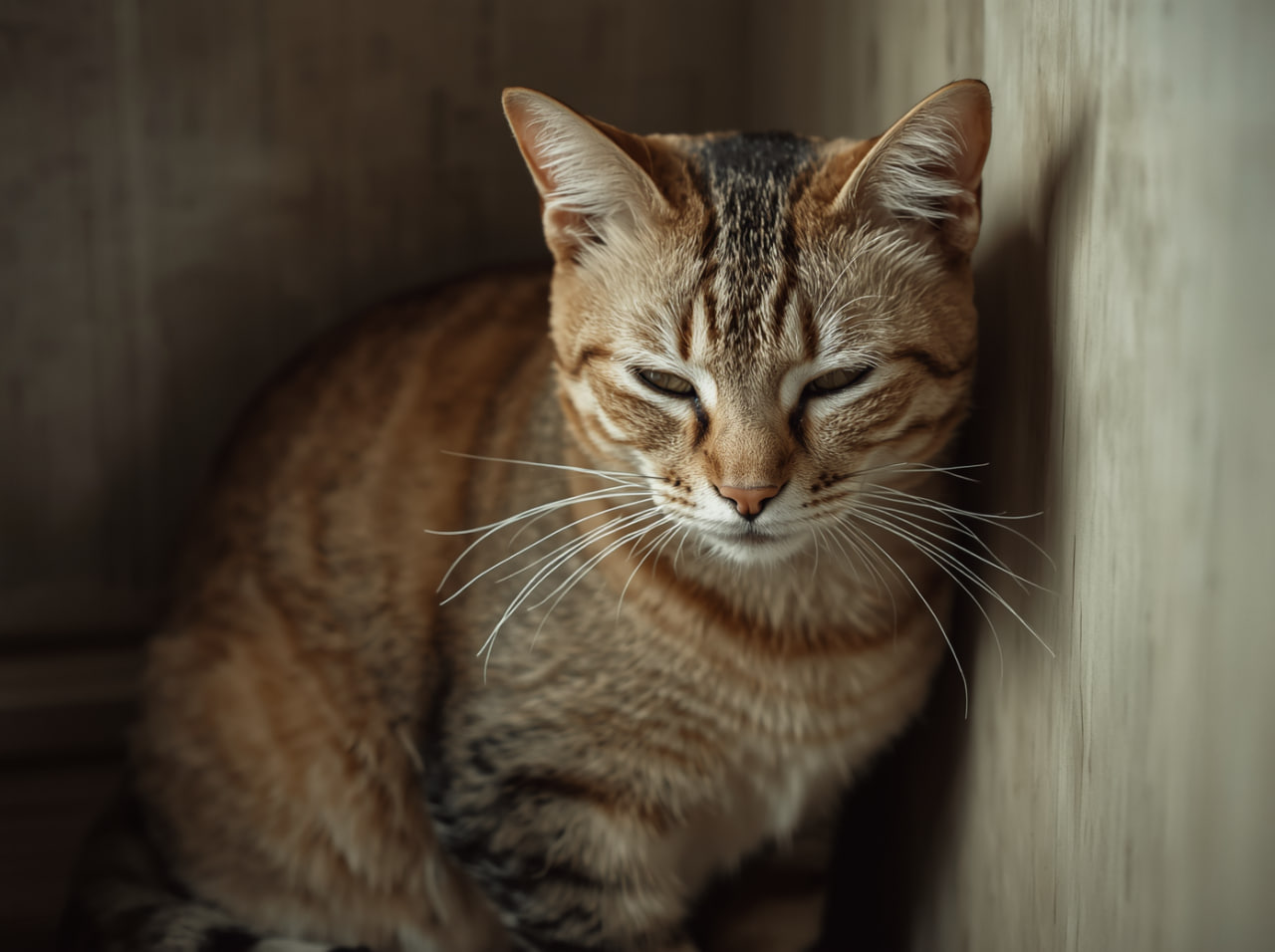
Cats are evolutionary masters of concealment. In the wild, a visibly injured or sick cat is a target — predators select the weakest members of any animal population for attack. As a result, domestic cats retain a powerful instinct to mask pain and illness, often appearing outwardly normal even when experiencing significant discomfort. This biological camouflage is one of the primary reasons why so many cats receive veterinary care later in the course of disease than dogs or humans in comparable situations. Understanding the subtle, often easily dismissed signs that indicate feline pain — and knowing when those signs demand veterinary attention — is one of the most important skills a cat owner can develop.
Why Cats Hide Pain — And Why This Matters for Owners
The concealment of pain and illness in cats is not stubbornness or stoicism in the human sense — it is a deep, automatic behavioral strategy with strong evolutionary roots. Even fully domesticated, indoor cats who face no predatory threat retain this instinct. The practical consequence for cat owners is that by the time a cat’s discomfort becomes obvious, the underlying condition has often progressed significantly. Many conditions that are highly treatable in early stages — dental disease, arthritis, urinary tract problems, hyperthyroidism — reach advanced stages before the behavioral signs become undeniable to owners who are not actively looking for early indicators. Knowing what the early signs look like, and taking them seriously rather than rationalizing them as ‘just getting older’ or ‘being moody,’ directly improves health outcomes for cats.
The Feline Grimace Scale: What Veterinarians Look For
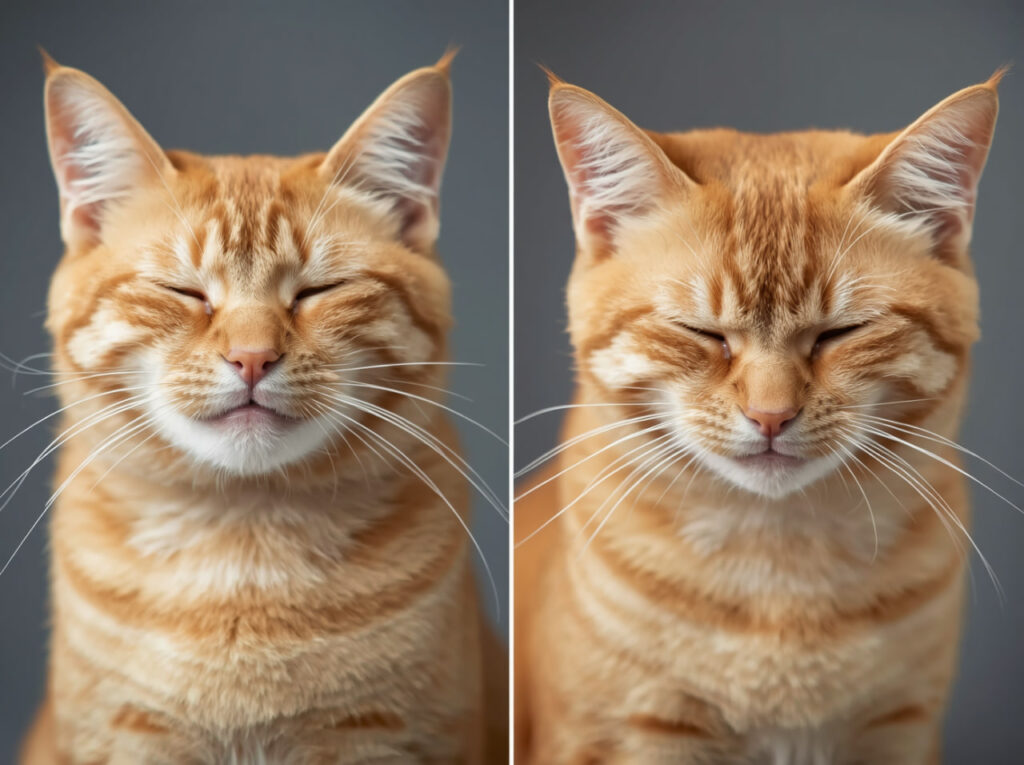
The Feline Grimace Scale (FGS) is a validated clinical tool developed through systematic research and used by veterinarians to assess acute pain in cats based on observable facial changes. It evaluates five action units:
- Ear position: ears rotated sideways or flattened against the skull — in contrast to the relaxed, slightly forward or upright position of comfortable cats.
- Orbital tightening: the eyes are partially closed with visible squinting or orbital tension — described as a ‘tight squint’ rather than a relaxed, slow blink.
- Muzzle tension: the muzzle appears rounded or tense rather than relaxed and gently pointed. Whiskers may be pulled back or bunched rather than spread naturally forward.
- Whisker change: whiskers pulled backward toward the cheeks, or pressed flat rather than spread naturally.
- Head position: the head is carried low, tucked, or positioned below the shoulders — rather than held up in normal alert posture.
A cat showing three or more of these facial changes simultaneously is considered to be in significant acute pain. Learning to recognize the FGS in your own cat requires familiarity with their normal, relaxed facial expression as a baseline — which is one more reason to observe your cat carefully when they are comfortable and well.
Behavioral Signs of Pain in Cats
Beyond the facial grimace, pain in cats produces a range of behavioral changes. The key is recognizing these as changes from your individual cat’s established normal — which is why knowing your cat’s baseline behavior when they are healthy is so valuable:
Changes in Social Behavior
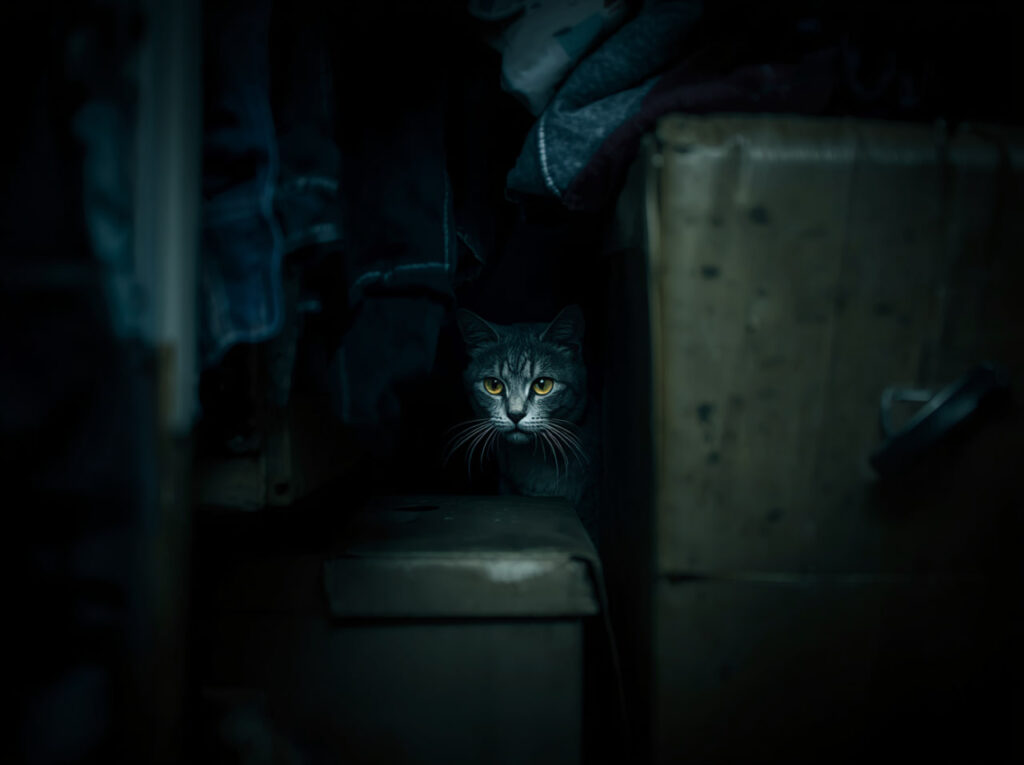
- Hiding: seeking unusual locations, staying there for extended periods, and not emerging for normal social interactions, meals, or play.
- Withdrawal from family: a normally interactive cat who begins avoiding people or other pets without obvious environmental cause.
- Unusual clinginess: the inverse of hiding — some cats in pain become anxious about separation and follow their owner constantly.
- Reduced or absent greeting behavior: a cat that normally meets you at the door who stops doing so.
Changes in Activity and Mobility
- Reluctance to jump: avoiding previously easy jumps (onto a sofa, window sill, or cat tree) — a common early sign of joint pain.
- Difficulty using the litter box: hesitating before entering, not adopting the normal squatting position, crying while in the box, or eliminating just outside the box (often indicates urinary tract pain or arthritis making the squat position painful).
- Stiffness after rest: slow, careful movement when rising from a resting position — becoming more fluid after moving around for a few minutes.
- Changes in gait: obvious limping or a subtle change in how the cat moves, distributes weight, or holds one limb.
Changes in Grooming
- Reduced grooming: a cat that stops grooming will develop a dull, matted, or unkempt coat relatively quickly. This is often noticed first at the base of the tail, which becomes untidy when a cat cannot comfortably turn to groom it.
- Obsessive licking of one area: cats frequently direct grooming attention toward a painful area — the skin may appear thinned, irritated, or even raw from persistent licking in one spot.
- Overgrooming other areas: some cats displace pain-related anxiety into repetitive grooming in locations unrelated to the pain source.
Changes in Appetite and Drinking
- Reduced appetite or food refusal: pain generally suppresses appetite. Dental pain in particular causes cats to approach food and then back away, or to chew on only one side of the mouth.
- Increased water consumption: polydipsia (excessive drinking) is a non-specific but important symptom associated with kidney disease, diabetes, and hyperthyroidism — all of which cause discomfort.
- Weight loss: often noticed on palpation of the spine and hips before it is visually obvious.
Common Sources of Pain That Are Easily Missed
- Dental disease: affects an estimated 70% of cats over age 3. Tooth resorption, periodontitis, and oral ulcers cause significant ongoing pain. Many cats continue eating despite severe dental pain — the need to eat overrides the pain. Reluctance to eat hard food, excessive drooling, and pawing at the mouth are specific signs.
- Arthritis (degenerative joint disease): affecting up to 90% of cats over 12 years old according to radiographic studies. Frequently dismissed as ‘slowing down with age.’ Signs include reduced jumping, altered gait, litter box avoidance, and reduced grooming of the lower back and tail.
- Urinary tract disease: particularly serious in male cats where urethral obstruction (blocked bladder) is a life-threatening emergency. Signs include frequent trips to the litter box with little or no urine produced, crying while trying to urinate, and blood in urine.
- Chronic pain from internal disease: kidney disease, hyperthyroidism, pancreatitis, and inflammatory bowel disease all cause ongoing discomfort that is easily attributed to other causes.
When to Contact Your Veterinarian
Contact your veterinarian promptly if your cat shows:
- Any combination of three or more of the behavioral or physical changes listed above
- Changes that persist for more than 24 to 48 hours
- Sudden onset of any change — particularly inability to urinate (emergency), collapse, or screaming vocalization
- Visible injury, swelling, or limping
- Appetite loss for more than 24 hours — particularly in cats, due to the risk of hepatic lipidosis
Frequently Asked Questions
My cat is purring. Does that mean they are definitely not in pain?
No. Purring is a self-soothing behavior that occurs both during contentment and during pain or stress. Cats may purr loudly while experiencing significant discomfort. Purring is not a reliable indicator of absence of pain.
How can I do a basic pain check at home?
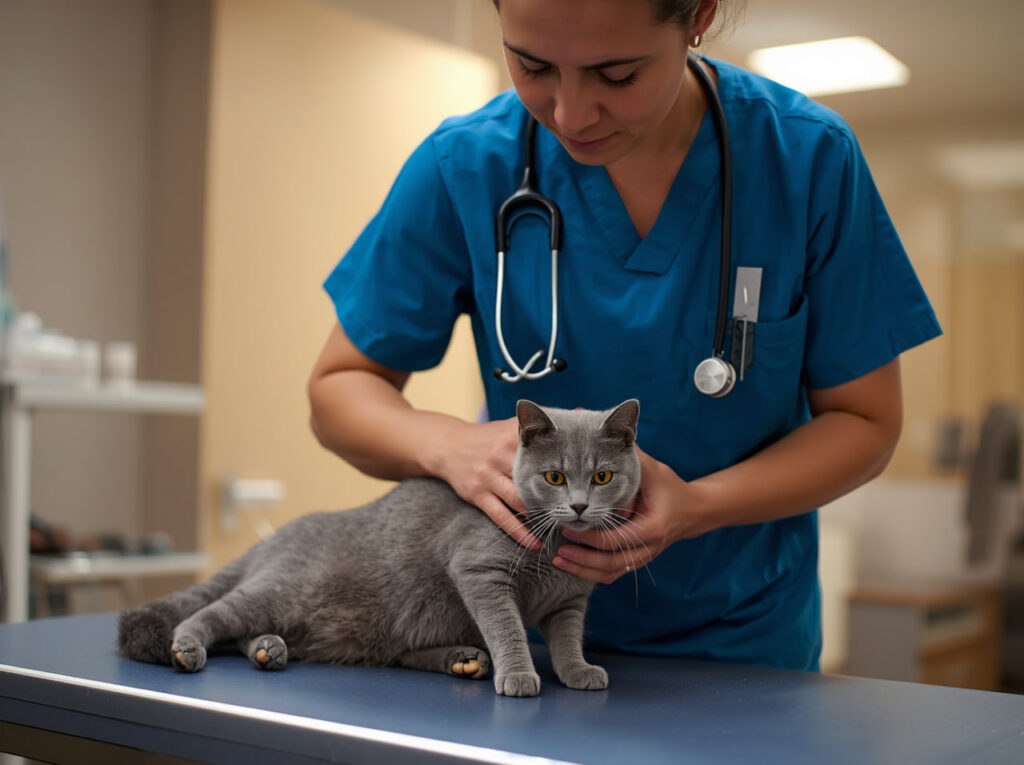
With your cat relaxed, gently run your hands slowly over the entire body — legs, abdomen, spine, hips, head, and neck. Watch for: flinching, twitching of the skin over specific areas, turning to look at your hand, pulling away, or vocalizing. Any of these responses over a specific area suggests local sensitivity worth reporting to your vet. This is a screening tool, not a diagnostic one.
My senior cat has slowed down a lot. Is this normal aging or pain?
This is one of the most common questions veterinarians hear — and the honest answer is that in many cases, what appears to be normal aging is pain from arthritis, dental disease, or another treatable condition. A vet visit with radiographs of the joints can clarify whether pain management would help, and in many cases the transformation in a cat who receives appropriate pain relief is remarkable.
What pain management options exist for cats?
Veterinary pain management for cats has advanced significantly and includes: meloxicam (a feline-specific NSAID), buprenorphine (excellent short-term opioid pain relief), gabapentin (neuropathic pain and anxiety), corticosteroids for inflammatory conditions, and newer treatments including monoclonal antibodies targeting the pain pathway of arthritis (frunevetmab, marketed as Solensia). Always use only veterinary-prescribed pain medications — never give human pain medications including ibuprofen, acetaminophen, or aspirin to cats, all of which are toxic and potentially fatal.
Conclusion
Because cats hide pain so effectively, every cat owner plays a critical and irreplaceable role in early detection. Learn your individual cat’s normal — their typical posture, movement pattern, grooming habits, social engagement, appetite, and facial expression when they are healthy and comfortable. Then take any departure from that normal seriously, rather than explaining it away. Early recognition of pain leads to earlier treatment, faster recovery, and — in the case of progressive conditions like arthritis and kidney disease — significantly better long-term outcomes. Your cat cannot advocate for themselves. You are their advocate, and understanding the signs of pain is one of the most powerful tools you have.