

Arthritis — formally called osteoarthritis or degenerative joint disease — is one of the most common health challenges facing senior dogs. Studies suggest that up to 80% of dogs over 8 years old have radiographic evidence of joint changes, and the condition causes chronic pain and progressive loss of mobility that significantly affects quality of life. While veterinary-prescribed medications, physical therapy, and weight management are the cornerstones of arthritis management, diet plays a genuinely meaningful supporting role. The right nutrition can reduce joint inflammation, slow cartilage degradation, maintain the muscle mass that protects arthritic joints, and support the overall health of an aging dog. This guide gives you a complete picture of what to feed — and what to avoid — for a senior dog with arthritis.
Why Diet Matters for Arthritic Dogs
Arthritis is fundamentally an inflammatory condition. The degradation of cartilage and the resulting bone-on-bone contact triggers a chronic local inflammatory response that causes the pain, stiffness, and swelling characteristic of the condition. Diet influences this inflammatory process through several mechanisms: the ratio of omega-6 to omega-3 fatty acids in the diet directly affects the production of pro- and anti-inflammatory eicosanoids; protein quality affects the maintenance of muscle mass that stabilizes and protects joints; and total caloric intake determines body weight — with every excess pound of body weight adding four pounds of additional force on the hips, knees, and elbows with every step. These are not trivial dietary effects. A well-designed diet, consistently fed, can produce measurable improvements in mobility and comfort.
The Most Important Nutrients for Dogs With Arthritis
1. Omega-3 Fatty Acids (EPA and DHA)
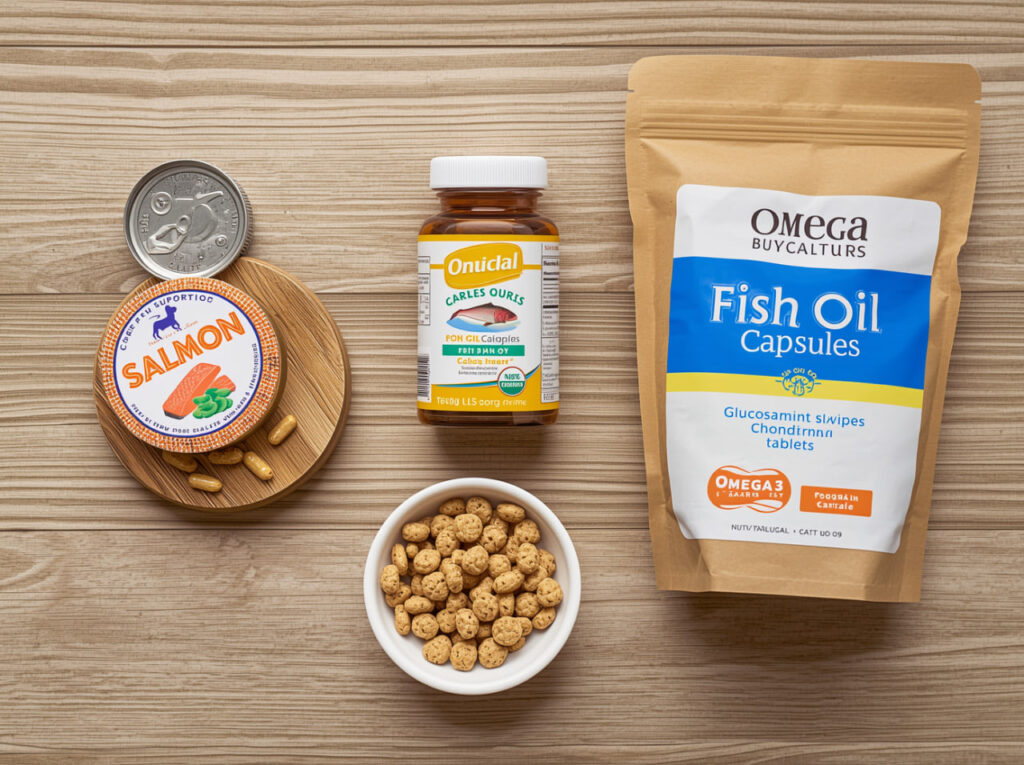
This is the most evidence-supported nutritional intervention for canine osteoarthritis. EPA (eicosapentaenoic acid) and DHA (docosahexaenoic acid) — found in fatty fish and fish oil — are precursors to anti-inflammatory eicosanoids that directly suppress the inflammatory cascade in arthritic joints. Multiple controlled clinical trials in dogs have demonstrated that dietary supplementation with fish-derived omega-3s produces measurable improvements in weight-bearing, mobility, and pain scores within 6 to 12 weeks. The therapeutic dose used in trials is significantly higher than what most commercial dog foods provide — typically 50 to 75 mg of combined EPA and DHA per kilogram of body weight per day. Fish oil supplementation (using products formulated for dogs and dosed appropriately) is one of the highest-value additions to an arthritic dog’s dietary regimen.
2. Glucosamine and Chondroitin
Glucosamine and chondroitin are structural components of cartilage that are incorporated into many commercial senior and joint support dog foods, and are also available as dedicated supplements. Their mechanism of action: glucosamine supports the synthesis of new cartilage components, while chondroitin inhibits enzymes that degrade cartilage matrix. Evidence in dogs shows modest but consistent benefit for slowing cartilage degradation and reducing pain scores over extended supplementation periods. These compounds are most effective as preventive and early-stage interventions — they do not reverse established cartilage damage but slow its progression.
3. High-Quality, Bioavailable Protein
Maintaining muscle mass is critical for arthritic dogs, because muscle provides the dynamic support and stability that arthritic joints cannot provide for themselves. Aging dogs have reduced protein synthetic efficiency — they need more dietary protein per kilogram of body weight than young adult dogs to maintain the same muscle mass. Look for senior foods with at least 25 to 30% protein on a dry matter basis, derived from named whole meat sources (chicken, salmon, lamb) rather than protein meal or plant-based protein concentrates. The protein quality and digestibility matters as much as the quantity.
4. Weight Management: The Most Impactful Single Intervention
Among all nutritional interventions for canine arthritis, maintaining a healthy body weight has the largest and most consistently documented impact on clinical outcomes. Every excess kilogram of body weight imposes additional force on arthritic joints with every step — a five-kilogram excess represents a meaningful increase in joint loading across thousands of daily steps. Clinical studies have demonstrated that weight loss alone — without any other intervention — produces significant improvements in mobility, pain scores, and quality of life in arthritic dogs. If your senior dog is overweight, calorie-controlled feeding to achieve and maintain a BCS of 4 to 5 out of 9 is the most powerful single nutritional decision you can make.
What to Look for in a Commercial Senior Dog Food
When evaluating commercial foods for a senior arthritic dog, prioritize these label characteristics:
- Named whole protein source in the first one to two ingredients: ‘chicken,’ ‘salmon,’ ‘beef,’ ‘lamb’ — not ‘poultry meal’ or ‘meat by-products’ as the primary protein
- Minimum 25% protein and moderate fat on a dry matter basis
- Omega-3 fatty acids listed with a specific mg/day amount of EPA and DHA on the guaranteed analysis
- Added glucosamine and chondroitin (look for at minimum 400 mg/kg glucosamine and 300 mg/kg chondroitin in the guaranteed analysis)
- No artificial preservatives (BHA, BHT, ethoxyquin), artificial colors, or corn syrup
- AAFCO statement confirming the food is complete and balanced for adult maintenance or all life stages
Prescription joint diets from companies like Hill’s (j/d — Joint Mobility), Royal Canin (Mobility), and Purina Pro Plan Veterinary Diets (JM Joint Mobility) have been specifically formulated and clinically tested for joint disease and typically contain higher therapeutic levels of omega-3s and joint-supporting nutrients than over-the-counter options. They are worth discussing with your veterinarian for dogs with moderate to severe arthritis.
Wet Food vs Dry Food for Senior Arthritic Dogs
Both wet and dry food can form the basis of a healthy senior dog’s diet. Wet food has several specific advantages for arthritic senior dogs: higher moisture content (supporting kidney health — increasingly important in aging dogs), softer texture that is easier for dogs with concurrent dental disease to chew, and often higher palatability that helps maintain appetite in dogs whose interest in food may have declined. Many veterinarians recommend a mixed diet combining a high-quality dry food base with a portion of wet food — providing the dental benefits of kibble alongside the hydration and palatability of wet food.
Foods and Ingredients to Avoid
- Excessive omega-6 fatty acids relative to omega-3s: modern commercial pet foods are frequently high in omega-6 (from poultry and plant oils) and low in omega-3. This imbalanced ratio promotes the pro-inflammatory pathway. Counteract by supplementing with fish oil.
- High-glycemic carbohydrates and added sugars: promote inflammation and contribute to weight gain. Look for foods where grains and carbohydrates are lower in the ingredient list.
- Low-quality protein sources: plant proteins and protein meals from unspecified sources are less digestible and less effective for maintaining muscle mass than high-quality animal proteins.
- Foods that promote obesity: high-calorie dense foods in large portions are particularly problematic for already-arthritic dogs. Measure precisely and account for all treats.

Practical Feeding Tips for Arthritic Senior Dogs
- Use an elevated food and water bowl: raised bowls reduce the neck extension and front leg loading required for eating at ground level — more comfortable for dogs with neck, shoulder, or elbow arthritis
- Feed two to three smaller meals rather than one large meal: multiple smaller meals are metabolically more efficient, maintain more consistent blood amino acid levels for muscle protein synthesis, and are less likely to cause post-meal lethargy
- Warm wet food slightly before serving: enhances aroma and palatability for dogs with reduced appetite
- Measure every meal precisely: free-feeding makes weight management impossible. A kitchen scale is more accurate than volume measures for dry food
- Add fish oil if not already included at therapeutic levels: discuss the appropriate dose for your dog’s weight with your veterinarian
Frequently Asked Questions
Is grain-free food better for dogs with arthritis?
No. Grain-free status has no established relationship with joint health, and the FDA has been investigating a potential link between grain-free diets and dilated cardiomyopathy in dogs. The most important considerations are omega-3 content, protein quality, and appropriate calorie density — not grain status.
Can I add turmeric to my arthritic dog’s food?
Turmeric contains curcumin, which has documented anti-inflammatory properties in laboratory settings. Evidence for meaningful clinical benefit at typical dietary doses in dogs is limited, and bioavailability of curcumin is poor without specific formulation. It is not harmful in small culinary amounts, but should not be expected to replace evidence-based interventions like omega-3 supplementation and weight management.
How quickly will dietary changes help my dog’s arthritis?
Omega-3 supplementation typically produces noticeable improvement in mobility and pain indicators within 6 to 12 weeks of consistent therapeutic dosing. Weight loss benefits are proportional to the amount of weight lost — significant improvement often begins at 5 to 10% reduction in body weight.
My arthritic dog has lost interest in food. What should I do?
Reduced appetite in a senior dog with arthritis may indicate that pain is more severe than you realize — pain suppresses appetite. Discuss pain management options with your veterinarian before focusing on diet palatability. Effective pain control often restores appetite.
Conclusion
Feeding a senior dog with arthritis well is one of the most tangible ways you can actively improve their daily comfort and mobility. The foundation is straightforward: high-quality protein to maintain muscle, therapeutic levels of omega-3 fatty acids to reduce inflammation, glucosamine and chondroitin to support cartilage, and strict calorie management to maintain a healthy weight. These nutritional decisions, consistently applied alongside appropriate veterinary pain management, give arthritic dogs the best possible quality of life in their senior years.