
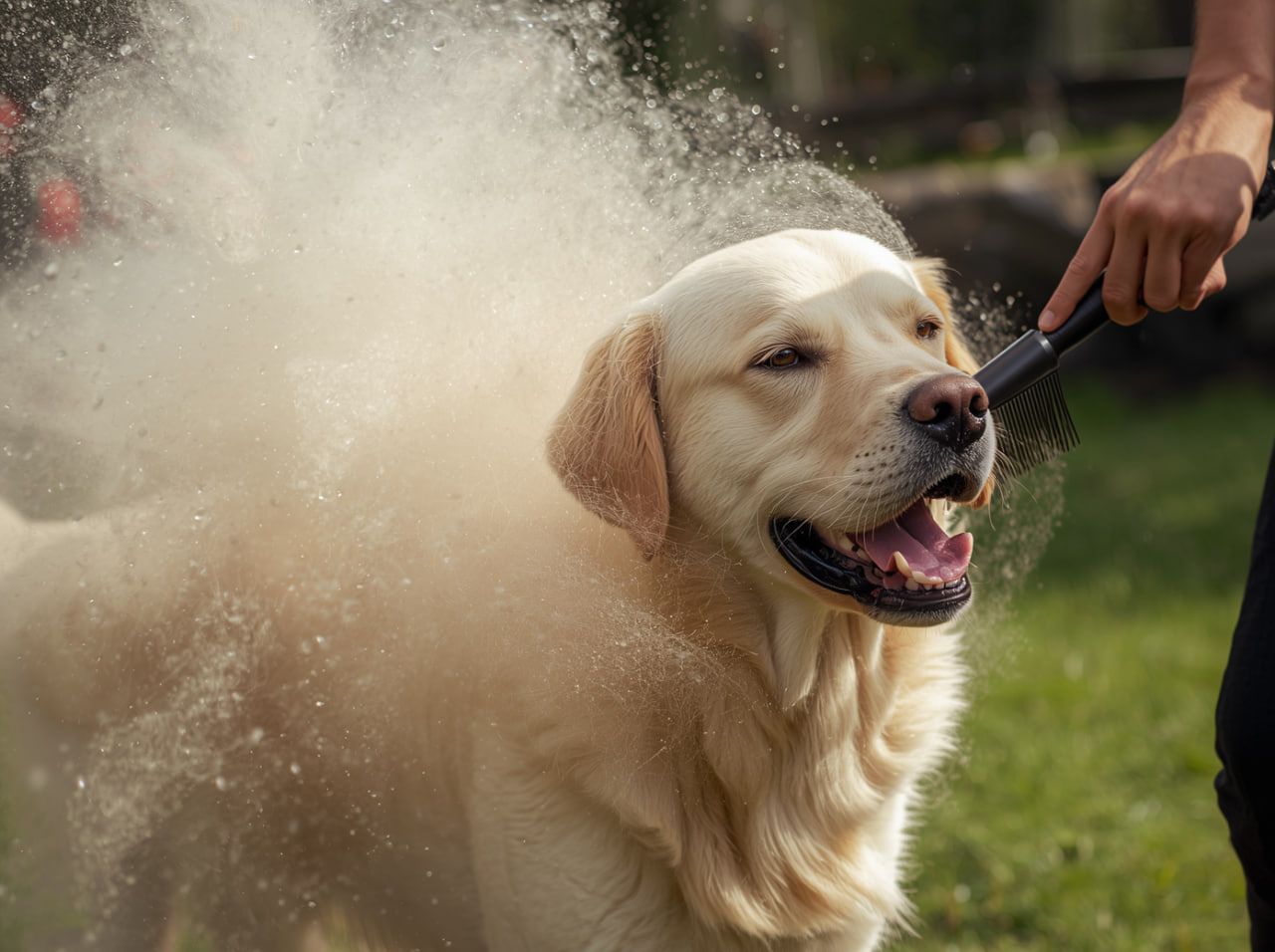
If you share your home with a Labrador Retriever, you are already intimately familiar with dog hair. On the sofa, on your clothes, in your coffee, and seemingly on every surface of your home regardless of how recently you cleaned. Labs are moderate to heavy shedders year-round, with two dramatically intensified periods — typically in spring and fall — during which they shed their entire undercoat in a process colloquially known as ‘coat blowing.’ For new Lab owners, this level of shedding can come as a genuine shock. The reassuring news is that with the right tools and a consistent routine, managing Labrador shedding becomes a predictable and manageable part of life with one of the world’s most beloved breeds.
Why Labradors Shed So Much: The Science of the Double Coat
Labrador Retrievers have a dense double coat — a soft, insulating undercoat beneath a short, water-resistant outer coat — that was developed through generations of selective breeding for cold-water retrieving work. This coat design is extraordinarily functional: it provides thermal insulation in cold water, sheds water rapidly after swimming, and protects the skin from brush, thorns, and rough terrain. The trade-off is a continuous, substantial shedding process. The undercoat is made up of soft, fine hairs that are replaced continuously as old hairs are pushed out by new growth. Twice a year — triggered by changes in daylight duration rather than temperature, which is why indoor Labs still blow their coats on schedule — the entire undercoat is replaced in a compressed, dramatic shedding event that can leave extraordinary amounts of fur around your home.
Grooming Tools That Make a Real Difference
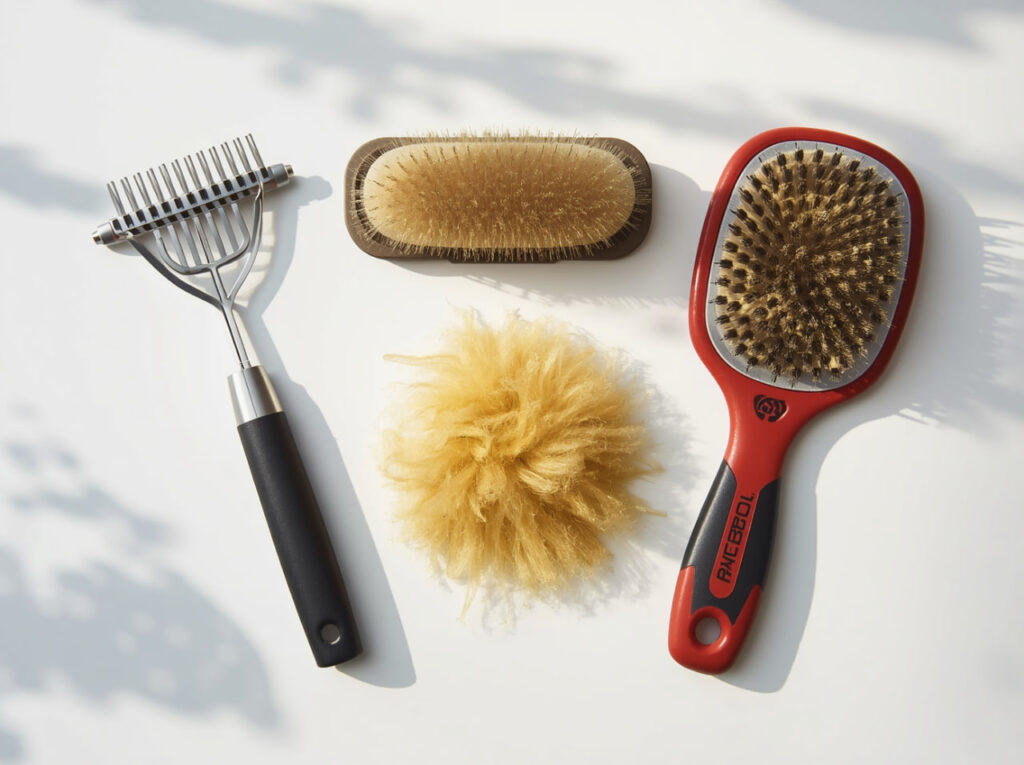
Not all brushes are created equal for a Labrador’s coat. The right tools reach through the short outer coat to the dense undercoat where most of the shedding originates:
- Undercoat rake: a wide-toothed grooming tool specifically designed to penetrate through the outer coat and pull loose undercoat hairs from the base. This is the most effective primary tool for Labs. The Furminator undercoat de-shedding tool is a popular and effective option, though any quality undercoat rake works well.
- Slicker brush: a brush with fine, closely spaced wire pins effective at removing loose surface hair from the outer coat and distributing natural oils. Best used after the undercoat rake for a finishing effect.
- De-shedding glove: a rubber glove with textured nodules on the palm that captures loose fur as you stroke your dog. Less effective than dedicated brushes for heavy shedding but good for dogs who resist traditional brushes.
- High-velocity dog dryer: used immediately after bathing, a high-velocity dryer blows loose undercoat out of the coat far more rapidly and completely than towel drying or air drying. The single most effective tool for removing massive quantities of loose fur during seasonal blowouts. Professional groomers use these routinely.
Brushing Technique and Frequency
Brushing frequency should adapt to the current shedding phase:
- Baseline (non-shedding season): two to three times per week with an undercoat rake followed by a slicker brush. Each session of 10 to 15 minutes removes the steady supply of loose hairs before they reach your furniture and floors.
- Peak shedding season (spring and fall coat blowout): daily brushing with the undercoat rake, ideally outdoors or in an easily cleaned area. Sessions during blowout can produce remarkable quantities of fur.
- Brushing technique: work in sections, brushing against the direction of hair growth first (to loosen undercoat), then with the direction of growth for the finishing pass. Part the coat to reach the undercoat rather than brushing only the surface.
- Outdoor brushing: during peak shedding, brushing outdoors keeps the bulk of the loose fur outside. Birds and small animals often collect the brushed-out fur for nesting material.
Bathing: The Underrated Shedding Management Tool
Regular bathing is one of the most effective and least utilized shedding management strategies for Lab owners. A thorough bath loosens and releases dead undercoat hairs far more effectively than dry brushing alone. The optimal sequence: brush thoroughly to remove surface loose hair, bathe with a de-shedding shampoo (formulated to penetrate and loosen undercoat), rinse very thoroughly, then dry with a high-velocity dryer if available — or a standard blow dryer on a cool or low-heat setting — while brushing simultaneously. This combined bath-and-brush process removes significantly more loose fur in one session than weeks of dry brushing.
Bathing frequency for Labradors: every four to six weeks for year-round maintenance. During peak shedding seasons, bathing at the start of the blowout period and then weekly for two to three weeks dramatically accelerates the transition through the shedding phase.
Diet and Nutrition: The Internal Approach to Coat Health
A Labrador’s coat quality — and by extension, the amount and duration of shedding — is significantly influenced by diet. Dogs fed low-quality diets with inadequate essential fatty acids, protein, or micronutrients shed more, and their coat is more brittle and prone to breakage rather than normal shedding of complete healthy hairs. Key nutritional factors for coat health:
- Omega-3 and omega-6 fatty acids: essential for maintaining the skin barrier and coat condition. Fish oil supplementation (providing EPA and DHA) produces noticeable coat improvement in most dogs within six to eight weeks of consistent supplementation.
- High-quality digestible protein: the coat is made of protein. Inadequate dietary protein produces a dull, brittle coat with increased shedding and reduced regrowth.
- Zinc and biotin: trace nutrients that support coat integrity and normal shedding cycles. Deficiency produces abnormal coat texture and increased breakage.
- Adequate hydration: chronically underhydrated dogs shed more. Ensure fresh water is always available and consider adding wet food to the diet.
Managing Shedding Around the Home
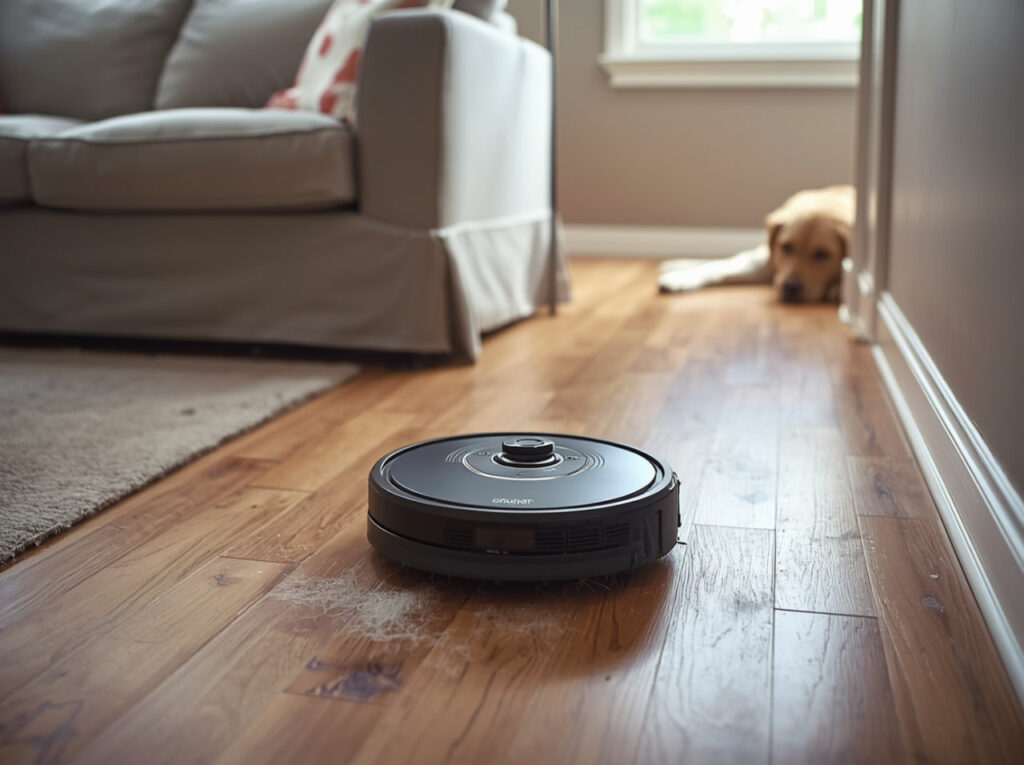
- Vacuum frequently: during shedding season, a pet-specific vacuum cleaner with strong suction and a tangle-resistant brush roll is essential. Robotic vacuums running on a daily schedule significantly reduce visible hair accumulation between manual vacuum sessions.
- Use washable slipcovers on sofas and chairs: easily removed and washed weekly during peak shedding. Far more effective than attempting to remove embedded hair from fabric upholstery.
- Lint rollers strategically placed: one at the front door, one in the car, one in the bedroom. Normalizing quick lint rolling before leaving the house significantly reduces the social impact of dog ownership.
- Microfiber cloths for surfaces: attract and hold dog hair better than conventional cloths.
- Air purifiers with HEPA filters: capture airborne dander and fine hair particles that regular vacuuming does not address. Particularly beneficial for household members with allergies.
When Shedding Indicates a Health Problem
Normal Labrador shedding, even at its most intense, follows a predictable seasonal pattern and affects the coat evenly. The following signs suggest a health issue rather than normal shedding and warrant veterinary evaluation:
- Patchy or asymmetrical hair loss — bald spots or areas of significantly reduced coat density
- Skin changes associated with hair loss: redness, scaling, crusting, or sores
- Your dog scratching, biting, or rubbing at the areas of hair loss
- Sudden dramatic increase in shedding outside of normal seasonal periods
- The coat appears dull, brittle, or has changed noticeably in texture or quality
Frequently Asked Questions
Do yellow, black, and chocolate Labs shed the same amount?
Yes — all Labrador Retrievers shed equally regardless of coat color. The shade does not affect the density of the double coat or the volume or timing of shedding. Some owners feel yellow Lab hair is more visible on dark fabrics and black Lab hair on light fabrics — a purely perceptual difference.
Can I shave my Lab to reduce shedding?
No — and this is important. Shaving a double-coated breed like a Labrador does not reduce shedding volume and can cause permanent damage to the coat’s growth cycle, disruption of natural thermal regulation, and increased sunburn risk. The undercoat may grow back unevenly or develop a cottony texture. Never shave a double-coated breed.
At what age do Labradors start their heavy shedding?
Labrador puppies have a soft, lower-shedding puppy coat. The adult double coat develops around 6 to 12 months of age, and the first major seasonal blowout typically occurs around 12 to 18 months. Heavy adult-level shedding is generally established by the first or second birthday.
Does neutering affect shedding?
Some owners report that spayed or neutered Labs develop a softer, slightly denser coat that may shed somewhat differently than an intact dog’s coat. The effect varies individually and is not a reason to choose or avoid neutering.
Conclusion
Labrador shedding is an immutable fact of Lab ownership — but it is also entirely manageable with the right tools, the right routine, and the right expectations. Consistent brushing with an undercoat rake, regular strategic baths, a high-quality omega-3-rich diet, and appropriate home management strategies transform shedding from an overwhelming constant to a predictable, contained part of life with one of the world’s most rewarding breeds. Accept the hair. Invest in a good vacuum. And enjoy every moment with your Lab.