

A dog scratching occasionally is completely normal — just as humans occasionally scratch an itch without any underlying problem. But when scratching becomes persistent, intense, or disruptive — affecting your dog’s sleep, causing hair loss, or breaking the skin — it is a signal that something is wrong and needs to be addressed. Excessive scratching, medically termed pruritus, is one of the most common reasons dogs visit veterinary clinics, and it has a broad range of causes from the easily resolved to the chronic and complex. Understanding the most likely causes and how to identify them is the first step toward getting your dog relief.
Normal vs Excessive Scratching: How to Tell the Difference
Occasional scratching — a few times per day with normal intensity — is completely normal canine behavior. Scratching becomes a clinical concern when it meets any of the following criteria:
- Occurs more than several times per hour at rest
- Disrupts sleep — either the dog’s or yours
- Is intense enough to cause hair loss, redness, or breaks in the skin
- Involves multiple body locations simultaneously or has spread progressively
- Has developed alongside other symptoms: ear infections, paw licking, anal scooting, or skin odor
- Has lasted more than two weeks without obvious explanation
The Most Common Causes of Excessive Scratching in Dogs
1. Environmental Allergies (Atopic Dermatitis)
Environmental allergies — technically called canine atopic dermatitis — are the single most common cause of chronic itching in dogs. The immune system mounts an exaggerated response to normally harmless environmental substances: pollen, dust mites, mold spores, grass, and dander from other animals. Unlike in humans where airborne allergies typically cause respiratory symptoms, dogs absorb allergens through the skin and experience primarily dermatological symptoms. Classic signs: itching that follows a seasonal pattern (worse in spring and fall for pollen allergies, year-round for dust mite allergies), with concentration in specific body regions — paws, ears, armpits, groin, and the belly. Atopic dermatitis is a chronic condition that requires ongoing management rather than a one-time cure.
2. Flea Allergy Dermatitis
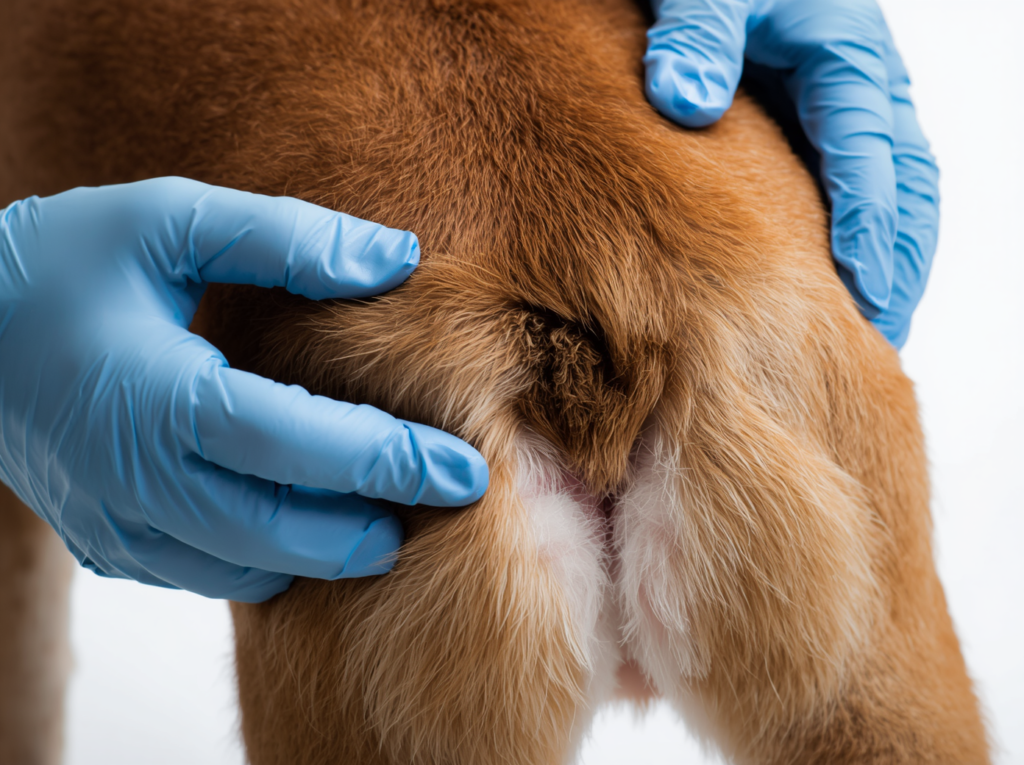
Flea allergy dermatitis (FAD) is the most common skin condition in dogs worldwide. Importantly, FAD is not caused by having many fleas — it is caused by an allergic reaction to a protein in flea saliva. A single flea bite on an allergic dog can trigger intense itching that persists for days to weeks. Signs: intense scratching and chewing concentrated at the base of the tail, lower back, and inner thighs — the classic distribution of flea feeding activity. You may not see fleas on your dog — the dog’s scratching and chewing often removes them — but flea dirt (tiny black specks of digested blood that turn red when wet) may be visible at the skin surface. Year-round flea prevention is essential for FAD-affected dogs.
3. Food Allergies and Food Intolerance
True food allergies in dogs are less common than environmental allergies but represent a significant subset of pruritic dogs. The most common food allergens in dogs are: beef, chicken, dairy products, eggs, wheat, and soy — all common ingredients in commercial dog foods. Food allergy itching is typically non-seasonal (present year-round) and does not respond to antihistamines or corticosteroids as reliably as environmental allergies. The gold standard for diagnosing food allergies is a strict hydrolyzed protein or novel protein elimination diet for a minimum of 8 to 12 weeks — during which the dog eats nothing except the prescribed diet, with no exceptions including treats or flavored medications.
4. Dry Skin and Environmental Dryness
During winter months, indoor heating dramatically reduces ambient humidity, which can cause the skin to dry out and become flaky and itchy — in dogs as in humans. Dry skin itching typically has a generalized distribution (all over the body), is worse in winter, and is accompanied by visible flaking in the coat. Management strategies: add a fish oil supplement (omega-3 fatty acids support skin moisture barrier function), switch to a moisturizing dog shampoo, use a humidifier in rooms where the dog sleeps, and avoid over-bathing during dry seasons.
5. Contact Dermatitis
Contact dermatitis is an inflammatory skin reaction caused by direct skin contact with an irritating substance. Common culprits: new laundry detergent or fabric softener used on the dog’s bedding, new carpet cleaning products, lawn chemicals (herbicides, pesticides, fertilizers), new shampoo or grooming products, and certain materials (rubber, dyes in plastic food bowls). The distribution of itching and redness typically follows the pattern of contact with the irritant — belly and paws for lawn chemicals, neck for collar irritation.
6. Mange (Sarcoptic and Demodectic)
Mange is caused by mite infestations. Sarcoptic mange (caused by Sarcoptes scabiei) produces intense, relentless itching with characteristic distribution on the ear margins, elbows, and abdomen. It is highly contagious between dogs and can cause temporary skin reactions in humans. Demodectic mange (caused by Demodex mites that normally live on all dogs in small numbers) typically produces patchy hair loss without intense itching — it occurs when the immune system fails to control the normal mite population. Both require veterinary diagnosis and treatment.

How to Identify the Cause at Home
Before your veterinary appointment, gathering the following information will help your vet narrow the diagnosis significantly:
- When did the scratching start and has it changed over time?
- Is the scratching seasonal or year-round?
- Where on the body is the scratching concentrated?
- Has anything changed recently — new food, new treats, new bedding, new cleaning products, new environment?
- Are other pets in the household also scratching?
- Is the dog on regular flea prevention, and when was it last administered?
- Has the dog recently been in a new environment — a dog park, a boarding facility, a groomed?
Treatment Options by Cause
- Flea allergy: year-round veterinary-grade flea prevention (isoxazoline-class products like NexGard, Bravecto, or Simparica are most effective), treat all pets in the household simultaneously, and treat the home environment.
- Environmental allergies: antihistamines (limited efficacy in dogs), corticosteroids for flare management, Cytopoint injections (monoclonal antibody — highly effective with minimal side effects), Apoquel tablets (JAK inhibitor), or allergen-specific immunotherapy for long-term management.
- Food allergies: strict elimination diet under veterinary supervision, then controlled challenge to identify the specific allergen.
- Dry skin: omega-3 supplementation, humidifier, moisturizing shampoo, reduced bathing frequency.
- Infections secondary to scratching: bacterial pyoderma and Malassezia yeast infections are common secondary complications of chronic scratching and require specific antibiotic or antifungal treatment.
Frequently Asked Questions
Can I give my dog Benadryl for itching?
Diphenhydramine (Benadryl) is safe for most dogs at approximately 1 mg per pound of body weight up to three times per day. However, its efficacy for canine pruritus is limited — studies show antihistamines help only about 30% of itchy dogs, and primarily those with mild environmental allergies. It is a reasonable first-line home measure for mild, short-term itching but should not replace veterinary evaluation for persistent scratching.
Why does my dog scratch more at night?
Nighttime scratching is often more noticeable because the environment is quieter and there are fewer distractions. However, dust mite allergy genuinely worsens at night because dust mites concentrate in bedding materials — if your dog’s scratching is consistently worse at night and in the sleeping area, dust mite allergy is worth investigating.
Can I put anything on my dog’s skin at home to relieve itching?
Plain, unscented aloe vera gel (ensure it does not contain xylitol), colloidal oatmeal sprays formulated for dogs, and cool water compresses can provide temporary relief. Avoid human hydrocortisone cream, calamine lotion, and tea tree oil — these are harmful to dogs. Never use essential oils on a dog’s skin.
My dog scratches but has no visible rash or fleas. What could it be?
Invisible-to-the-eye causes are common. Early food allergies, dust mite allergies, and the beginning stages of mange can all cause significant itching before visible skin changes develop. A veterinary skin examination including skin scraping (to check for mites) and a dietary history review is the appropriate next step.
Conclusion
Excessive scratching is almost always a signal from your dog’s body that something needs attention — whether a treatable underlying condition, a simple environmental change, or a chronic allergy that requires long-term management. The most important step is accurate diagnosis: identifying the specific cause determines the most effective treatment. If your dog’s scratching has lasted more than two weeks, is disrupting their quality of life, or has caused any skin damage, a veterinary appointment is the right next step. Modern veterinary dermatology offers highly effective treatment options for virtually every cause of canine pruritus.