

Watching your dog age is one of the most bittersweet experiences of pet ownership. The dog who once launched himself at full speed across the yard now moves more slowly and sleeps more deeply. The face that was once entirely gold or black or brown is now dusted with gray. These changes are normal — but they also signal a shift in your dog’s needs that requires a thoughtful, proactive response. Senior dogs are not simply older versions of adult dogs. They have different nutritional requirements, different exercise capacities, different health vulnerabilities, and different emotional needs. Understanding these differences and adapting your care accordingly is how you give your dog the best possible quality of life in their final years — which, with good care, can be among the most rewarding years of your relationship.
When Is a Dog Considered Senior?
The answer depends primarily on body size, because larger dogs age faster than smaller dogs at a physiological level:
- Small breeds (under 20 lbs — Chihuahuas, Shih Tzus, Toy Poodles): considered senior around 10 to 12 years. Many live to 15 or 16 years with good care.
- Medium breeds (20 to 50 lbs — Beagles, Cocker Spaniels, Border Collies): senior from approximately 8 to 10 years.
- Large breeds (50 to 90 lbs — Labradors, Golden Retrievers, Boxers): senior from approximately 7 to 8 years.
- Giant breeds (over 90 lbs — Great Danes, Saint Bernards, Irish Wolfhounds): considered senior from just 5 to 6 years. Giant breeds have significantly shorter lifespans than small breeds.
Nutrition for Senior Dogs: Key Adjustments
A senior dog’s nutritional needs differ meaningfully from those of a young adult. The most important considerations:
Caloric Adjustment
Most senior dogs have a lower metabolic rate and reduced activity level compared to their younger selves, meaning they require fewer calories to maintain a healthy weight. Obesity is epidemic in senior dogs and directly worsens the joint disease, cardiovascular disease, and diabetes that are already more common in older animals. Transition to a senior formula food or reduce the quantity of current food based on body condition assessment. Weigh your dog monthly and adjust portions to maintain a BCS of 4 to 5 out of 9.
Protein — More, Not Less
Contrary to older veterinary thinking (which recommended reduced protein for seniors), current evidence strongly supports maintaining or increasing high-quality protein in senior dogs’ diets. Adequate protein is essential for preserving muscle mass during aging — muscle loss (sarcopenia) is one of the most significant contributors to weakness, immobility, and reduced quality of life in old dogs. Look for a senior food with a named animal protein as the first ingredient and at least 25 to 28% protein on a dry matter basis.
Joint-Supporting Nutrients
Senior dog foods formulated for joint health typically include glucosamine, chondroitin, and omega-3 fatty acids (EPA and DHA). These ingredients are well-supported by research for reducing joint inflammation and supporting cartilage health. If your senior dog’s food does not include these, fish oil supplementation (providing EPA and DHA) is a straightforward addition with a strong evidence base for both joint and cognitive health.

Exercise for Senior Dogs: The Right Balance
The instinct to reduce exercise as dogs age is understandable — but incorrect. Regular exercise remains critically important for senior dogs. It maintains muscle mass, supports joint health through fluid distribution, manages weight, supports cardiovascular function, and provides the mental stimulation that is as important for an aging dog’s wellbeing as it is for a young one’s. The correct adjustment is not less exercise but different exercise:
- Frequency over intensity: two to three shorter walks per day is preferable to one long, strenuous walk for most senior dogs.
- Soft surfaces: grass, dirt, and sand are significantly easier on arthritic joints than pavement. Where possible, walk on natural surfaces.
- Avoid sudden bursts: discourage the explosive sprinting and jumping that can stress arthritic joints, particularly at the beginning of activity before the joints are warmed up.
- Swimming and hydrotherapy: outstanding options for senior dogs with joint disease. Water supports the dog’s weight, eliminates impact, and provides gentle resistance training. Many veterinary rehabilitation centers offer hydrotherapy sessions for senior dogs.
- Watch for signs of over-exertion: limping, lagging behind, panting beyond what the exercise level warrants, or reluctance to continue are signals to reduce intensity immediately.
Veterinary Care: The Non-Negotiable Foundation
Annual veterinary visits are appropriate for healthy young adult dogs. For senior dogs, twice-yearly visits are strongly recommended — and for dogs with diagnosed conditions, more frequent monitoring may be needed. Here is what senior veterinary care should include:
- Comprehensive physical examination: including assessment of body condition, dental health, vision, hearing, lymph nodes, heart and lung auscultation, abdominal palpation, and joint mobility.
- Blood panel and urinalysis: thyroid function, kidney values, liver function, blood glucose, complete blood count. These detect the most common senior dog conditions in early, treatable stages.
- Blood pressure measurement: hypertension is common in older dogs and is a risk factor for kidney disease, heart disease, and retinal damage.
- Dental assessment: dental disease is nearly universal in senior dogs and causes chronic pain, systemic infection, and reduced quality of life when untreated. Professional dental cleaning under anesthesia may be recommended annually.
- Mobility assessment: your vet can assess joint range of motion, identify early arthritis, and prescribe appropriate pain management before pain becomes severe.
Managing Common Senior Dog Health Conditions
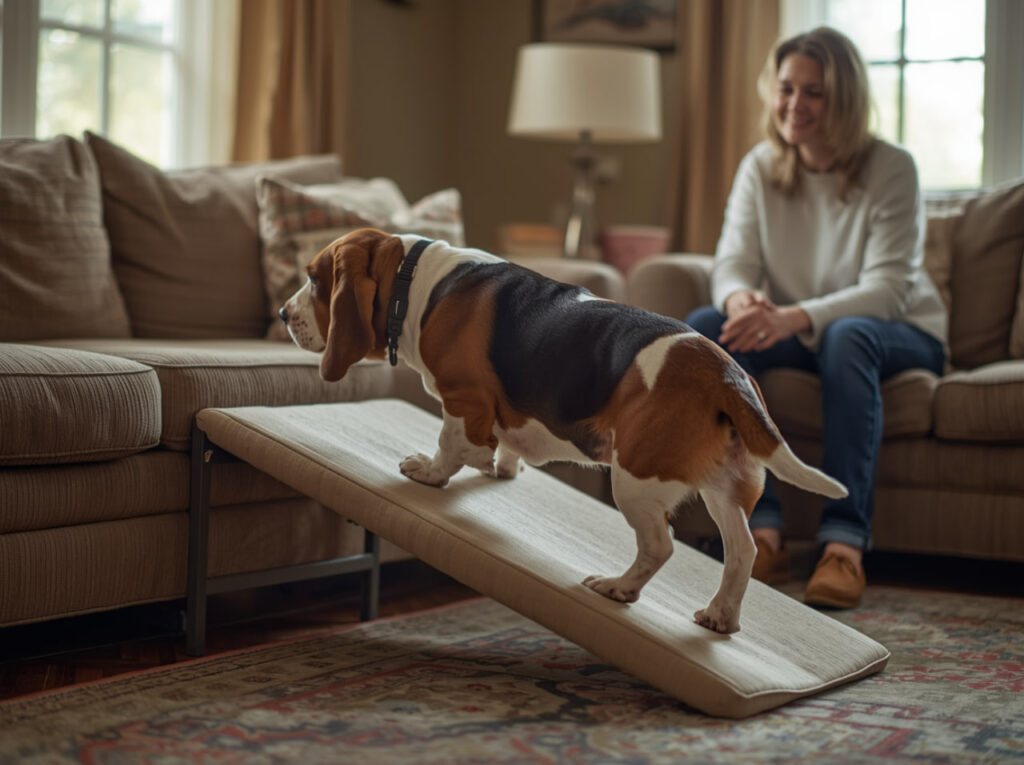
- Arthritis (osteoarthritis): affects the majority of dogs over 8 years. Management includes: weight management (most impactful single intervention), omega-3 supplementation, NSAIDs prescribed by your vet, physical therapy, and mobility aids like orthopedic beds and ramps for furniture access.
- Cognitive Dysfunction Syndrome (CDS): dog dementia. Signs include: disorientation, confusion, changes in sleep-wake cycle, loss of house training, decreased interaction, and staring at walls. Management includes enrichment activities, dietary antioxidants, and in some cases, veterinary-prescribed medications.
- Incontinence: hormonal (spay incontinence) or neurological causes are treatable. Do not assume it is untreatable — always discuss with your vet before making management decisions.
- Hypothyroidism and Cushing’s disease: both common in older dogs, both often initially presenting as weight gain, lethargy, and coat changes, and both manageable with medication once diagnosed.
- Cancer: the leading cause of death in dogs over 10 years. Regular veterinary examinations with attention to new lumps, bumps, or lymph node changes provide the best chance of early detection.
Quality of Life and Emotional Wellbeing in Senior Dogs
Physical health is one dimension of your senior dog’s wellbeing. Emotional and cognitive engagement matters equally. Senior dogs who are mentally stimulated, socially connected, and have a sense of purpose show better behavioral health and often better physical health outcomes than those who are simply kept comfortable but understimulated:
- Maintain routine: predictability is deeply comforting for aging dogs whose sensory and cognitive capacity is declining.
- Adapt play to current capacity: gentle fetch, slow sniff walks, easy puzzle feeders, and calm training sessions provide engagement without physical strain.
- Protect from over-excitement and stress: senior dogs with reduced sensory capacity or early cognitive decline can be overwhelmed by situations they previously handled easily. Monitor interactions with children and other pets.
- Provide warmth and comfort: older dogs lose the ability to thermoregulate efficiently. Orthopedic heated beds, blankets, and warm indoor temperatures significantly improve comfort for arthritic senior dogs.
- Cherish the relationship: senior dogs often develop a depth of connection with their owners that is different from the exuberant bond of puppyhood. These years, approached with attention and intention, can be among the most meaningful of your time together.
Frequently Asked Questions
Should I switch my dog to senior food as soon as they reach the senior age category?
Not necessarily. ‘Senior’ formulas vary widely between brands, and some are little different from standard adult food. The more important consideration is whether your individual dog’s current body condition, activity level, and health status indicate a dietary change is needed. Discuss with your veterinarian at your dog’s next annual exam.
My senior dog is sleeping much more than before. Is this normal?
Increased sleep is a normal aspect of aging in dogs. However, a sudden or dramatic increase in sleep alongside other behavioral changes warrants a veterinary visit to rule out pain, hypothyroidism, anemia, or other treatable conditions.
How do I know if my senior dog is in pain?
Dogs hide pain instinctively. Signs to watch for: reluctance to rise from rest, stiffness that improves after movement, reluctance to use stairs or jump, changes in gait, increased irritability when touched in specific areas, loss of appetite, and reduced engagement with activities previously enjoyed. When in doubt, have your vet assess for pain — the assessment is straightforward and the treatment options are excellent.
When is it time to discuss end-of-life care with my vet?
The quality-of-life conversation is appropriate when your senior dog has a diagnosed terminal or progressive condition, when pain cannot be adequately managed, or when your dog can no longer participate in activities that were central to their wellbeing — eating, social interaction, and basic mobility. Your veterinarian is your most important partner in this conversation and will not initiate it before it is genuinely necessary.
Conclusion
Caring well for a senior dog is an act of love that requires attention, adaptation, and a willingness to prioritize their comfort and quality of life above convenience. The investment of twice-yearly veterinary visits, thoughtful nutrition, gentle adapted exercise, and proactive pain management pays dividends in years of comfortable, engaged life for your dog — and in the knowledge that you gave them the best possible final chapter.