
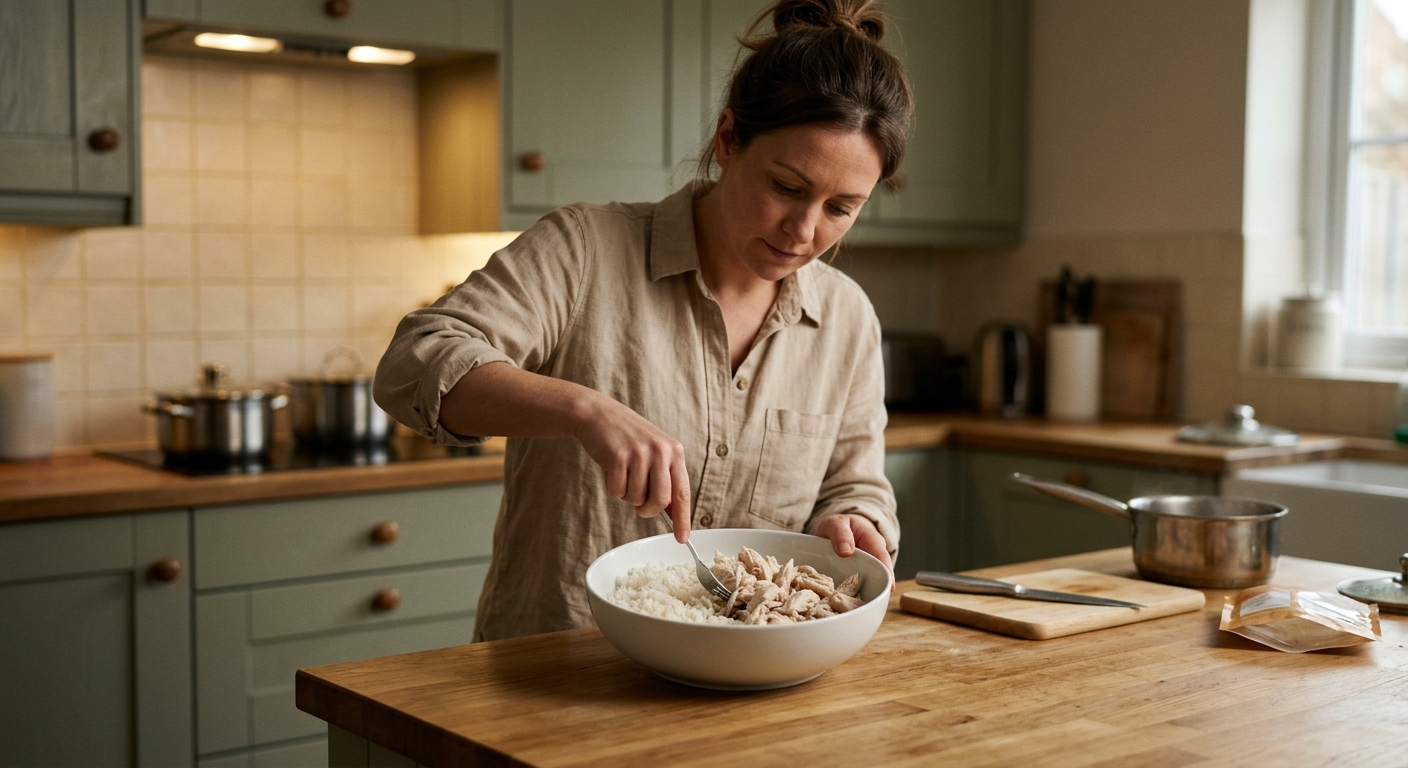
Every dog owner will eventually face the experience of a dog with an upset stomach — the telltale signs of vomiting, loose stools, loss of appetite, and lethargy that often resolve within a day or two with simple dietary management. Knowing exactly what to feed (and what not to feed) a sick dog, when to withhold food entirely, and how to transition back to regular food safely can make the difference between a rapid recovery and a prolonged digestive disturbance. This guide provides a complete, practical framework for managing mild to moderate gastrointestinal illness in dogs at home, with clear guidance on when veterinary attention is warranted.
When to Withhold Food First: The Fasting Question
For dogs with acute vomiting, a short period of food withholding — typically 6 to 12 hours for adult dogs — allows the gastrointestinal tract to rest and reduces the likelihood of continued vomiting triggered by food in the stomach. During this period, water must remain available. Withholding water risks dehydration, which compounds the problem.
Important exceptions to fasting: puppies under 6 months should not be fasted for more than 6 hours (risk of hypoglycemia). Diabetic dogs should not be fasted without veterinary guidance. If vomiting is severe or continues beyond 24 hours, do not continue fasting at home — seek veterinary attention. After the fasting period, introduce the bland diet gradually rather than offering a full meal immediately.
The Classic Bland Diet: Boiled Chicken and Rice
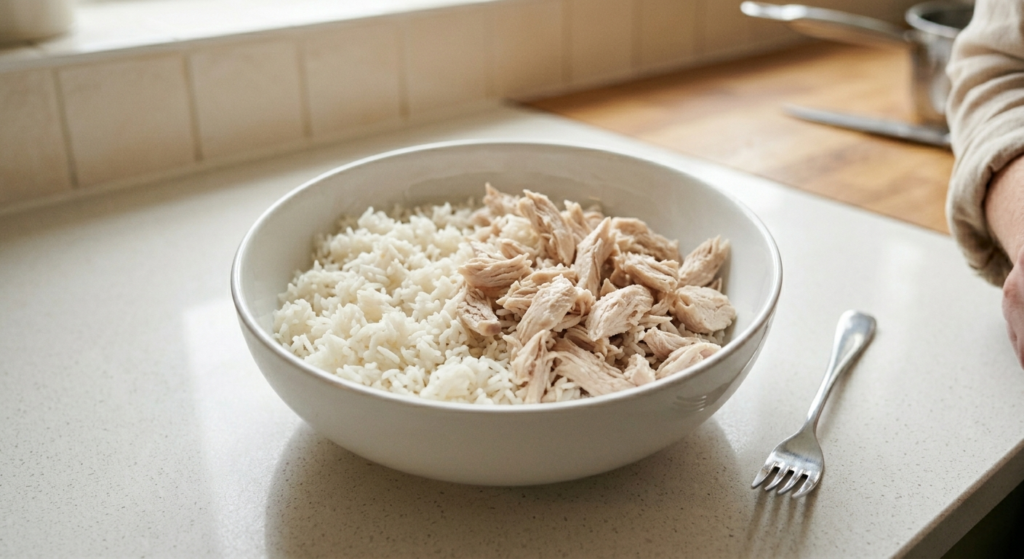
The boiled chicken and white rice combination is the most widely recommended bland diet for dogs with gastrointestinal upset, and its effectiveness has stood the test of decades of veterinary use. Here is why each component works:
Plain Boiled White Rice
White rice (not brown rice, which contains more fiber) is the ideal carbohydrate component for a sick dog’s diet because it is easily digestible, gentle on an irritated gut lining, low in fat, and helps firm up loose stools. The starch in white rice is absorbed early in the digestive process, reducing the fermentation and gas that can worsen gastrointestinal symptoms. Rice should be cooked in plain water with no salt, butter, or seasoning of any kind.
Plain Boiled Chicken Breast
Skinless, boneless chicken breast provides lean, highly digestible protein with minimal fat — exactly what an inflamed digestive tract can most easily process. The skin contains high amounts of fat that can worsen pancreatitis and diarrhea. Bones present a splintering risk. Cook by boiling in plain water — no stock, no seasoning, no garlic, no onion. Shred or chop into small pieces appropriate for your dog’s size.
Bland Diet Ratio and Portion Sizes
The standard ratio is 1 part cooked chicken to 3 parts cooked rice by volume. This ratio provides adequate easily-digestible protein while keeping fat low and providing the gut-soothing starchy base that white rice offers.
Portion guidance: offer approximately 25 to 30% of your dog’s normal meal quantity for the first feeding after the fasting period. If the dog tolerates this without vomiting, offer a second similarly-sized feeding 4 to 6 hours later. If the second feeding is also tolerated, gradually return to normal meal size over the next 24 hours, while continuing the bland diet.
- Small dogs (under 20 lbs): approximately 1/4 to 1/3 cup total per feeding, two to three times daily
- Medium dogs (20 to 50 lbs): approximately 1/2 to 1 cup total per feeding, two to three times daily
- Large dogs (50 to 90 lbs): approximately 1 to 1.5 cups per feeding, two to three times daily
- Giant breeds (over 90 lbs): approximately 1.5 to 2 cups per feeding, two to three times daily
Alternative Bland Diet Options
If chicken and rice is unavailable or your dog has a known chicken allergy, these alternatives provide similar digestibility:
- Plain boiled turkey breast (no skin) with white rice: very similar nutritional profile to chicken and equally well-tolerated
- Boiled lean ground beef (drained of all fat) with white rice: higher palatability for some dogs, equally digestible
- Plain boiled white fish (cod, tilapia, haddock) with white rice: excellent for dogs with poultry sensitivities
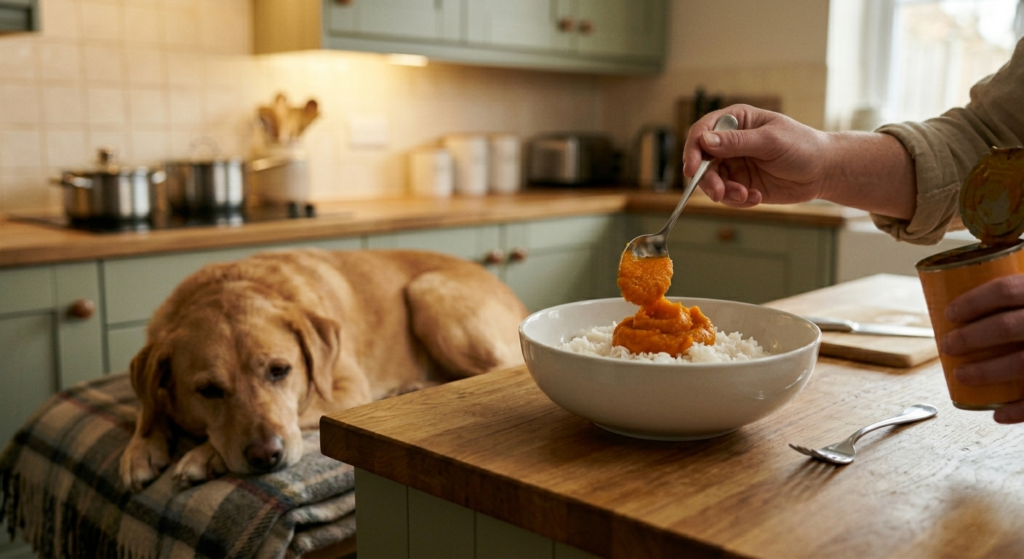
- Plain cooked plain pumpkin (canned, 100% pumpkin — not pumpkin pie filling): fiber-based approach particularly useful for diarrhea. The soluble fiber in pumpkin absorbs excess water in the intestine and helps normalize stool consistency. Offer 1 to 4 tablespoons per meal depending on dog size.
- Plain low-fat cottage cheese with white rice: good option for dogs who do not tolerate meat-based proteins well
Transitioning Back to Regular Food
Returning to regular food too quickly after gastrointestinal illness is one of the most common reasons for recurrence. A gradual transition over three to five days prevents the digestive system from being overwhelmed before full recovery:
- Days 1 to 2 of transition: 75% bland diet, 25% regular food
- Days 3 to 4: 50% bland diet, 50% regular food
- Day 5: 25% bland diet, 75% regular food
- Day 6 onward: full regular food
When the Bland Diet Is Not Enough: When to Call a Vet
Home management with a bland diet is appropriate for mild, self-limiting gastrointestinal upset. The following signs indicate that veterinary evaluation is needed:
- Vomiting that continues for more than 24 hours, or more than 3 to 4 episodes within 12 hours
- Diarrhea that contains blood or is black and tarry (digested blood — a serious sign)
- Signs of dehydration: gums that appear pale or sticky rather than pink and moist, skin that does not spring back quickly when gently pinched
- Significant lethargy, weakness, or abdominal pain
- Retching without producing vomit (possible bloat — an emergency)
- Your dog ate something potentially toxic or a foreign object that could cause obstruction
- Any gastrointestinal upset in puppies under 6 months (potentially serious more rapidly than in adults)
- Gastrointestinal symptoms alongside other signs: fever, weight loss, frequent episodes over several weeks
Frequently Asked Questions
How long should I feed my dog a bland diet?
Continue the bland diet for at least 24 hours after symptoms fully resolve (normal stools, no vomiting, normal appetite). Then transition back to regular food gradually over 3 to 5 days as described above.
Can I add probiotics to the bland diet?
Yes — dog-specific probiotic supplements (Purina Fortiflora, Proviable, Nutramax Proviable) can help restore healthy gut flora and may shorten recovery time. Do not use human probiotics, which are formulated for different bacterial strains than dogs need.
My dog won’t eat the bland diet. What should I do?
Some sick dogs have reduced appetite and will not eat readily. Try warming the food slightly to enhance aroma. If your dog refuses food for more than 24 hours and is showing other symptoms, contact your vet — persistent appetite loss alongside gastrointestinal symptoms may indicate a more serious condition.
Is brown rice okay instead of white rice?
White rice is preferred for sick dogs because its lower fiber content is easier on an irritated digestive tract. Brown rice’s higher fiber content, while healthier in normal circumstances, can worsen diarrhea in some dogs with GI upset. Stick to white rice for the bland diet.
Conclusion
The bland diet is one of the simplest and most reliable tools for managing mild gastrointestinal illness in dogs at home. Plain boiled chicken and white rice, offered in small frequent portions, gives the digestive tract the rest it needs to recover while providing adequate nutrition. The most important principles are: fast briefly if vomiting is present, introduce the bland diet gradually, transition back to regular food slowly, and recognize the signs that indicate a vet visit is more appropriate than home management. Most dogs with mild gastrointestinal illness recover fully within 24 to 72 hours on this approach.