
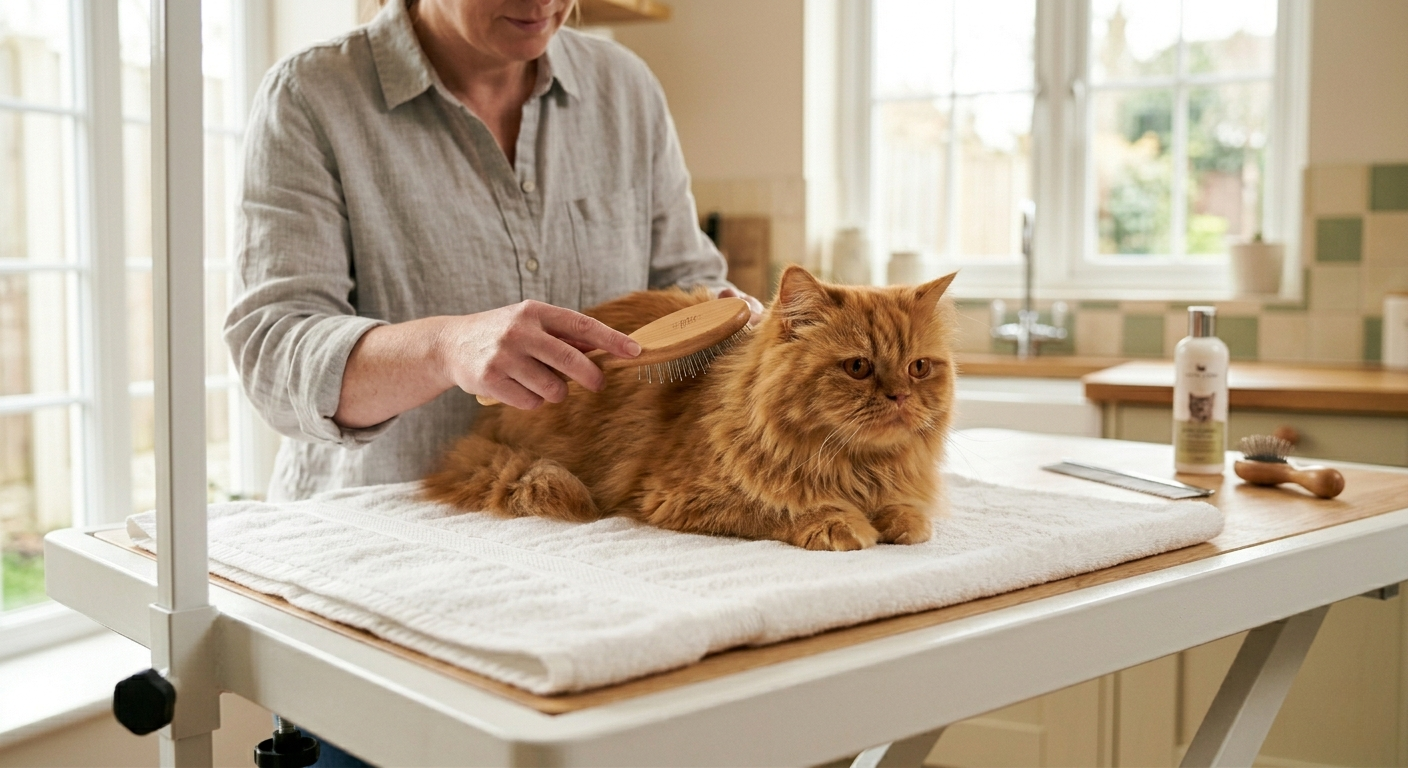
Cats are celebrated for their self-grooming abilities — a healthy adult cat spends up to five hours per day grooming themselves, maintaining a remarkably clean coat with minimal human intervention. But this does not mean cats require no grooming assistance. Long-haired cats are physically incapable of fully maintaining their coats without human help, and all cats benefit from regular nail trimming, ear monitoring, and dental care that are beyond what self-grooming provides. Regular grooming also gives you the opportunity to examine your cat’s skin, coat, ears, eyes, and nails closely — catching early signs of health problems before they become serious. This guide covers every component of cat home grooming for both short and long-haired cats.
Brushing: The Core of Cat Coat Care
Short-Haired Cats (Domestic Shorthairs, British Shorthairs, Bengals)
Short-haired cats are largely self-sufficient in coat maintenance, but weekly brushing provides meaningful benefits: removing loose hair before it ends up on furniture and in the cat’s stomach as hairballs, distributing natural skin oils for a healthy shine, and providing a grooming interaction that many cats find deeply pleasurable. Use a soft rubber de-shedding glove or a fine-tooth grooming comb for short coats. Most short-haired cats accept brushing readily when introduced gradually with positive reinforcement from kittenhood.
Long-Haired Cats (Persians, Maine Coons, Ragdolls, Norwegian Forest Cats)
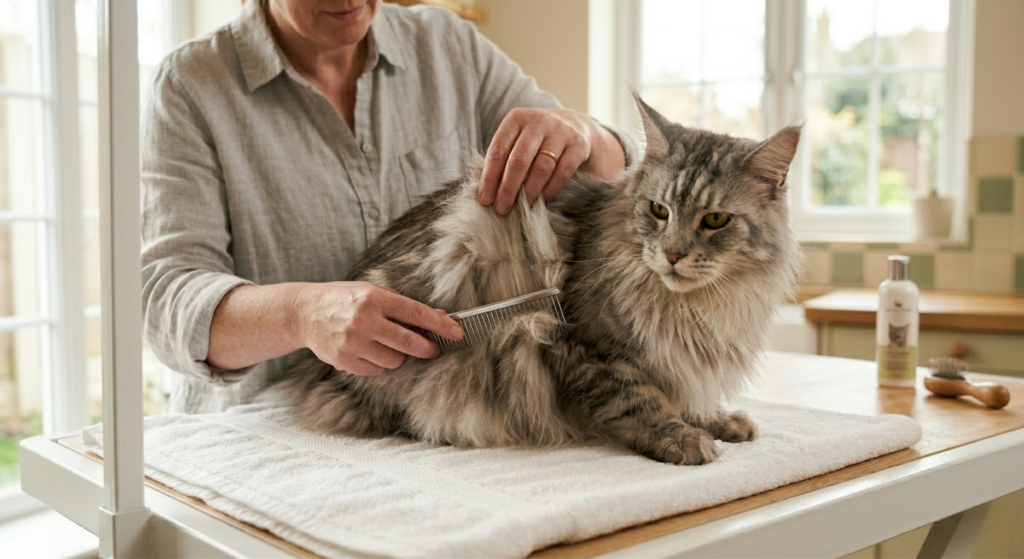
Long-haired cats require daily brushing without exception. Their coat grows faster than they can self-groom, and mats form rapidly in high-friction areas: behind the ears, under the armpits (in the ‘armpits’ of the front legs), around the collar area, in the groin, and at the base of the tail. A mat that is caught early (a soft tangle) can be worked out gently with a wide-tooth comb and a detangling spray. A tight, compacted mat that has been present for more than a few days often requires cutting out or professional groomer intervention to remove without causing skin damage. Allowing mats to develop to the point of requiring shaving is painful for the cat and entirely preventable with daily grooming.
- Tools for long-haired cats: wide-tooth comb for initial pass and mat detection, slicker brush for finishing, fine-tooth comb for checking high-friction areas
- Work systematically in sections, holding the hair above the section being brushed to avoid pulling the skin
- Never attempt to brush through a tight mat — use a seam ripper or mat splitter to split the mat into smaller sections before attempting to brush out
- Apply detangling spray to mats before working on them to reduce friction and discomfort
Nail Trimming: Essential and Easier Than Most Owners Fear
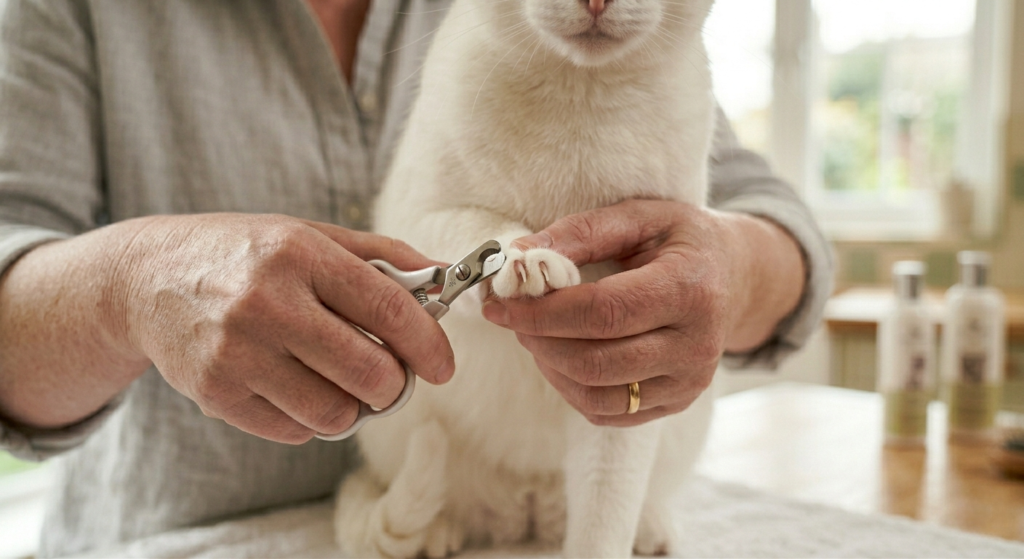
Cat nails grow continuously and require trimming every two to three weeks. Overgrown nails curve and can grow into the paw pad — a painful condition requiring veterinary treatment. Cats with overgrown nails also catch them more easily on fabric and carpet, creating risk of nail tearing injuries.
Equipment: small, sharp cat nail clippers with a scissor or guillotine mechanism. Human nail clippers are technically usable for young cats but tend to crush rather than cut cleanly. Dedicated cat nail clippers with a curved blade cut more cleanly.
Technique: gently press the toe pad between your thumb and index finger to extend the claw. The clear, curved tip of the nail beyond the pink quick (blood vessel) is the safe zone for trimming. Cut only the clear, hooked tip — never into the pink area. If your cat has dark nails and the quick is not visible, trim only the very tip in 1 mm increments. Keep styptic powder available for any accidental quick cuts. For cats that strongly resist nail trimming, a two-person approach (one to hold gently, one to trim) or trimming one paw per session over four sessions reduces stress significantly.
Ear Care: What to Check and When to Clean
A healthy cat’s ears are pale pink, have no odor, and have a minimal amount of light-colored waxy debris. Check your cat’s ears weekly and clean only when debris is visible — over-cleaning a healthy ear removes protective wax and can cause irritation. Use a veterinarian-approved ear cleaning solution and a cotton ball — never a cotton swab inside the canal. Apply a few drops of cleaning solution, massage the base of the ear briefly, then gently wipe the visible outer canal with the cotton ball. Seek veterinary attention if you notice dark crumbly debris (ear mites), odor, redness, or your cat is scratching at the ears.
Bathing: Rarely Needed, but Here Is How
Most cats do not require baths. Their self-grooming is sufficient for normal hygiene, and bathing causes significant stress in most cats. The situations where bathing is appropriate include: the cat has come into contact with something genuinely toxic or difficult to self-clean, the cat has a skin condition requiring medicated shampoo prescribed by your vet, or the cat is being prepared for a show. If a bath is necessary:
- Trim nails before bathing — this is important for your safety.
- Place a non-slip mat in the basin or sink.
- Use lukewarm water — not hot, not cold.
- Use only cat-specific shampoo — human shampoo disrupts feline skin pH.
- Wet the coat thoroughly, apply shampoo, massage gently, and rinse very thoroughly.
- Wrap in a warm towel immediately and keep the cat warm during drying. Most cats will not tolerate a blow dryer — a warm room with towel drying is often sufficient.
- Keep calm and handle gently throughout. Never restrain forcefully — this creates lasting fear of bathing.
Dental Care: The Most Neglected Grooming Task
Dental disease affects 70% of cats by age 3. Daily tooth brushing with cat enzymatic toothpaste and a small cat toothbrush is the most effective home dental care. Introduce gradually — start by letting the cat lick the toothpaste, then introduce the brush over days to weeks. Even 30 seconds of daily brushing provides substantial benefit over no brushing. Supplement with Veterinary Oral Health Council (VOHC)-approved dental treats or water additives when brushing is not possible.
Frequently Asked Questions
My cat hates being groomed. What can I do?
Introduce all grooming activities gradually using very high-value treats at every step. Keep sessions extremely short initially — even 30 seconds of calm brushing rewarded generously builds positive association over time. For cats with strong grooming resistance, working with a Fear Free certified groomer or veterinarian can help develop a manageable routine.
How do I know if my cat has a mat?
Run a wide-tooth comb through the coat in all areas. A mat will stop the comb — you will feel resistance. Early mats feel like a soft tangle; advanced mats feel like a dense, compact clump close to the skin. Check behind the ears, under the armpits, in the groin, and at the collar line weekly for long-haired cats.
Can I shave my cat in summer to keep them cool?
Healthy cats do not need shaving for temperature regulation — their coat actually provides insulation against both cold and heat. Shaving removes this protection and can cause sunburn, skin irritation, and coat damage. Exceptions: medically necessary shaving prescribed by a vet, or shaving to address a severely matted coat that cannot be safely brushed out.
What age should I start grooming my kitten?
Start from 8 to 10 weeks of age — as early as possible. The socialization period (3 to 14 weeks) is the optimal window for building positive associations with handling, brushing, nail trimming, and ear touching. Kittens introduced to these experiences early become the easiest adult cats to groom.
Conclusion
Regular home grooming is one of the most valuable things you can do for your cat’s health and your relationship with them. It provides a thorough weekly health check, prevents the painful consequences of mat formation and overgrown nails, supports dental health that significantly affects lifespan and quality of life, and builds a touching, trusting interaction between cat and owner. Invest the time to introduce grooming positively from kittenhood, use the right tools for your cat’s coat type, and make each session brief and rewarding. The payoff is a healthy, comfortable cat who accepts handling with ease.