
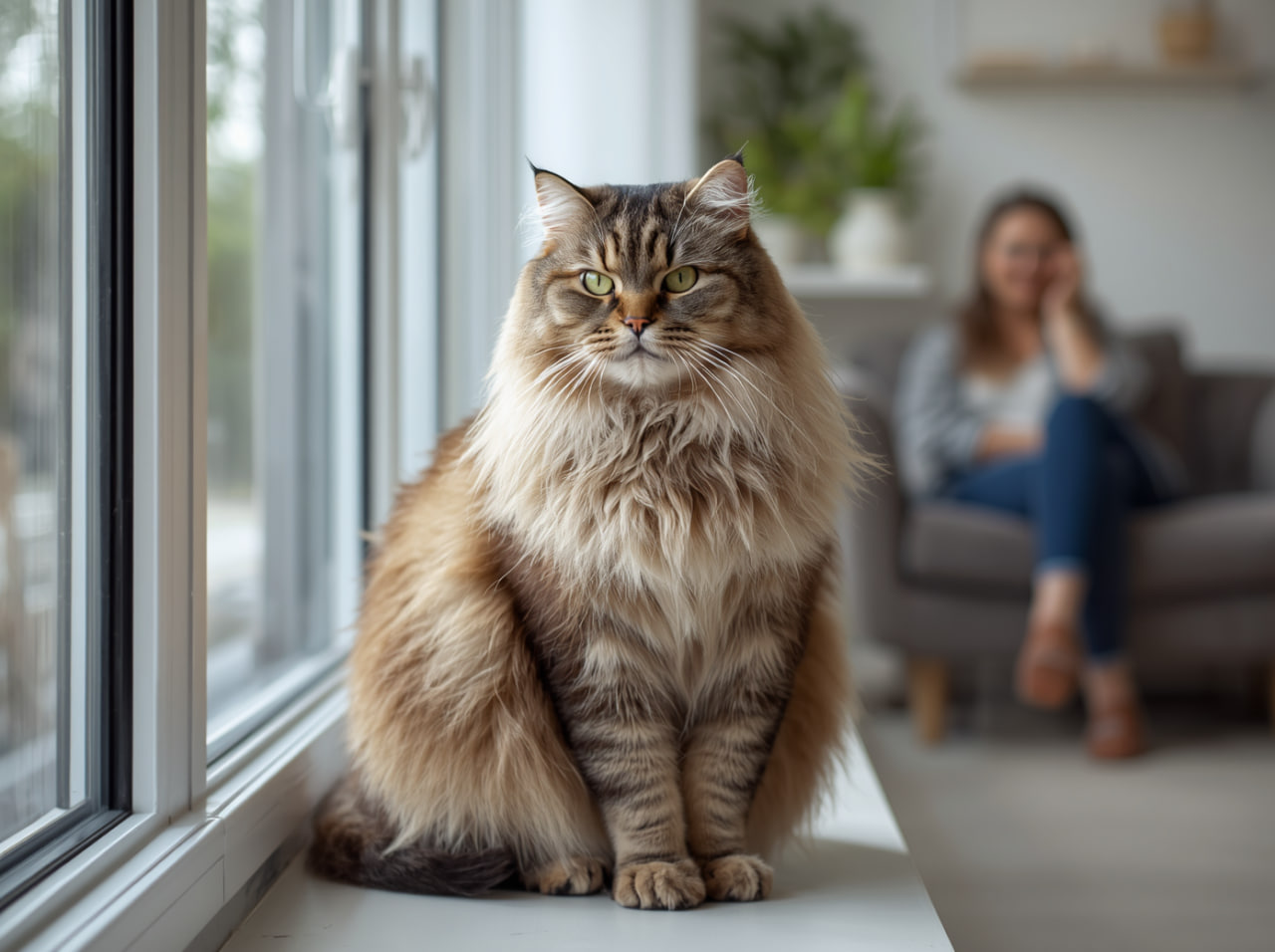
Cat allergies affect approximately 10 to 20% of the global population, making cats the second most common cause of pet-related allergic reactions after dogs. For cat lovers with allergies, the idea of a hypoallergenic cat — one that causes little or no allergic reaction — is enormously appealing. The good news is that while no cat is completely allergen-free, certain breeds do produce significantly lower levels of the primary cat allergen, and combined with smart home management strategies, many allergy sufferers can successfully live with these cats. Here is what the science says and which breeds are worth considering.
What Causes Cat Allergies? It Is Not the Fur
The most common misconception about cat allergies is that they are caused by cat fur. They are not. The primary allergen responsible for the majority of cat allergy reactions is a protein called Fel d 1 — short for Felis domesticus allergen 1. Fel d 1 is produced primarily in cats’ sebaceous glands (in the skin) and salivary glands, and is also present in urine and dander (dead skin cells). When cats groom themselves — which they do for several hours daily — Fel d 1 from saliva coats the fur. As the saliva dries, the Fel d 1 protein binds to microscopic particles of fur and dander that become airborne and settle on every surface in the home. These particles are extraordinarily light, small, and sticky — they can remain airborne for hours and persist on surfaces for months.
This is why no cat is truly allergen-free — all cats produce Fel d 1 to some degree. However, there is significant variation between individual cats and between breeds in how much Fel d 1 they produce, and this variation is what makes some cats more manageable for allergy sufferers than others.
The Best Hypoallergenic Cat Breeds
1. Siberian
The Siberian is consistently ranked as the top recommendation for allergy sufferers who want a cat with a full, beautiful coat. Multiple independent studies have found that Siberians produce measurably lower levels of Fel d 1 than most other breeds. Many allergy sufferers who react to other cats report minimal or no reaction to Siberians. They are large, affectionate, playful, and dog-like in their social behavior — following their owners around and enjoying interactive play. The coat is long but surprisingly low-maintenance, requiring brushing two to three times per week.
2. Balinese
The Balinese is a longhaired relative of the Siamese that produces lower Fel d 1 levels than most breeds. They are highly social, vocal, and intelligent — sharing the Siamese’s communicative personality with a silkier coat. Balinese are known for forming intense bonds with their owners and following them throughout the house. Their coat, despite appearing luxurious, sheds less than many shorter-coated breeds and requires only weekly brushing.
3. Sphynx
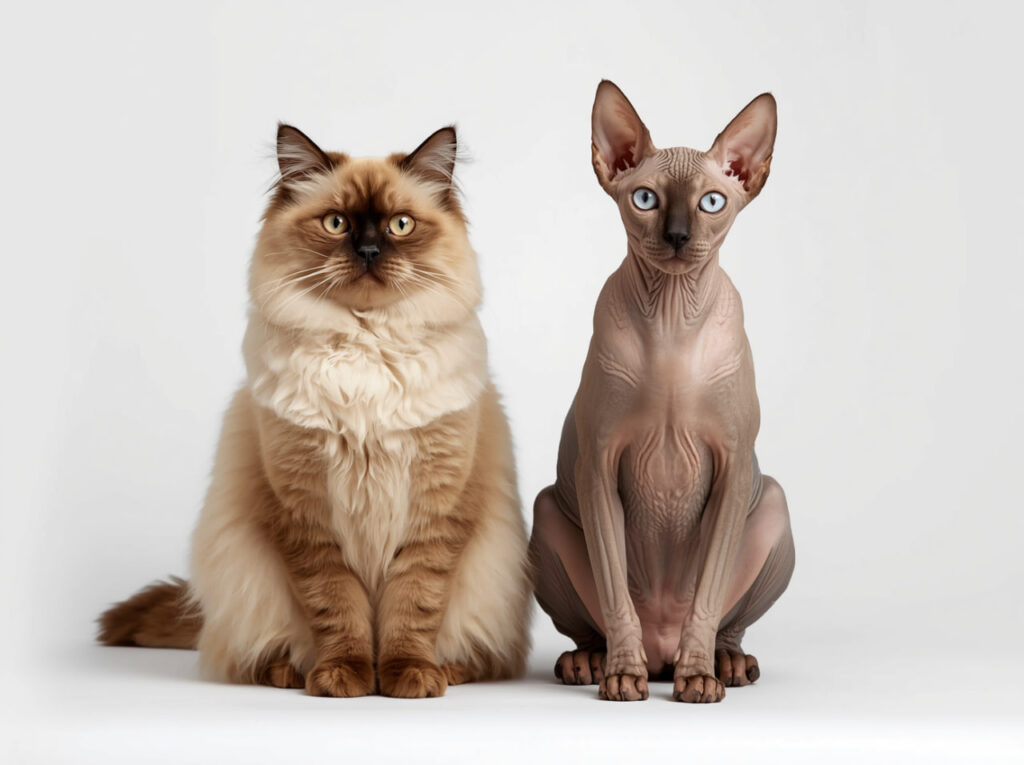
The hairless Sphynx is often assumed to be the gold standard for allergy sufferers because they have no fur — but this assumption is partially incorrect. Sphynx cats still produce Fel d 1 (it is a skin and saliva protein, not a fur protein). Their advantage is that without fur, the Fel d 1 does not attach to airborne hair particles and spread as readily throughout the home. However, they do require weekly baths to remove skin oil buildup, which can itself contain allergens. Sphynx cats are demanding, affectionate, energetic, and almost dog-like in their need for constant interaction.
4. Devon Rex
The Devon Rex has a very short, fine, curly coat that sheds minimally compared to most cat breeds. Less shedding means less airborne Fel d 1 distribution throughout the home. Devon Rex cats are known for their large ears, impish facial features, and highly interactive, clownish personality. They are energetic, social, and love to perch on their owner’s shoulder.
5. Cornish Rex
Similar to the Devon Rex in coat structure, the Cornish Rex has an even shorter, wave-like coat with almost no guard hairs (the longer outer layer of most cat coats). This results in minimal shedding. Cornish Rex are slender, athletic, and playful — they remain kitten-like in energy and personality well into adulthood.
6. Russian Blue
The Russian Blue is believed to produce lower than average Fel d 1 levels, making it another frequently recommended option for allergy sufferers. Their distinctive double coat is short, dense, and plush — and they are known to shed only seasonally rather than year-round. Russian Blues are gentle, reserved, quiet, and deeply loyal to their primary person. They are not typically lap cats but form strong attachments and enjoy proximity.
7. Bengal
Bengals have a short, fine, pelt-like coat that they maintain through self-grooming with minimal shedding. While they are not as well-documented for low Fel d 1 production as Siberians or Balinese, their reduced shedding means less allergen distribution. Bengals are active, highly intelligent, and demanding — they require significant daily mental and physical engagement and are not recommended for first-time cat owners.
Science-Backed Home Management Strategies for Cat Allergy Sufferers
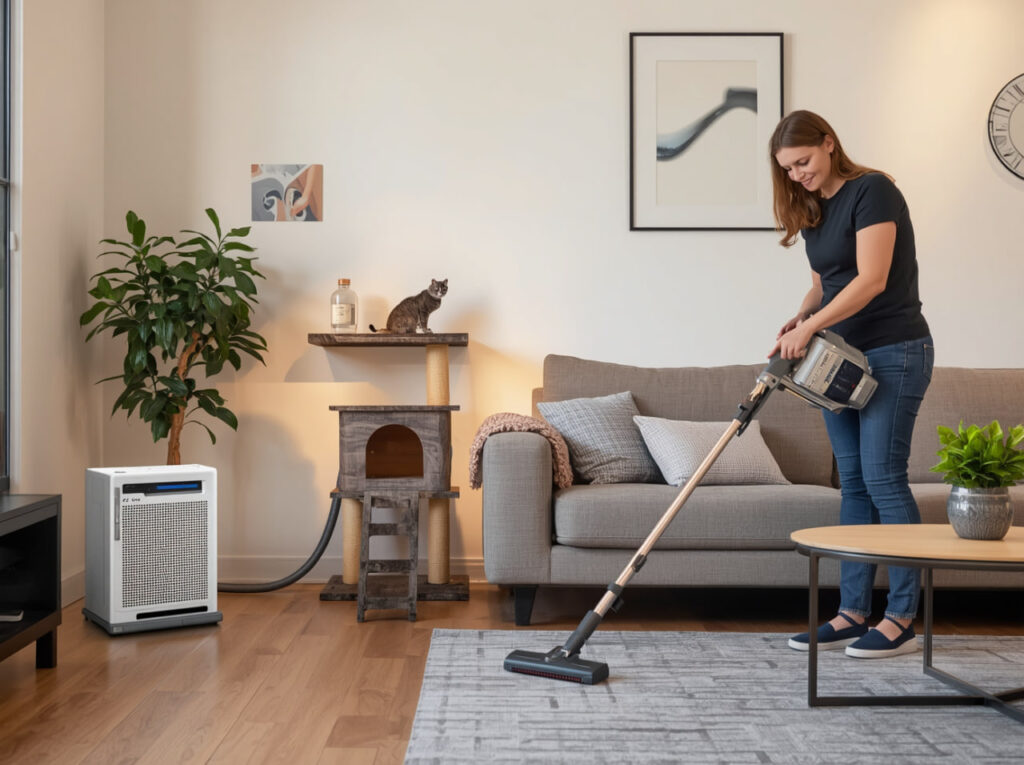
Even with a lower-allergen breed, additional environmental management dramatically improves the experience for allergy sufferers:
- Keep the bedroom a strictly cat-free zone: you spend eight hours a day in your bedroom — making it an allergen sanctuary has an outsized impact on total allergen exposure and symptom severity.
- Run a HEPA air purifier continuously in the main living areas: HEPA filters capture particles down to 0.3 microns — well below the size of Fel d 1-carrying particles.
- Vacuum all soft furnishings, carpets, and upholstery two to three times per week using a HEPA-filtered vacuum cleaner.
- Wash bedding, curtains, and soft furnishings at 60°C (140°F) weekly — this temperature kills allergen proteins.
- Bathe your cat monthly if they tolerate it — bathing removes surface Fel d 1 from the coat and skin temporarily.
- Replace carpets with hard flooring where possible — allergens accumulate and persist far more readily in carpet fibers.
- Wash your hands after touching your cat and avoid touching your face before washing.
- Consider Purina Pro Plan LiveClear — a commercially available cat food shown in peer-reviewed clinical trials to reduce the active Fel d 1 in cat saliva by an average of 47% when fed consistently, by neutralizing the allergen in the cat’s mouth.
Should You Get an Allergy Test Before Choosing a Breed?
Yes — strongly recommended. An allergist can confirm whether you are specifically allergic to Fel d 1 (the primary cat allergen) or to other components, assess the severity of your reaction, and discuss options including allergen immunotherapy (allergy shots), which can reduce sensitivity to cat allergens significantly over a three to five year course of treatment. Spending time with a cat of the specific breed you are considering before adopting — ideally in the home of an owner — is also the most reliable way to assess your personal reaction, since Fel d 1 levels vary between individual cats within a breed.
Frequently Asked Questions
Are male or female cats more allergenic?
Intact (unneutered) males produce the highest levels of Fel d 1. Spayed females produce the least. Neutered males fall in between. If you have cat allergies, always adopt a spayed or neutered cat for the lowest possible allergen exposure.
Can you build immunity to your own cat over time?
Some people report reduced symptoms after months or years of living with the same cat. This may reflect a degree of tolerance developing, but it is not guaranteed, and severe allergies can actually worsen with prolonged exposure. Allergy immunotherapy under the guidance of an allergist is a more reliable approach to building genuine tolerance.
Is a Sphynx really better for allergies than a fluffy cat?
Not necessarily. A Siberian with a full coat but naturally low Fel d 1 production may cause fewer reactions than a Sphynx with average production. Allergen levels depend primarily on how much Fel d 1 a cat produces, not how much hair they have.
What is Purina LiveClear and does it work?
Purina Pro Plan LiveClear is a cat food that contains a specific egg product protein that binds to and neutralizes Fel d 1 in the cat’s saliva. A randomized, double-blind clinical trial published in the Journal of Allergy and Clinical Immunology found it reduced active Fel d 1 in cat saliva by an average of 47% within three weeks of daily feeding. It is not a cure for cat allergies, but it is a meaningful additional tool in a comprehensive allergen management approach.
Conclusion
Living happily with a cat when you have allergies is genuinely achievable — but it requires a thoughtful approach. Choosing a breed with documented lower Fel d 1 production, implementing smart home management strategies, and potentially pursuing allergy immunotherapy gives you the best chance of a comfortable life with a feline companion. Always spend time with the specific cat you plan to adopt before making a commitment, and work with both an allergist and a cat-experienced breeder or rescue organization to make the best possible match for your situation.