
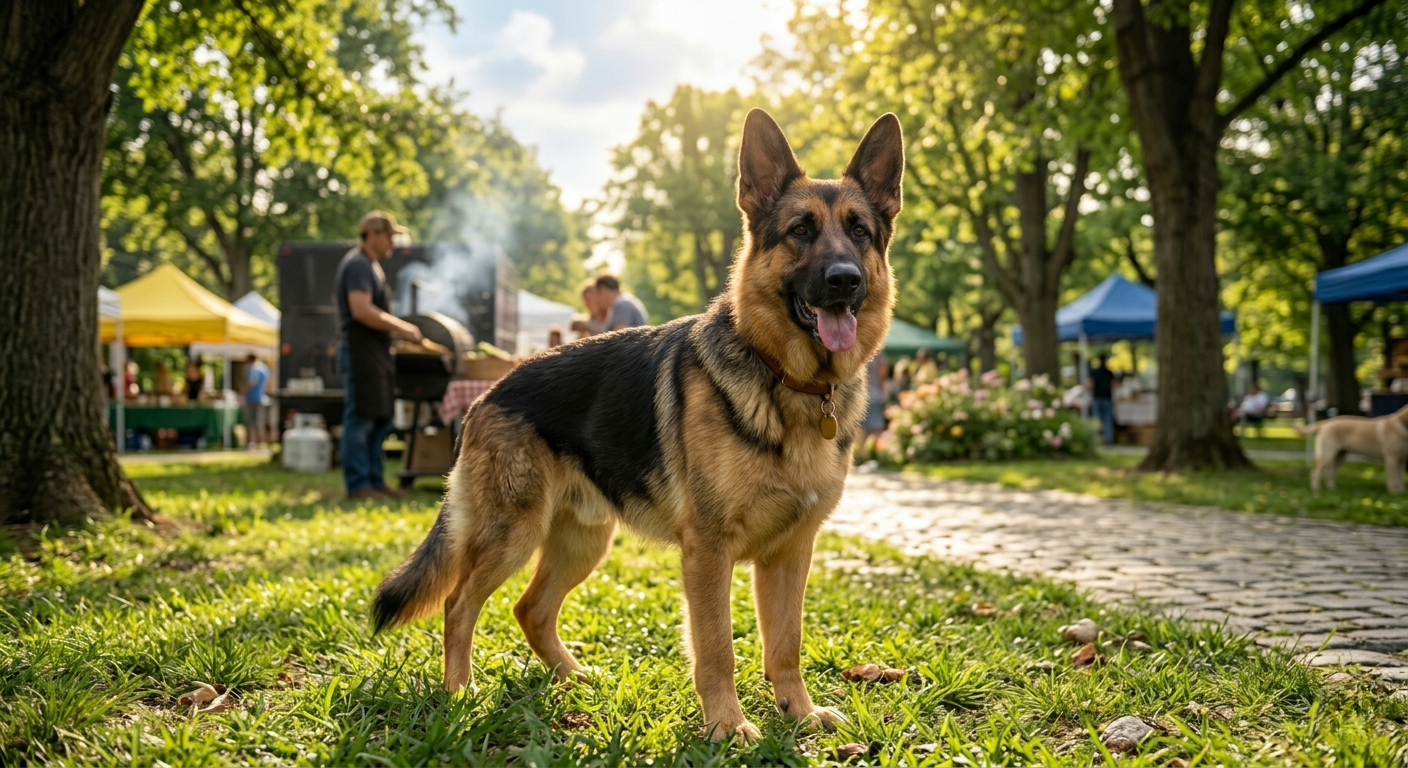
Dogs communicate constantly and fluently — but in a language that requires translation for humans. Unlike human communication, which relies primarily on verbal language, canine communication is almost entirely physical: a nuanced, sophisticated system of postures, movements, facial expressions, and micro-signals that convey emotional state with remarkable precision. Dogs who live with humans that understand their communication language experience dramatically reduced stress and misunderstanding, while owners who can accurately read their dog’s signals respond more appropriately and build stronger, more trusting relationships. This guide covers the core elements of canine body language — from obvious displays to the subtle signals most owners miss.
The Fundamental Principle: Read the Whole Dog
The single most important concept in canine body language interpretation is that no individual signal can be read accurately in isolation. A wagging tail does not mean a dog is happy — it means the dog is aroused or emotionally activated, which can mean happy, anxious, frustrated, or predatorily focused depending on every other signal the dog is simultaneously displaying. A dog showing its teeth is not necessarily aggressive — it may be engaging in a ‘submissive grin’ of greeting. A yawn is not necessarily tiredness — it is commonly a displacement behavior signaling mild stress or discomfort. Read every signal in the context of all other signals, the environment, and what just happened.
Tail: The Emotional Barometer
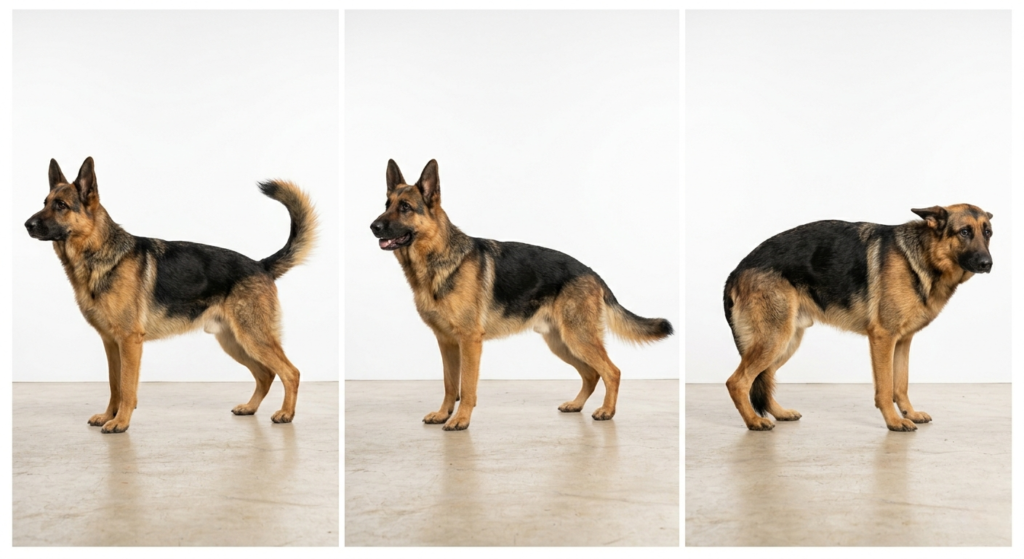
The tail communicates the dog’s arousal level and emotional state through two independent variables: height (relative to the spine) and movement pattern.
Tail Height
- High (above spine level): elevated arousal, confidence, dominance, or alertness. In conjunction with other tense signals, this can indicate threat or aggression.
- Natural or slightly below spine level: relaxed and comfortable baseline for most breeds.
- Low (approaching between legs): anxiety, fear, submission, or discomfort. The further under the body, the greater the anxiety.
- Completely tucked between legs: intense fear, severe stress, or pain.
Tail Movement
- Broad, sweeping wag at mid-height: genuinely happy, relaxed, friendly — the classic ‘happy dog’ tail.
- Rapid, stiff wag at high position: high arousal — possibly happy excitement, but potentially frustration or pre-aggression in a tense context.
- Small, slow wag at low position: uncertainty, appeasement, or mild anxiety.
- Helicopter wag (circular): seen in extremely joyful greetings — unmistakably positive.
- Tail stiffly erect with no movement: alert focus or potential threat — watch other signals carefully.
Ears: The Direction of Attention
- Relaxed and natural (breed-specific baseline): comfort and calm. Baseline varies enormously by breed — a Beagle’s natural ear position differs completely from a German Shepherd’s.
- Forward and erect: focused attention, curiosity, alertness.
- Slightly forward: mild interest or gentle alertness.
- Rotated sideways or back: mild apprehension or uncertainty.
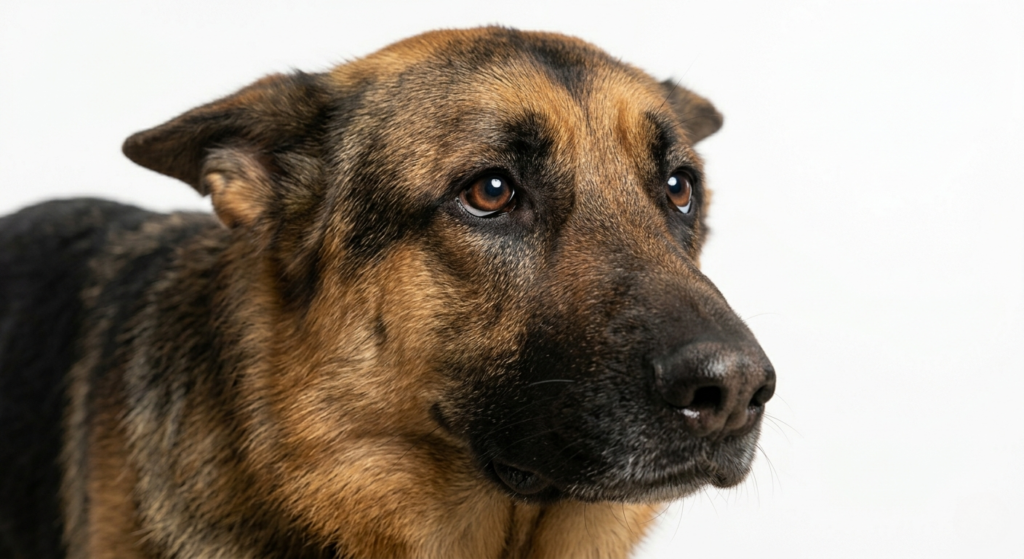
- Fully flattened against the skull: significant fear, extreme submission, or severe aggression in some contexts. This is one of the clearest stress signals in dogs.
Eyes: Softness, Hardness, and the Whale Eye
- Soft eyes (normal pupil size, no visible whites, relaxed orbital area): relaxed and comfortable.
- Hard eyes (pupils dilated, orbital muscles tense, fixed gaze): intense focus, arousal, potential threat. Hard eyes combined with a freeze are one of the most important warning signals to recognize.
- Slow blinking or squinting: contentment, affection, or appeasement.
- Whale eye (whites of the eyes visible in a crescent shape at the corner or edge): a classic stress signal. Often seen when a dog is uncomfortable with close approach, handling, or resource presence but does not feel able to move away.
- Avoiding eye contact (looking away): active appeasement signal, or stress coping behavior.
- Sustained, unblinking eye contact: dominance, challenge, or threat.
Mouth and Face
- Open mouth, loose lips, tongue lolling out: relaxed, comfortable, often panting from exercise or heat.
- Closed mouth in a normally panting dog: sudden tension, focus, or mild concern.
- Lip licking (not food-related): one of the most reliable early stress indicators. Often appears in veterinary settings, during uncomfortable handling, or in low-level conflict situations.
- Yawning (not sleepiness context): displacement behavior — a self-calming signal the dog displays when mildly stressed or uncertain. Also used as a calming signal toward other dogs and humans.
- Showing front teeth without wrinkling the muzzle (submissive grin): greeting behavior in some dogs — not aggression, but can be misread.
- Wrinkling the muzzle, retracting lips to show canine teeth: warning signal — do not approach or reach toward the dog.
Overall Posture: Forward vs Backward
One of the clearest high-level signals in canine body language is whether the dog is leaning forward or backward:
- Weight forward, body tall and slightly stiff: confidence, alertness, potential threat or challenge. Height is a deliberate signal of status.
- Weight centered, relaxed muscles, soft movement: comfortable, neutral, non-threatening.
- Weight backward, body low, possibly rolling onto side: appeasement, submission, anxiety.
- Play bow (front end down, back end up, tail wagging): universal invitation to play — one of the most positive and unambiguous signals in canine communication.
- Freeze (complete stillness in an otherwise tense body): one of the most important warning signals. A dog that freezes during handling, resource guarding, or in a tense encounter is on the edge of reacting.
Calming Signals: Communication You May Be Missing
Norwegian dog trainer Turid Rugaas identified a category of signals dogs use to de-escalate tension — in themselves and in other animals — called calming signals. Recognizing these helps you understand when your dog is experiencing stress and when they are attempting to communicate non-threat to another dog or person:
- Turning the head away or averting gaze: ‘I am not a threat, please relax’
- Sniffing the ground: displacement behavior and de-escalation — often seen when two dogs approach and one is uncomfortable
- Moving in a curve rather than straight toward another dog: polite canine greeting approach that reduces frontal tension
- Sitting or lying down in a tense situation: appeasement and de-escalation
- Shaking off when not wet: resetting after a stressful moment — watch for this immediately after a tense interaction
Frequently Asked Questions
Is a wagging tail always a sign of a friendly dog?
No — a wagging tail indicates emotional activation, not necessarily friendliness. A high, stiff wag combined with a tense body, hard eyes, and forward weight is a warning signal, not an invitation. Always read the tail wag in the context of the full body.
My dog growls sometimes. Should I punish the growl?
Never punish a growl. Growling is critical communication — it is the dog telling you or another animal that they are uncomfortable and escalation may follow. Punishing a growl suppresses the warning signal without addressing the underlying discomfort. A dog that has had growling punished will bite without warning. Instead, address the source of discomfort through management and behavioral support.
How can I tell if dogs playing together are genuinely having fun?
Healthy play is characterized by self-handicapping (bigger dog lying down for smaller dog), role reversal (taking turns chasing), frequent pauses and resets, loose body movements, and both dogs returning to the interaction voluntarily after breaks. Concerning play shows one dog consistently pinning the other, one dog that never gets a break and shows distress signals, or escalating intensity without pauses.
My dog seems happy but growls when I approach their food bowl. What does this mean?
Resource guarding is a normal canine behavior — growling at the bowl is clear communication that the dog is uncomfortable with approach during eating. Manage the environment (feed in a separate space) and work with a certified trainer on a desensitization protocol. Never punish resource guarding — it creates a dog that bites without warning.
Conclusion
Understanding dog body language is one of the most rewarding skills a dog owner can develop. It transforms your relationship with your dog from one of guesswork and misunderstanding to genuine two-way communication. Start by observing your own dog daily — note their baseline in relaxed, comfortable situations so you can recognize departures from normal. Then build your vocabulary of signals gradually, always remembering the fundamental rule: read the whole dog, not isolated signals. The more fluently you read your dog’s language, the more effectively you can support their wellbeing and respond to their needs.