
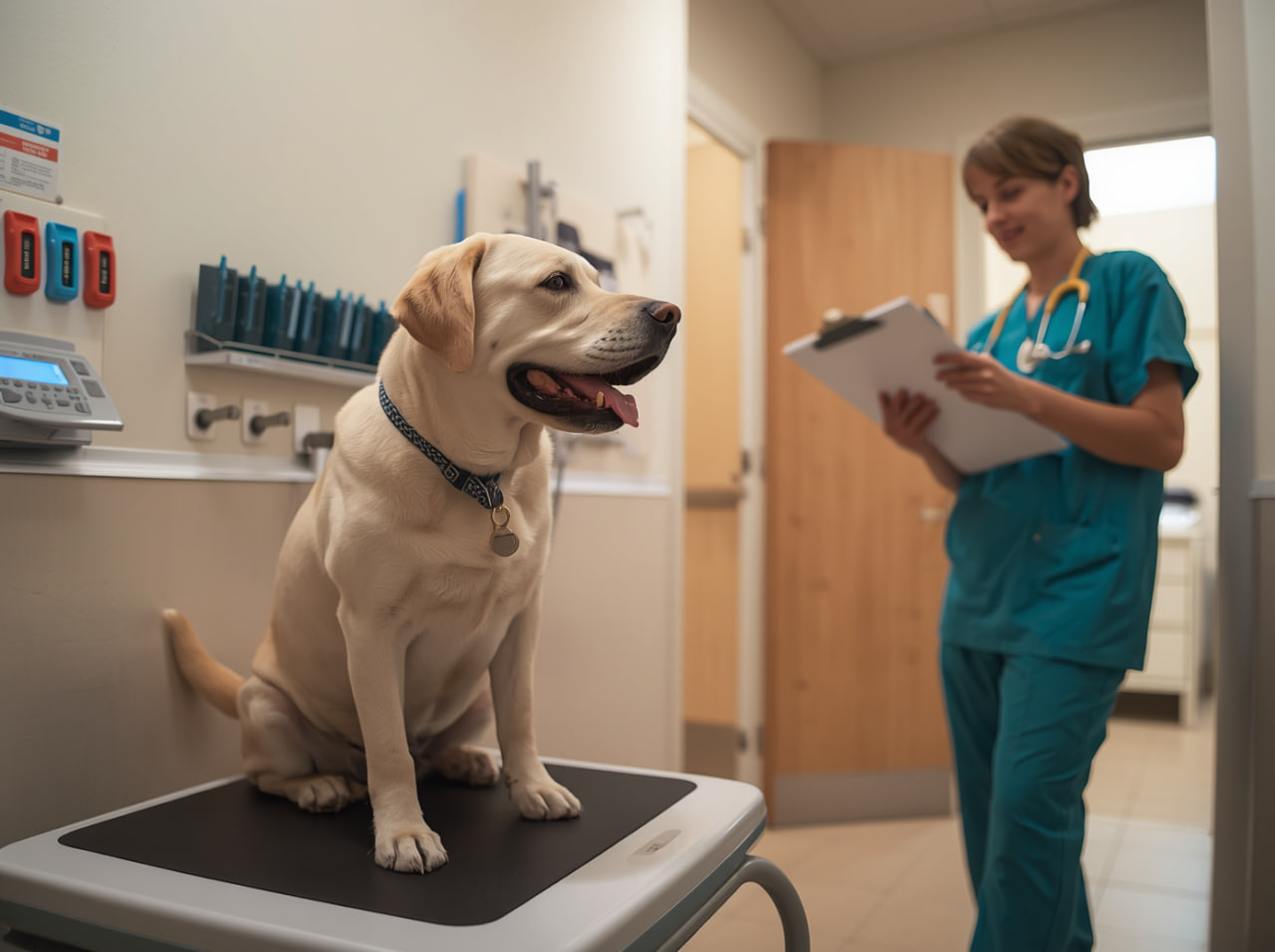
Canine obesity has reached epidemic proportions. According to the Association for Pet Obesity Prevention, over 55% of dogs in the United States are currently classified as overweight or obese — and the numbers are similar in the UK, Australia, and Canada. This is not a cosmetic issue. Excess weight in dogs directly contributes to joint disease, diabetes, cardiovascular problems, reduced life expectancy, and a measurably lower quality of life. The encouraging news is that dogs respond very well to appropriate dietary and exercise interventions, and most overweight dogs can reach and maintain a healthy weight within six to twelve months with a structured approach. This guide provides that structure, step by step.
How to Tell If Your Dog Is Overweight: The Body Condition Score
Before starting a weight loss program, accurately assess your dog’s current body condition. Veterinarians use the Body Condition Score (BCS) — a standardized scale typically rated from 1 to 9, with 4 to 5 representing ideal condition. Here is how to perform a basic at-home assessment:
- Ribs: run your hands firmly along your dog’s ribcage. You should be able to feel individual ribs easily, with a slight layer of tissue over them — like pressing your fingers over the back of your hand. If you cannot feel the ribs without significant pressure, your dog is overweight.
- Waist: look at your dog from directly above. Behind the ribcage, there should be a visible narrowing — a waist. Absence of a waist, or a barrel-shaped trunk from above, indicates excess weight.
- Belly tuck: look at your dog from directly side-on. The abdomen should tuck upward behind the ribcage, not hang level with it or drop below it.
- Base of tail: run your fingers along the base of the tail. You should be able to feel the tail vertebrae. If they are difficult to feel through a thick layer of fat, your dog is overweight.
A score of 6 or 7 indicates overweight, and 8 or 9 indicates obese. If you assess your dog as a 6 or above, the steps below will help. Dogs at 8 or 9 on the BCS benefit most from a full veterinary consultation and potentially a prescription weight management diet.
Step 1: Rule Out Medical Causes First
This step is important and frequently skipped. Some weight gain in dogs is caused by underlying medical conditions — most commonly hypothyroidism (underactive thyroid), Cushing’s disease (hyperadrenocorticism), or certain medications including steroids. These conditions require medical treatment, and dietary restriction alone will have limited effect until the underlying condition is managed. Schedule a veterinary visit that includes bloodwork before implementing a significant dietary change, particularly for dogs who have gained weight rapidly without a clear dietary explanation.
Step 2: Calculate Your Dog’s Calorie Target
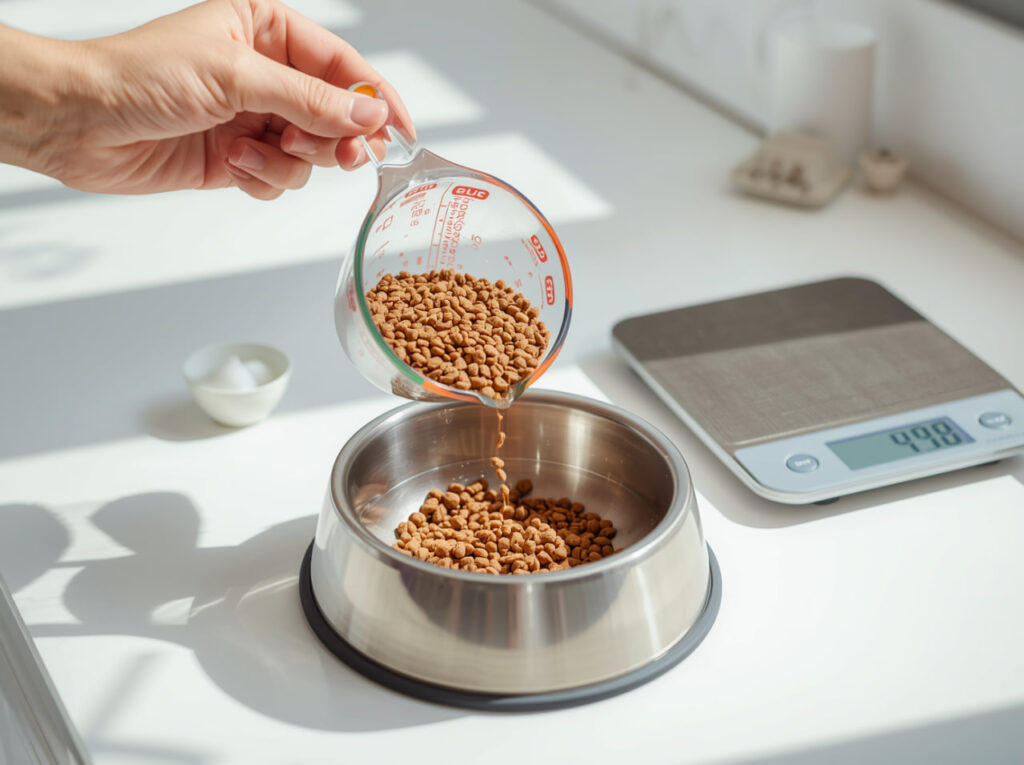
To lose weight, your dog needs to consume fewer calories than they burn. The starting point is calculating the appropriate calorie intake for your dog’s ideal target weight — not their current weight. Your veterinarian can calculate this precisely, or you can use the following rough framework as a starting point:
- Calculate your dog’s Resting Energy Requirement (RER): RER (calories/day) = 70 × (ideal body weight in kg)^0.75
- For weight loss, feed approximately 80% of this RER to create a calorie deficit without triggering muscle loss.
- Divide this total into two or three meals per day rather than one — multiple smaller meals support better metabolic function and help the dog feel less hungry.
- Include calories from all sources — treats, toppers, chews — in this daily total.
Step 3: Choose the Right Weight Loss Food
Not all dog foods are equally effective for weight loss. When evaluating options, look for these characteristics:
- High protein content: at least 25–30% protein on a dry matter basis. High-protein diets support muscle mass preservation during calorie restriction — critical because muscle mass supports metabolism.
- Moderate, controlled fat: fat is calorie-dense. Weight loss foods are formulated with lower fat content to allow larger volumes of food for fewer calories.
- Higher fiber: dietary fiber increases satiety, helping your dog feel fuller between meals and reducing food-seeking behavior.
- Named whole protein source as first ingredient: ‘chicken,’ ‘salmon,’ ‘beef’ — not ‘meat meal’ or ‘poultry by-product.’
- Prescription weight management foods: for dogs more than 20% above their ideal weight, veterinary-prescribed options like Hill’s Prescription Diet Metabolic, Purina Pro Plan Veterinary Diets OM, or Royal Canin Satiety Support may be recommended. These are significantly more effective for severe obesity than over-the-counter ‘lite’ foods.
Step 4: Replace High-Calorie Treats
Treats are often the hidden culprit in canine weight gain. Many commercial dog treats are calorie-dense, and owners frequently underestimate how much they give throughout the day. During a weight loss program:
- Replace high-calorie commercial treats with low-calorie vegetable alternatives: baby carrots (approximately 4 calories each), green beans (2–3 calories each), cucumber slices (2 calories each), and blueberries (1 calorie each) are all dog-safe and highly effective as rewards.
- If using commercial treats for training, use tiny pieces (pea-sized) and count their calories toward the daily total.
- Eliminate table scraps and food-sharing entirely during the weight loss period.
- Divide your dog’s daily kibble allowance and use portions of it as training treats — this works well for kibble-motivated dogs.
Step 5: Build a Progressive Exercise Program
Exercise accelerates weight loss, builds and maintains muscle mass, improves metabolic rate, and supports your dog’s overall wellbeing. Start conservatively and progress gradually — particularly for obese dogs whose joints are under significant strain:
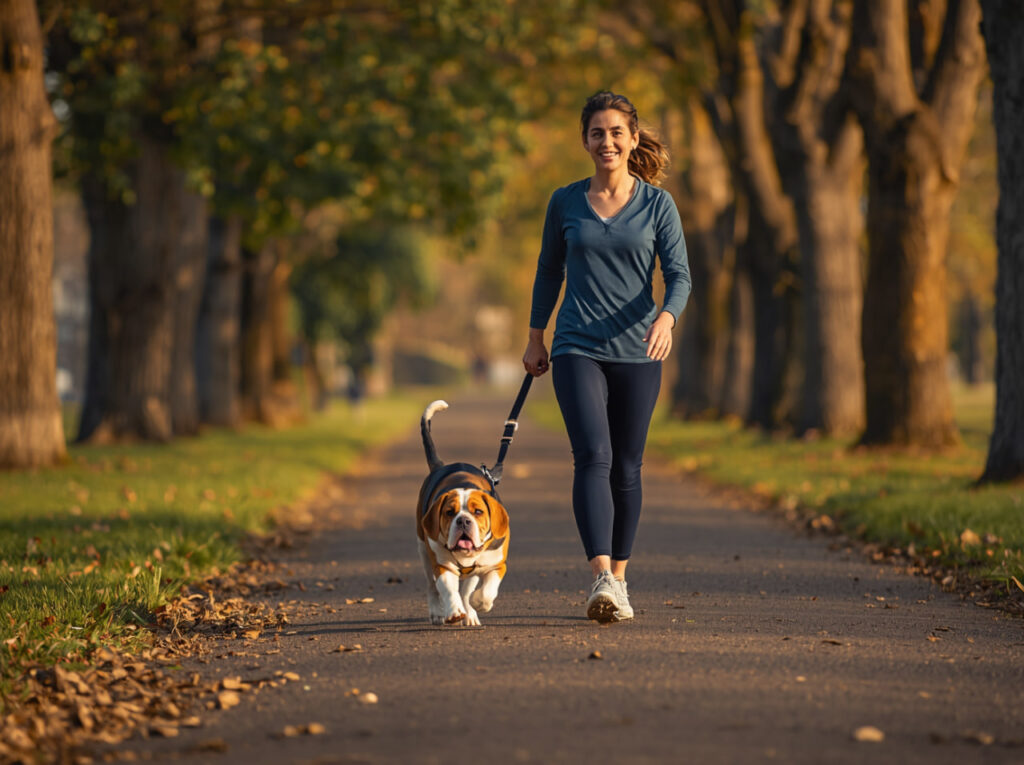
- Weeks 1–2: Two daily walks of 15 to 20 minutes at a comfortable pace. Focus on consistency rather than intensity.
- Weeks 3–4: Extend each walk by five minutes. Introduce light play sessions (fetch, gentle tug) for five to ten minutes.
- Month 2 onward: Build toward 30 to 45 minutes of active exercise daily for medium breeds, adjusting based on your dog’s tolerance and breed-appropriate needs.
- For dogs with arthritis or joint problems: swimming and hydrotherapy are excellent alternatives to walking — they provide cardiovascular exercise and calorie burn with minimal joint impact.
Monitor exercise tolerance: watch for signs of fatigue, limping, or excessive panting. Reduce intensity if these occur.
Step 6: Track Progress and Adjust
Weigh your dog monthly — most veterinary clinics will allow you to use their scale at no charge. Safe, sustainable weight loss is one to two percent of body weight per week. A 30-pound dog should lose approximately 0.3 to 0.6 pounds per week. If progress is slower than this after four weeks of consistent effort, reduce daily calories by a further 10% and ensure you are accounting for all treat calories. If your dog is losing weight faster than two percent per week, increase food slightly to avoid muscle loss.
Frequently Asked Questions
How long will it take for my dog to reach a healthy weight?
The timeline depends on how much weight needs to be lost. Expect approximately six months to reach a healthy weight for dogs who are 20 to 30% above their ideal weight, and up to twelve months for significantly obese dogs. Patience and consistency are the key variables.
My dog is always hungry on a diet. What can I do?
This is the most common challenge. Strategies that help: switch to a higher-fiber food (fiber increases satiety), divide the daily allowance into three meals rather than two, add low-calorie vegetables to bulk up meals without adding significant calories, and use a slow-feeder bowl to extend mealtime.
Can my dog exercise if they have arthritis?
Yes — and they should. Low-impact exercise like gentle walking on soft surfaces and swimming is therapeutic for arthritic joints. Weight loss itself also dramatically reduces the load on arthritic joints, often producing significant pain relief. Work with your veterinarian to design an exercise plan appropriate for your dog’s specific condition.
Are grain-free foods better for weight loss?
No. Grain-free does not mean lower calorie. Many grain-free foods are actually higher in fat and calories than conventional formulations. Focus on the calorie content and macronutrient profile rather than the grain-free label when selecting a weight loss food.
Conclusion
Helping your dog lose weight is one of the most impactful health decisions you can make as a pet owner. Obesity shortens life and reduces quality of life — but it is also one of the most reversible conditions with consistent effort. Combine measured, appropriate portions with a high-protein food, daily progressive exercise, the elimination of high-calorie treats, and monthly progress tracking, and most dogs will reach a healthier weight within six to twelve months. Work with your veterinarian throughout the process — they are your most valuable resource in getting this right.