
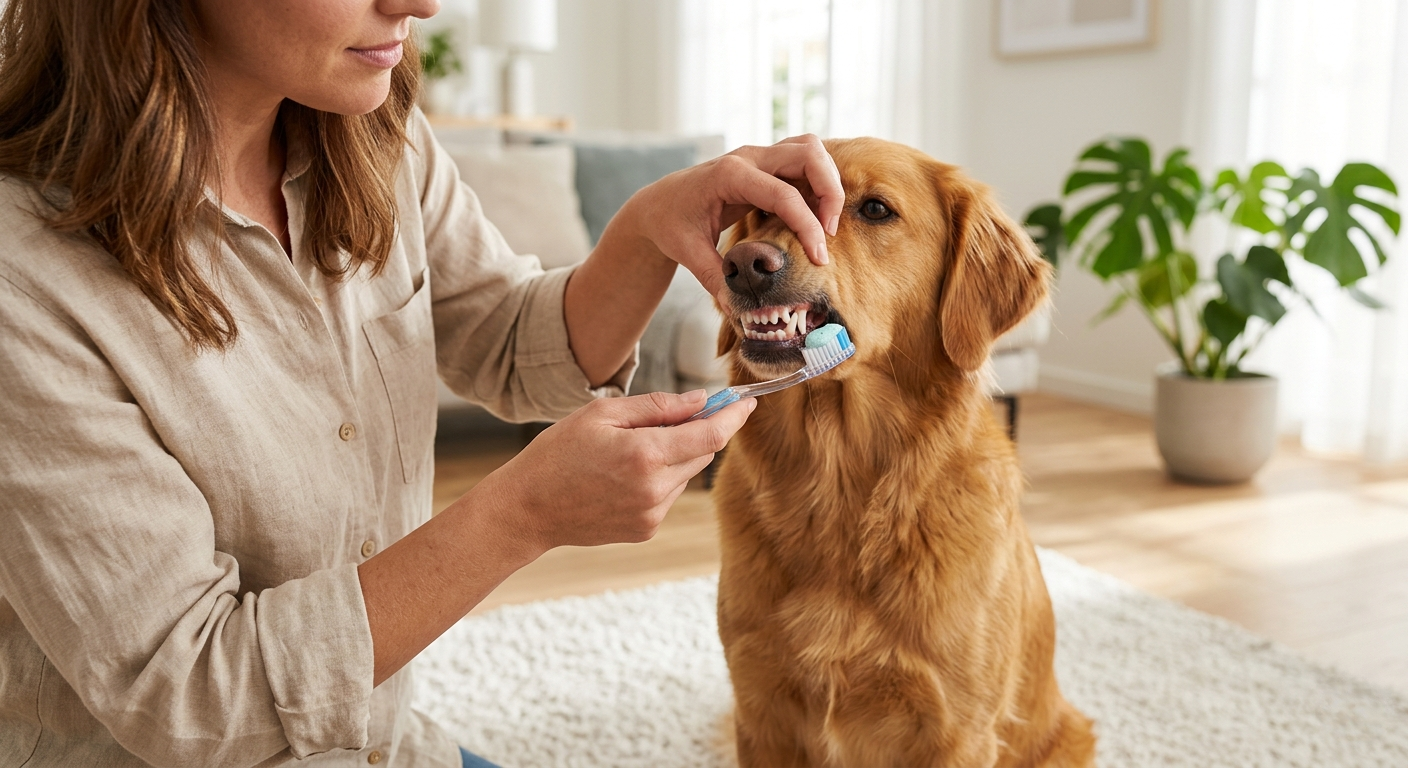
Dental disease is the most common health condition diagnosed in domestic dogs — and one of the most consistently neglected by owners. According to the American Veterinary Medical Association, more than 80% of dogs over the age of three have some degree of periodontal disease. Yet surveys consistently show that fewer than 10% of dog owners brush their dog’s teeth regularly. This gap between the prevalence of dental disease and the adoption of preventive measures means that millions of dogs are living with chronic dental pain that significantly affects their quality of life — pain they cannot communicate and that owners do not know to look for. This guide closes that gap with everything you need to understand, recognize, and prevent dental disease in your dog.
Why Dental Health Matters Beyond the Mouth
Dental disease in dogs is not simply a cosmetic issue or an odor problem. Advanced periodontal disease allows oral bacteria continuous access to the bloodstream through infected, inflamed gum tissue — a process called bacteremia. These bacteria colonize distant organs, contributing to kidney disease, heart valve disease (endocarditis), and liver disease over time. Studies in veterinary medicine consistently show that dogs with chronic untreated dental disease have worse outcomes for kidney disease and heart disease compared to those with good oral health. The connection between dental hygiene and systemic organ health is clinically real and clinically significant.
How Dental Disease Develops: The Progression
Understanding the stages of dental disease helps you recognize the signs at each point and understand why intervention at earlier stages is so much more effective:
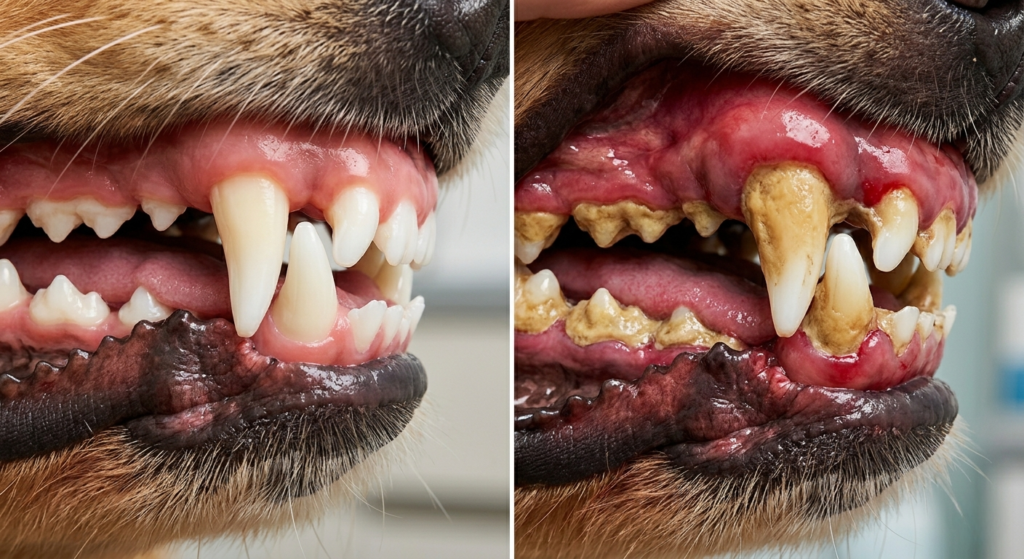
- Stage 0 — Healthy: clean tooth surfaces, pale pink gums with a sharply defined edge, no odor, no tartar visible.
- Stage 1 — Gingivitis: plaque (a soft bacterial film) has accumulated on tooth surfaces and calcified into tartar (calculus). The gum line is reddened and slightly swollen. Gingivitis is fully reversible with professional cleaning.
- Stage 2 — Early periodontitis: the infection has begun to erode the attachment between the tooth and the surrounding bone and tissue. Some attachment loss has occurred. Early periodontitis can be arrested but not fully reversed — management prevents further progression.
- Stage 3 — Moderate periodontitis: significant attachment loss, visible tartar above and below the gum line, possible tooth mobility, evidence of bone loss on X-ray. Extraction of affected teeth may be necessary.
- Stage 4 — Advanced periodontitis: severe bone loss, tooth mobility, abscess formation, painful lesions, possible jaw fracture in small breeds where dental disease has destroyed significant bone. Extractions required.
Recognizing the Signs of Dental Disease in Your Dog
Dogs are well-adapted to hiding pain, including dental pain. By the time owners notice signs of dental disease, it has often already progressed significantly. Watch for:
- Bad breath (halitosis): the most commonly noticed sign. Persistent bad breath — beyond the normal ‘dog breath’ after eating — indicates active bacterial overgrowth associated with periodontal disease.
- Discolored teeth: yellow or brown deposits on the tooth surface, particularly near the gum line, indicate tartar accumulation.
- Red, swollen, or bleeding gums: healthy gums are pale pink and firm. Redness, swelling, and bleeding on contact with a toothbrush or bone indicate gingivitis.
- Pawing at the mouth or rubbing the face: suggests oral discomfort. Some dogs with dental pain stop this behavior when it does not provide relief, so absence of pawing does not confirm absence of pain.
- Reluctance to chew hard food or toys: changes in chewing behavior, including preference for softer food, dropping food from the mouth, or chewing on one side, suggest dental pain.
- Reduced appetite or weight loss: chronic dental pain suppresses appetite, particularly for food that requires chewing.
- Visible drooling or excessive salivation: more than baseline can indicate oral pain or infection.
- Tooth that appears longer than its neighbors: gum recession exposing the root surface.
- Visibly broken tooth: a broken tooth exposes the pulp cavity and is acutely painful. Requires veterinary dental treatment.
Prevention: The Most Effective Strategies
Daily Tooth Brushing — The Gold Standard
Daily tooth brushing with dog-specific enzymatic toothpaste is the single most effective home dental care intervention available. Research consistently shows it reduces plaque and gingivitis scores more effectively than any other home care method when done consistently. Equipment:
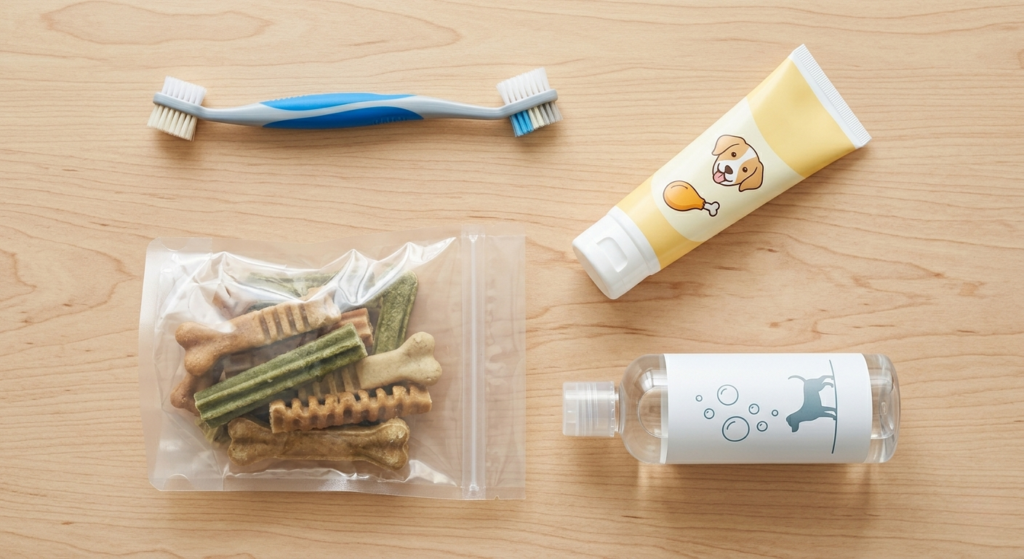
- Dog toothbrush: soft-bristled, small head. Finger brushes are an acceptable alternative for dogs who strongly resist standard brushes. Never use a human toothbrush.
- Dog enzymatic toothpaste: never human toothpaste — fluoride is harmful to dogs, who swallow rather than spit. Dog toothpastes come in flavors (poultry, beef, vanilla mint) that most dogs find highly palatable and are formulated with enzymes that continue breaking down plaque between brushing sessions.
- Frequency: daily is ideal. Studies show measurable benefit from as little as three times per week, though daily provides the maximum preventive effect.
- Focus: concentrate on the outer surfaces of the upper teeth — this is where tartar accumulates most rapidly and where the brush does the most work.
VOHC-Approved Dental Products
The Veterinary Oral Health Council (VOHC) awards its seal to products that have demonstrated efficacy in controlled clinical trials for reducing plaque or tartar accumulation in dogs. This seal is your most reliable guide to products that actually work:
- Dental chews: products like Greenies (VOHC-approved) provide mechanical cleaning through chewing action. Offer daily for best results.
- Water additives: enzymatic solutions added to the drinking water bowl that reduce bacterial load. Helpful between brushing sessions.
- Dental diets: prescription dental kibble (Hill’s Prescription Diet t/d) uses oversized kibble that requires the dog to bite through it, providing mechanical cleaning. Effective supplement to brushing.
- Dental wipes: for dogs that strongly resist brushing, dental wipes provide some plaque disruption through direct wiping of tooth surfaces.
Professional Dental Cleaning Under Anesthesia
Home care prevents disease progression but cannot remove established tartar — which is calcified and can only be removed with professional ultrasonic scaling instruments. Professional dental cleaning under general anesthesia is necessary for any dog with existing tartar accumulation or evidence of periodontal disease. The AAHA recommends annual professional assessments and cleaning as indicated by the individual dog’s oral health status. The procedure includes full-mouth dental radiographs (which identify disease below the gum line and bone loss not visible on the surface), supragingival and subgingival scaling, polishing, and extractions of non-viable teeth as identified on radiographs. Anesthesia concerns in older dogs are frequently cited as a reason to avoid professional cleaning — in practice, pre-anesthetic bloodwork, IV fluid support, and continuous monitoring make the risk acceptable in most cases, and the risk of leaving advanced painful dental disease untreated typically exceeds the anesthetic risk.
Chews and Toys That Help Dental Health
- Raw meaty bones (appropriate size, raw not cooked): provide significant mechanical cleaning through gnawing. Risk of tooth fracture on bones that are too hard (knuckle bones, marrow bones). Consult your veterinarian before adding raw bones.
- Rubber dental toys (Kong, Nylabone): mechanical cleaning through chewing action. Choose appropriate size and hardness — if you cannot dent the surface with your thumbnail, it is likely too hard and risks tooth fracture.
- Avoid: cooked bones (splinter risk), antlers and hard nylon bones (too hard — tooth fracture risk), anything labeled as a ‘dental treat’ without VOHC approval (often ineffective and high calorie).
Frequently Asked Questions
My dog’s breath is terrible. Is this always dental disease?
Persistent, strong halitosis in dogs is almost always caused by oral bacteria associated with periodontal disease or tooth infection. In rare cases, bad breath originates from gastrointestinal disease, kidney disease (ammonia-like breath), or diabetes (sweet or fruity breath). A veterinary examination is the appropriate first step.
At what age should I start brushing my dog’s teeth?
From as early as possible — ideally from 8 to 10 weeks of age, even before the permanent teeth erupt. Early habituation to having the mouth handled makes lifelong dental care dramatically easier. Puppies introduced to toothbrushing before 4 months almost universally tolerate it as adults.
Is anesthesia-free dental cleaning a safe alternative to professional cleaning?
No. Anesthesia-free dental cleaning cannot safely reach below the gum line where disease originates and progresses, cannot perform dental radiographs, and causes significant stress to most dogs. It provides a cosmetic improvement (cleaner-looking teeth above the gum line) without addressing actual disease. It is not recommended by the AVMA or AAHA as a substitute for appropriate professional cleaning.
How much does professional dog dental cleaning cost?
Professional dental cleaning including anesthesia, radiographs, and standard scaling typically ranges from $300 to $800 in the US depending on location and the dog’s size. Cases requiring extractions add to this cost. Cost is significantly higher in major metropolitan areas. Pet insurance often covers dental disease treatment if the policy includes illness coverage and the condition is not pre-existing.
Conclusion
Dental disease is the most preventable significant health condition in dogs — and it is also the most consistently ignored. Daily tooth brushing, VOHC-approved dental products, and annual veterinary dental assessments with professional cleaning when indicated form a prevention program that effectively eliminates the chronic pain, tooth loss, and systemic organ damage that advanced dental disease causes. The five minutes per week invested in your dog’s dental care is among the highest-return health investments you can make, with benefits that compound across your dog’s entire life.