
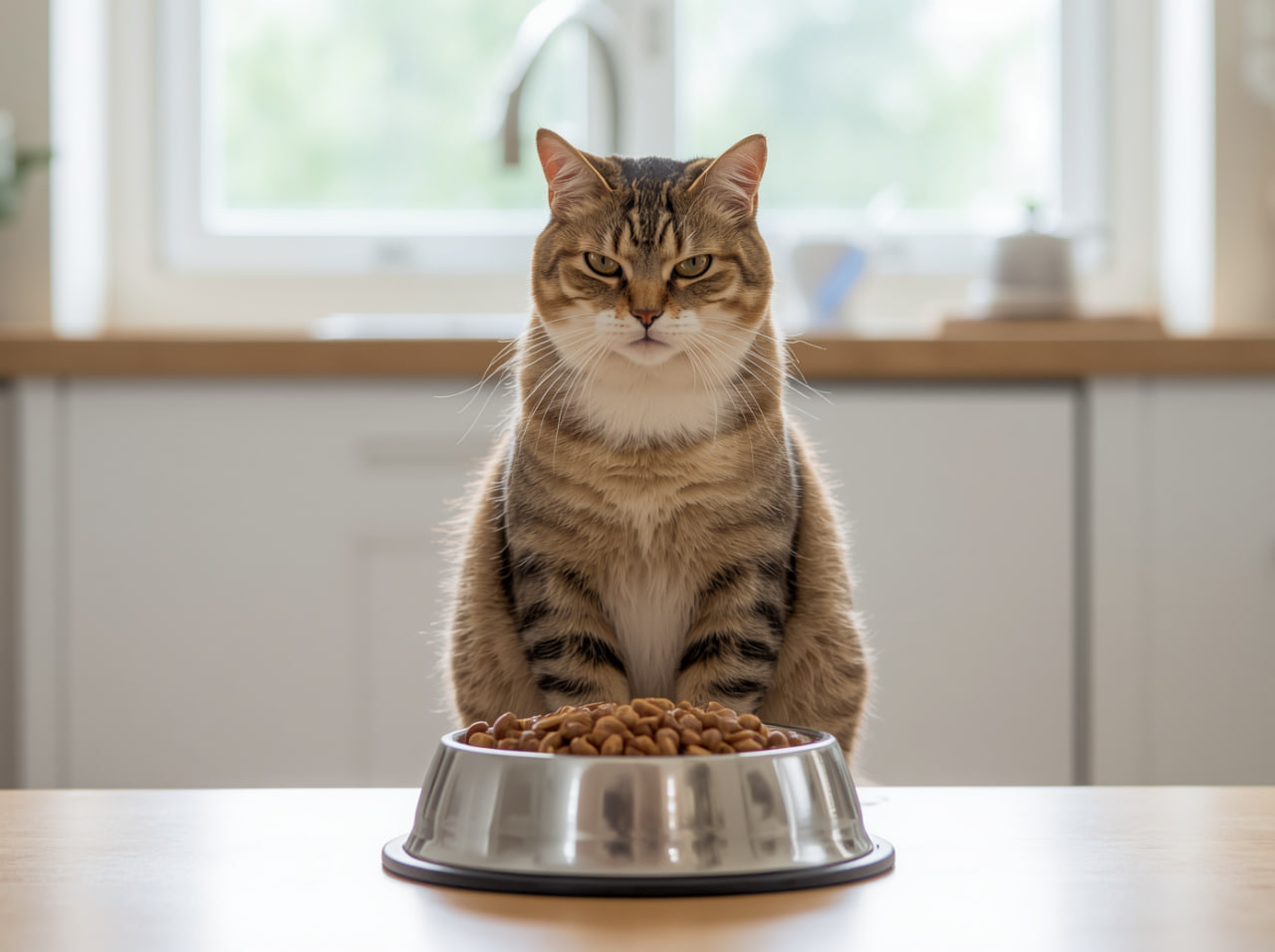
When a dog refuses a meal, most experienced owners know to wait and see — skipping a meal is common in dogs and rarely indicates a serious problem. Cats are an entirely different situation. Due to their unique metabolism, a cat that stops eating for even 24 to 48 hours faces a genuinely dangerous health risk called hepatic lipidosis, or fatty liver disease. This condition can develop surprisingly quickly and requires intensive veterinary treatment. Understanding why cats stop eating, what you can safely try at home, and when the situation demands immediate veterinary attention is essential knowledge for every cat owner.
Why Cats Are Uniquely Vulnerable to Food Refusal: Hepatic Lipidosis
Hepatic lipidosis is the most common severe liver disease in domestic cats, and it is directly triggered by food refusal. Here is the physiological mechanism: when a cat stops eating, its body begins mobilizing stored fat for energy. In cats, this process is exceptionally rapid and efficient compared to other species — fat is broken down and sent to the liver for processing at a high rate. When a cat goes without food for an extended period, the liver becomes overwhelmed by the volume of fat it is required to process, and fat begins accumulating within liver cells. This fat accumulation interferes with normal liver function, leading to liver failure if not treated promptly.
Obese cats are at significantly higher risk of developing hepatic lipidosis faster and more severely than lean cats, because they have larger fat stores that mobilize rapidly during food deprivation. However, cats of any body condition can develop the condition. Treatment typically requires hospitalization, IV fluid support, appetite stimulants, and in severe cases, placement of a feeding tube through which nutrition can be administered directly into the stomach or esophagus. The condition is serious, expensive to treat, and entirely preventable by addressing food refusal promptly.
Common Reasons Cats Stop Eating
Food refusal in cats has a broad range of potential causes, ranging from minor and easily resolved to serious and requiring urgent veterinary attention. Here are the most common:
1. Stress or Environmental Change
Cats are highly sensitive to changes in their environment and routine. Moving to a new home, a new pet or family member, changes in the owner’s schedule, renovation noise, changes in the household’s emotional atmosphere, or even rearranging furniture can trigger appetite suppression in sensitive cats. This type of appetite loss is usually temporary — it resolves within one to three days as the cat acclimatizes to the change.
2. Food Aversion or Food Change
Cats can develop sudden aversions to previously accepted foods, particularly if they became nauseous after eating that food (even if the nausea was caused by something else entirely — cats associate nausea with the most recently eaten food, creating a conditioned aversion). A sudden switch to a new food can also cause refusal. Gradual transitions over seven to ten days are far more successful than abrupt food changes.
3. Dental Pain
Dental disease is one of the most underdiagnosed causes of appetite loss in cats. Tooth resorption, gum disease, broken teeth, and oral ulcers are all extremely painful conditions that make eating uncomfortable or impossible. Signs that point to dental pain as the cause: the cat approaches the food bowl and then backs away, drops food from the mouth while chewing, shows excessive drooling, or favors one side of the mouth when eating.
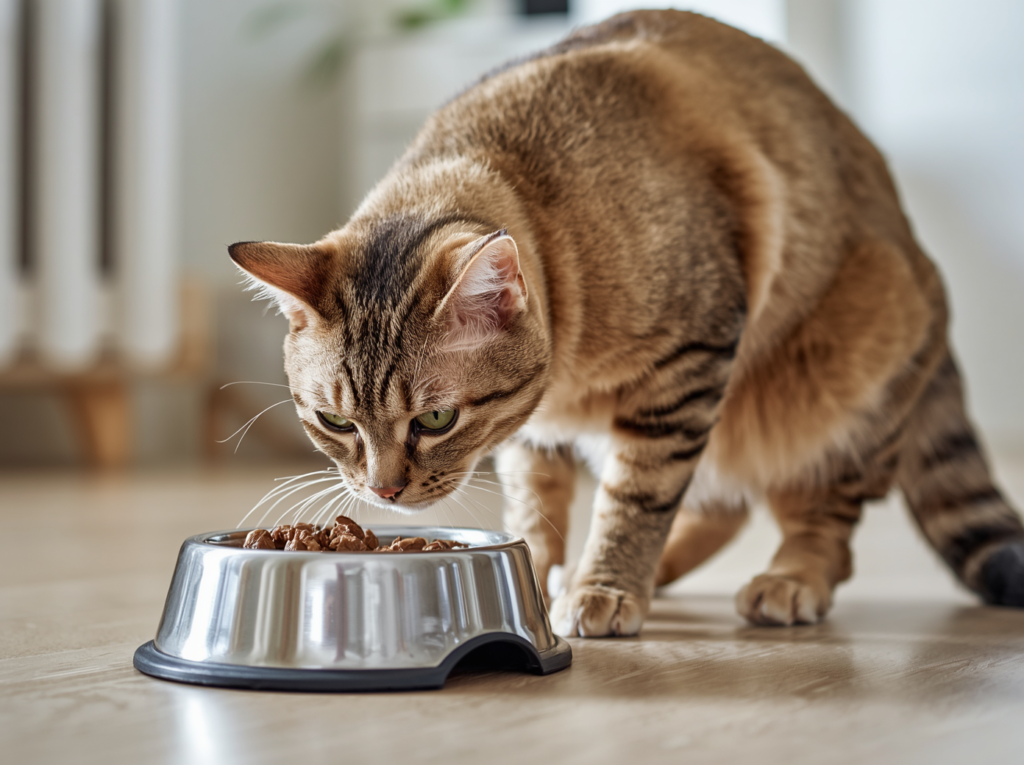
4. Respiratory Infection
Upper respiratory infections (URIs) are extremely common in cats, particularly those adopted from shelters or recently exposed to other cats. URIs cause nasal congestion that dramatically reduces or eliminates a cat’s sense of smell — and since cats rely heavily on smell to identify food and stimulate appetite, a congested cat will often refuse to eat simply because they cannot smell the food. Signs: sneezing, nasal discharge, watery eyes, and lethargy alongside food refusal.
5. Nausea
Nausea suppresses appetite powerfully in cats. It can be caused by medications (particularly antibiotics and some pain medications), kidney disease, liver disease, pancreatitis, inflammatory bowel disease, and many other conditions. A nauseous cat may drool excessively, lick their lips repeatedly, swallow frequently, or show exaggerated grooming of the mouth area.
6. Serious Underlying Illness
Appetite loss is one of the most non-specific symptoms in feline medicine — it is associated with a very wide range of conditions including chronic kidney disease, hyperthyroidism, diabetes, cancer, heart disease, pancreatitis, and hepatic lipidosis itself. This is why veterinary evaluation is essential when appetite loss persists beyond 24 hours, even when no other obvious symptoms are present.
What You Can Try at Home (First 12–24 Hours Only)
These strategies may help if the appetite loss appears related to food preference, minor stress, or mild nausea — and if your cat is otherwise showing no other signs of illness:
- Warm the food slightly (10 to 15 seconds in the microwave, stirred well and tested for hot spots): warming releases aroma that can stimulate appetite in cats whose sense of smell may be reduced.
- Offer a different texture: try switching from pate to chunks in gravy, or from wet to dry (or vice versa). Some cats develop sudden texture preferences.
- Try a highly palatable option: a small amount of plain unseasoned cooked chicken, low-sodium tuna water, or commercially available cat food broth (not soup — cat-specific) may entice a reluctant eater.
- Ensure the food bowl is clean and positioned away from the litter box: cats are highly sensitive to odors near their food.
- Reduce household stressors and offer quiet, undisturbed time and space to eat.
When to Call Your Veterinarian — Do Not Wait Beyond These Points
- Your cat has not eaten for more than 24 hours (48 hours maximum — do not wait longer than this under any circumstances).
- Your cat is also lethargic, hiding, or showing any other behavioral change alongside food refusal.
- Your cat has lost weight even while appearing to eat normally in previous weeks.
- Your cat is drooling excessively or pawing at their mouth — classic signs of dental pain or oral ulceration.
- Your cat has vomited multiple times or shows diarrhea alongside food refusal.
- Your cat has any diagnosed underlying health condition — sick cats decompensate quickly with food refusal.
- You have recently changed your cat’s medication.
Frequently Asked Questions
My cat is very picky. How do I know when this is serious versus just being difficult?
A picky cat who picks at food, eats slowly, or prefers certain flavors is different from a cat who refuses food entirely and completely. Complete refusal — walking away from food without eating any — for more than 24 hours warrants a vet call regardless of your cat’s history of pickiness.
Can I force-feed my cat at home?
Do not attempt to force-feed without explicit veterinary instruction. Forcing food into a cat who is nauseous or resisting will cause aspiration (food entering the airway), which is a life-threatening emergency. Your vet can prescribe appetite stimulants like mirtazapine or capromorelin (Entyce) that are safe and often highly effective.
My cat has not eaten for two days but seems okay. Do I still need a vet?
Yes — immediately. Two days without food is already in the danger zone for hepatic lipidosis, even if your cat appears outwardly alert. Internal changes have been occurring since day one. A vet visit that day is not optional.
What appetite stimulants do vets use for cats?
Mirtazapine is the most commonly prescribed appetite stimulant for cats and is highly effective. It is available as a tablet or as a transdermal gel applied to the inner ear (the Elura gel formulation). Capromorelin (Entyce) is a newer option with strong evidence for efficacy in cats with appetite loss from chronic illness.
Conclusion
A cat that is not eating is never simply ‘being difficult’ when the refusal extends beyond a day — not with the very real risk of hepatic lipidosis looming. The single most important message of this entire article is: do not wait more than 24 to 48 hours before contacting your veterinarian when your cat refuses food. Early intervention is the difference between a straightforward fix and a severe, expensive, and potentially fatal medical crisis. Your cat’s appetite is one of the most reliable early indicators of their overall health — take it seriously.