
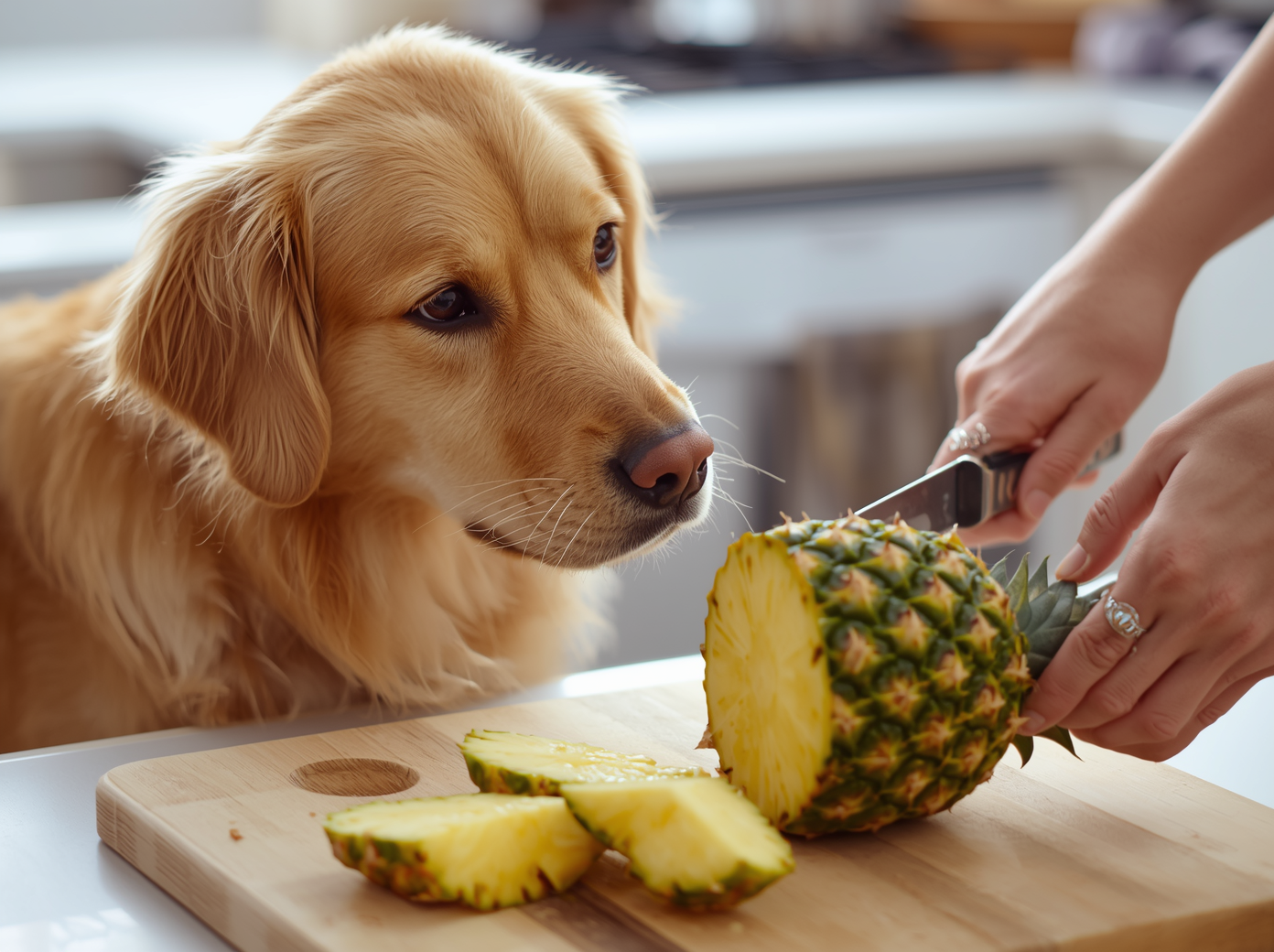
Pineapple is one of those tropical fruits that feels indulgent — bright, sweet, and intensely flavored. For dog owners wondering whether their pets can share in this treat, the answer is genuinely good news: fresh pineapple flesh is completely safe for dogs and offers some legitimate nutritional benefits. As with any human food introduced to a canine diet, a few important preparation and portion guidelines apply. This guide covers everything you need to know to safely share pineapple with your dog.
Nutritional Benefits of Pineapple for Dogs
Beyond its exceptional sweetness, pineapple contains a range of nutrients that are genuinely beneficial for dogs in appropriate amounts:
- Vitamin C: a powerful antioxidant that supports immune function, collagen synthesis, and cellular protection from oxidative damage. Particularly relevant for stressed, ill, or aging dogs.
- Vitamin B6: supports protein metabolism, neurotransmitter production, and red blood cell function.
- Manganese: an essential trace mineral supporting bone development, enzyme activation, and fatty acid metabolism.
- Thiamine (Vitamin B1): supports carbohydrate metabolism and nerve function.
- Riboflavin (Vitamin B2): supports energy metabolism and healthy skin.
- Folate: essential for cell division and DNA synthesis.
- Bromelain: a proteolytic enzyme complex unique to pineapple that breaks down proteins and supports digestive function. Bromelain has also been studied for its anti-inflammatory properties and is used therapeutically in human medicine. In dogs, bromelain may support digestion and has a mild anti-inflammatory effect.
- High water content: approximately 86% water, making pineapple mildly hydrating as a treat.
The presence of bromelain makes pineapple nutritionally distinct from most other dog-safe fruits. While the amount of bromelain in a few pineapple cubes is modest, it is one of the specific reasons some dog owners and trainers include pineapple as a regular treat — particularly for dogs with sensitive digestive systems.
Which Parts of the Pineapple Are Safe?
- Fresh pineapple flesh: the only part that is safe and appropriate. Ripe, juicy, and fully peeled flesh is safe in moderate amounts.
- Pineapple core: technically not toxic, but significantly tougher and more fibrous than the surrounding flesh. It is difficult to chew and digest, particularly for smaller dogs, and poses a potential choking hazard. Remove the core before serving.
- Pineapple skin and spiky exterior: never serve this. The tough, spiky exterior is not digestible and can cause damage to the mouth, throat, and digestive tract. Always remove completely.
- Canned pineapple in syrup: not appropriate for dogs. Commercial pineapple syrup contains concentrated added sugars — and some brands use sweeteners that may contain xylitol. Always use fresh pineapple only, never canned in any form.
- Dried pineapple: similar to other dried fruits, drying concentrates the natural sugar content dramatically. Avoid dried pineapple for dogs.
How Much Pineapple Can a Dog Eat?
Pineapple is higher in natural sugar than many other dog-safe fruits. While the fiber content modulates the blood sugar impact somewhat, portion control remains important — particularly for diabetic dogs, obese dogs, or dogs prone to pancreatitis. Use the 10% treat rule as your guide:
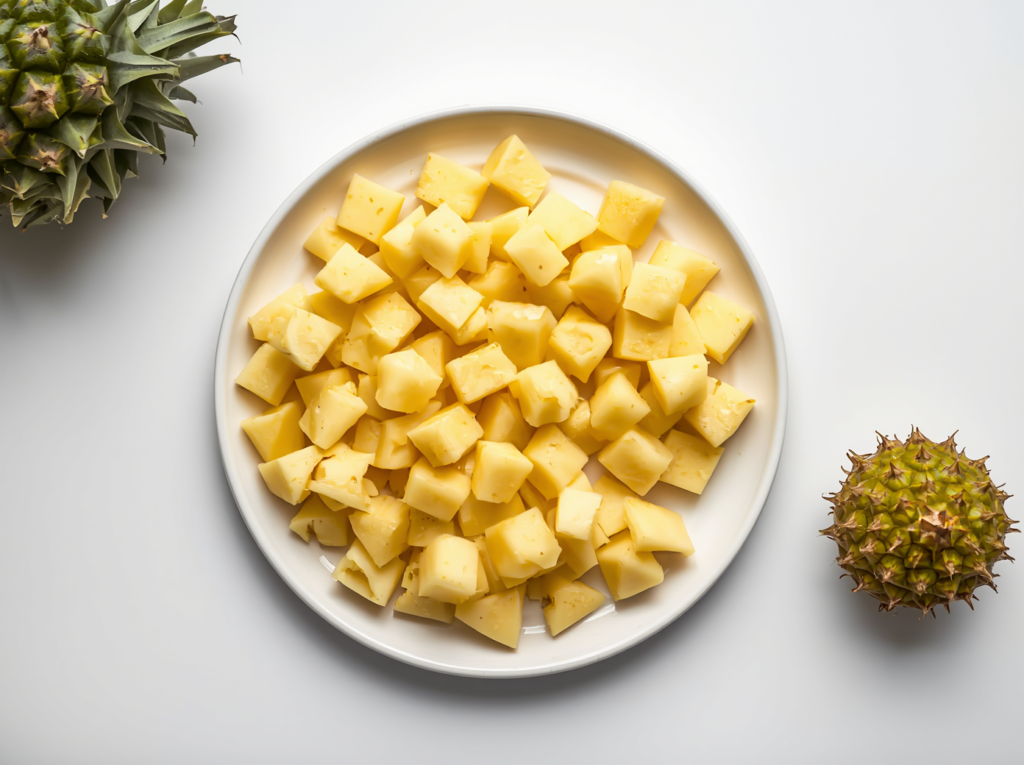
- Extra-small dogs (under 10 lbs): 1 small cube (about 1 cm) a few times per week
- Small dogs (10 to 20 lbs): 2 small cubes a few times per week
- Medium dogs (20 to 50 lbs): 2 to 4 cubes a few times per week
- Large dogs (50 to 90 lbs): 4 to 6 cubes a few times per week
- Giant breeds (over 90 lbs): up to 8 cubes a few times per week
Does Pineapple Stop Dogs From Eating Their Own Feces?
This is one of the most persistent myths in dog ownership, and it deserves a clear, honest answer. The idea is that feeding dogs pineapple makes their feces taste unpleasant, thereby discouraging coprophagia (the consumption of feces). The bromelain in pineapple is the proposed mechanism — the theory is that it changes the taste or smell of digested material. Unfortunately, there is no credible scientific evidence supporting this claim. Coprophagia is a complex behavior with multiple potential causes — nutritional deficiency, gastrointestinal parasites, learned behavior from the mother, boredom, or attention-seeking. A veterinary consultation to identify and address the actual cause is far more productive than the pineapple remedy, which reliably disappoints owners who try it.

How to Prepare and Serve Pineapple for Your Dog
- Choose a ripe but not overripe pineapple — overripe fruit has significantly higher sugar content and a more fermented quality that some dogs find unpleasant.
- Remove the entire spiky outer skin, cutting deep enough to remove all the hard outer layer.
- Slice off both ends.
- Cut the flesh away from the central core on all sides.
- Cut the flesh into small, appropriately sized cubes for your dog.
- Serve immediately at room temperature, refrigerate in an airtight container for up to three days, or freeze cubes for a refreshing summer treat.
Frequently Asked Questions
Can dogs eat pineapple leaves?
No — the leaves are tough, fibrous, and have sharp edges that can injure the mouth, throat, and digestive tract. Only the flesh should ever be offered.
Can puppies eat pineapple?
Yes, in very small amounts. A single small cube for puppies over 8 weeks is appropriate. Due to the sugar content, introduce slowly and watch for loose stools or digestive upset.
My dog loves pineapple. Can I give it daily?
Daily in small appropriate amounts is fine for most healthy adult dogs. The concern with daily feeding is primarily the cumulative sugar intake — ensure the rest of the diet and treat rotation accounts for this.
Is frozen pineapple safe for dogs?
Yes — frozen pineapple cubes made from the fresh flesh only are safe and most dogs enjoy them as a summer treat. The freezing process does not significantly affect nutritional content.
Conclusion
Fresh pineapple is a safe, moderately nutritious, and enjoyable treat for most dogs. Serve the flesh only — never the skin, core, canned varieties, or dried form — in appropriate portions for your dog’s size, and introduce gradually the first time. Despite the popular coprophagia claim, pineapple’s real value to your dog is simply as a tasty, vitamin-rich occasional treat. And for most dogs, that is more than enough reason to share a few cubes.