
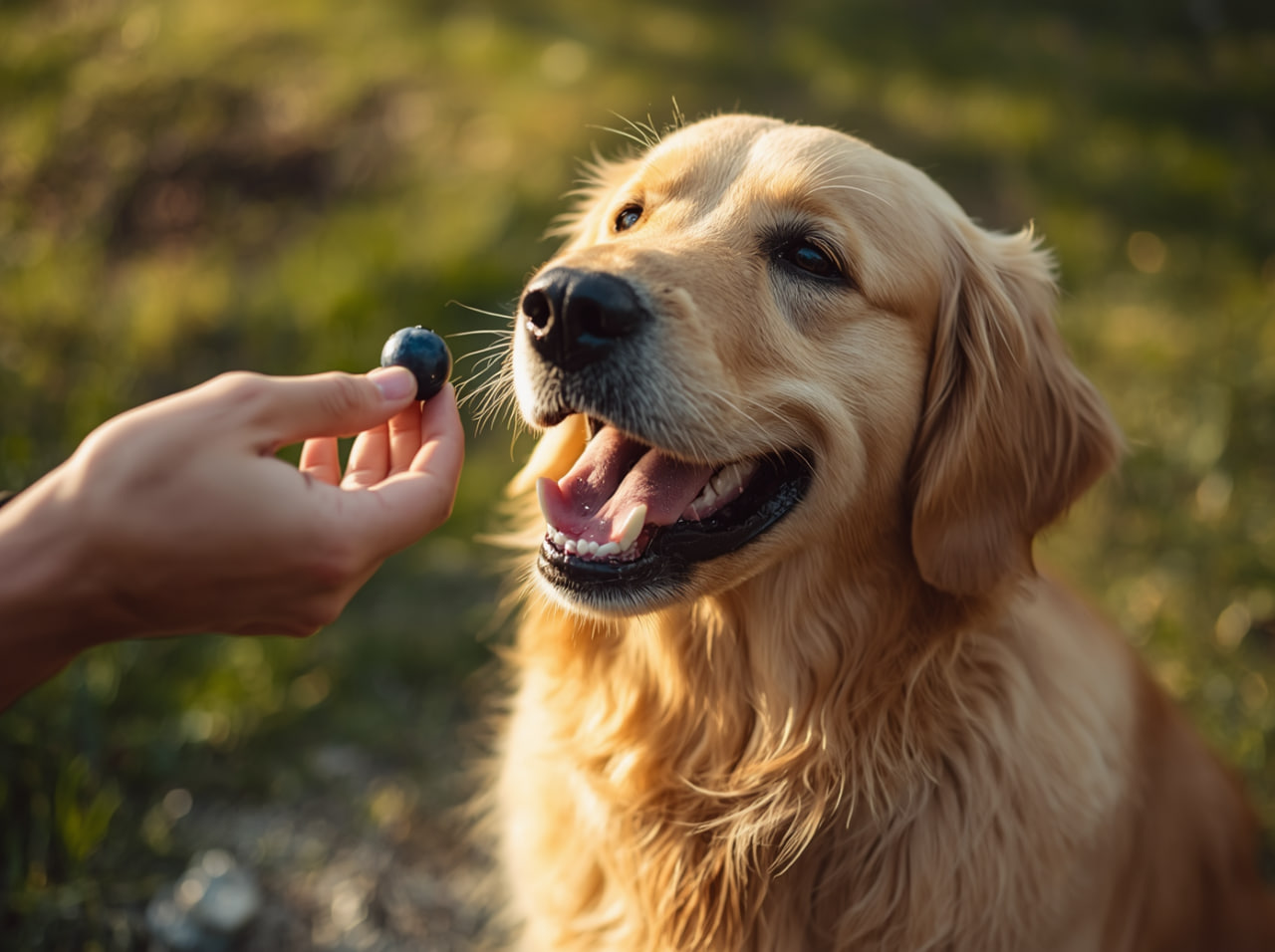
If you are looking for a treat that is both genuinely healthy and universally loved by dogs, blueberries belong at the top of your list. Unlike many commercial dog treats, which are loaded with artificial preservatives, fillers, and added sugars, blueberries are a whole food that delivers real nutritional value in a tiny, easy-to-serve package. Veterinary nutritionists consistently rank blueberries among the safest and most beneficial fruits you can offer your dog. In this guide, we cover the full nutritional picture, the correct portions for every size of dog, the best ways to serve them, and the few situations where caution is warranted.
Why Blueberries Are One of the Best Dog Treats Available
Blueberries have earned their reputation as a superfood — a classification supported by an extensive body of nutritional research. The same properties that make them beneficial for humans apply equally to dogs:
- Antioxidants — particularly anthocyanins, the compounds that give blueberries their deep blue-purple color: anthocyanins are among the most potent naturally occurring antioxidants studied in any food. They neutralize free radicals — unstable molecules that damage cells and contribute to aging and disease. For dogs, regular antioxidant intake supports immune function, reduces systemic inflammation, and may slow age-related cognitive decline.
- Vitamin C: supports immune function, collagen synthesis, and acts as an additional antioxidant. Dogs synthesize their own vitamin C, but supplementary dietary sources provide additional support during illness, stress, and aging.
- Vitamin K: essential for healthy blood clotting and bone metabolism. Particularly relevant for senior dogs prone to bone density loss.
- Manganese: a trace mineral supporting bone development, enzyme function, and fatty acid metabolism.
- Dietary fiber: soluble and insoluble fiber supporting healthy gut motility, a balanced microbiome, and regular bowel movements.
- Low calorie density: a single blueberry contains only about 1 calorie. This makes blueberries one of the few treats that can be offered generously without meaningfully contributing to weight gain — a significant advantage over most commercial treats.
Beyond individual nutrients, the combination of antioxidants, vitamins, and fiber in blueberries works synergistically to support overall health in ways that individual supplements cannot replicate. This is what makes whole food treats like blueberries superior to most commercial alternatives.
Are Blueberries Safe for All Dogs?
Yes — blueberries are safe for virtually all dogs, including puppies over 8 weeks, senior dogs, and dogs with most common health conditions. There are a few specific situations where moderation or veterinary guidance is warranted:
- Diabetic dogs: blueberries contain natural sugars that can affect blood glucose. The amount is small relative to most fruits, but diabetic dogs should have their treat intake reviewed by a veterinarian.
- Dogs with a history of urinary issues: blueberries are slightly acidic. While not harmful in typical treat amounts, dogs with a history of calcium oxalate bladder stones should have their diet reviewed by a vet before adding any acidic fruits regularly.
- Very small dogs: due to their tiny size, even one or two blueberries may represent a higher caloric percentage of their daily intake than for larger breeds. Keep portions proportional.
How Many Blueberries Can a Dog Eat? Portion Guide
The 10% treat rule applies: all treats combined should represent no more than 10% of total daily caloric intake. For blueberries at approximately 1 calorie each, this translates to generous practical amounts:
- Extra-small dogs (under 10 lbs): 2 to 3 blueberries per day
- Small dogs (10 to 20 lbs): 3 to 5 blueberries per day
- Medium dogs (20 to 50 lbs): 5 to 10 blueberries per day
- Large dogs (50 to 90 lbs): 10 to 15 blueberries per day
- Giant breeds (over 90 lbs): up to 20 blueberries per day
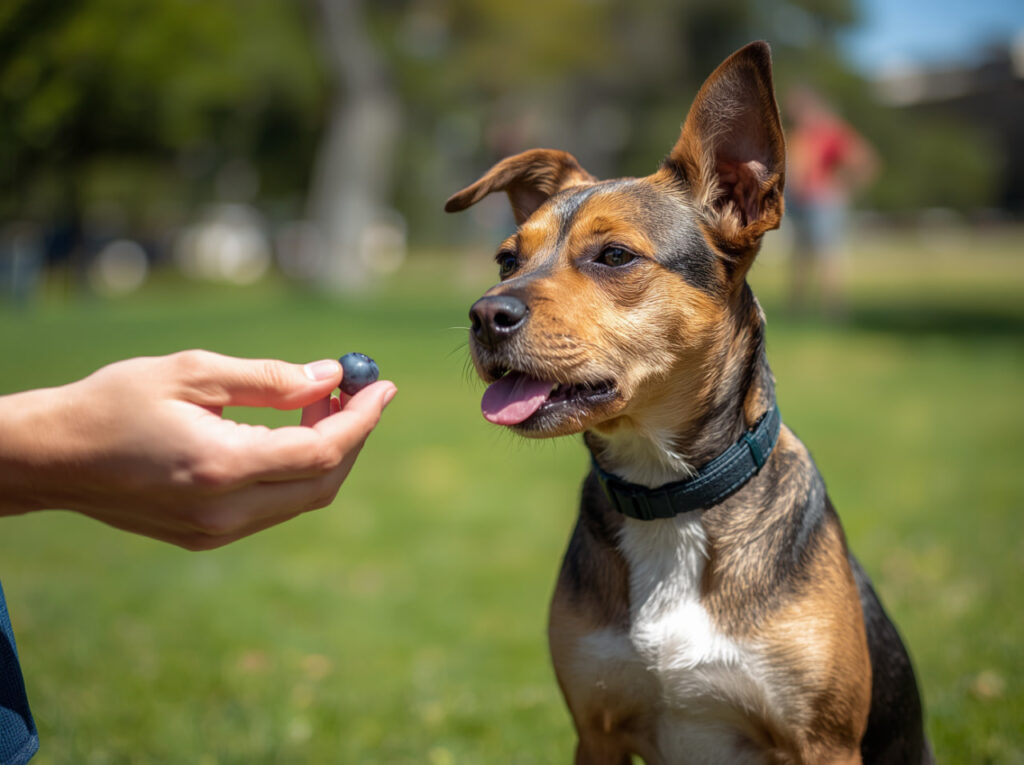
These amounts can be split across multiple daily sessions. Using blueberries as training treats is particularly effective — they are the right size, have high palatability for most dogs, and are so low in calories that even a high-repetition training session does not meaningfully impact daily caloric balance.
Fresh, Frozen, or Dried: Which Form Is Best?
- Fresh blueberries: the gold standard. Fully intact nutritional profile, appropriate texture, and no processing. Wash thoroughly before serving to remove any pesticide residue.
- Frozen blueberries: nutritionally equivalent to fresh — freezing does not significantly degrade the antioxidant content or vitamin levels. Many dogs love frozen blueberries as a cool summer treat, and the slightly firmer texture makes them feel more substantial. Offer directly from frozen or thaw briefly.
- Dried blueberries: significantly more concentrated in sugar and calories — effectively the same problem as dried mango or raisins. A small amount of dried blueberry can contain five to six times the sugar of an equivalent amount of fresh blueberry. Avoid dried blueberries as a regular treat, particularly for smaller dogs or dogs prone to obesity.
- Blueberry-flavored commercial products: check ingredients carefully. Many blueberry-flavored dog treats contain very little actual blueberry and significant amounts of sugar, artificial flavoring, and preservatives. Fresh or frozen whole blueberries are always the better option.
Creative Ways to Serve Blueberries to Your Dog
- Training treats: simply toss them one at a time. Their round shape makes them easy to throw and catch, and most dogs are enthusiastic about the game.
- Mixed into regular food: scatter a few on top of kibble or wet food to add variety and a burst of nutrition.
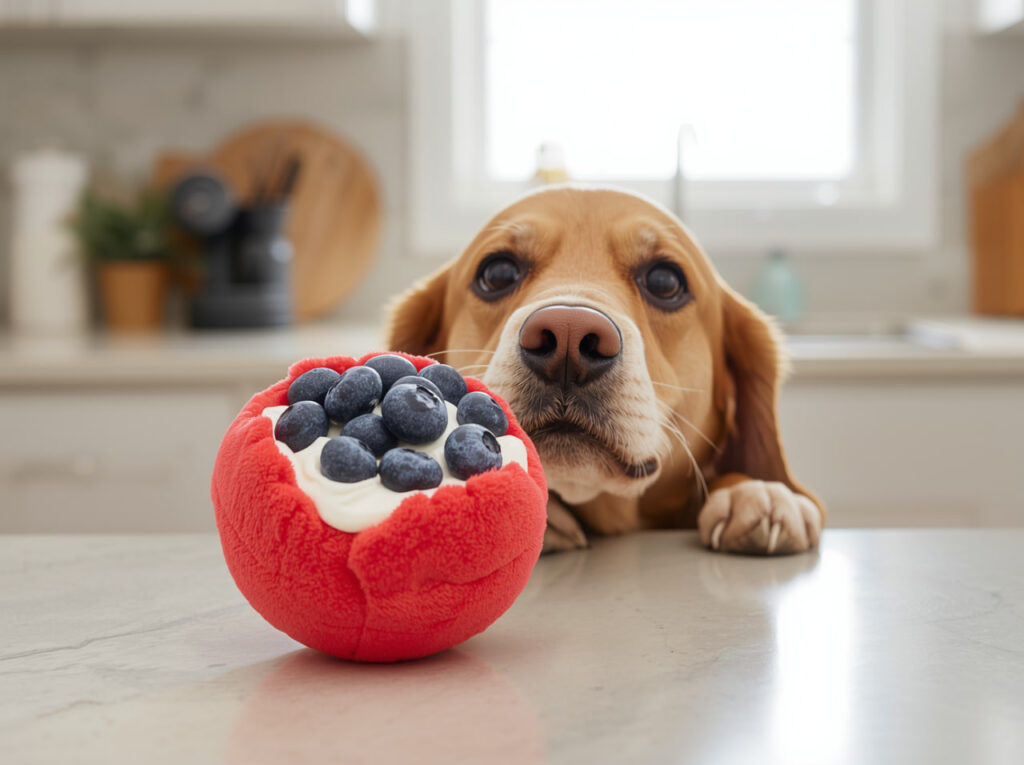
- Frozen in Kong or silicone mold: blend blueberries with plain yogurt (no xylitol) and freeze in a Kong or ice cube tray. An excellent heat-relief treat in summer.
- Homemade blueberry dog treats: blend blueberries, oat flour, and a small amount of honey into small biscuits. These can be batch-baked and stored for up to a week.
- Blueberry and banana mash: mash a few blueberries with a small piece of banana. Most dogs enjoy the combined flavors and the soft texture makes it suitable for senior dogs or dogs with dental issues.
Can Blueberries Help With Dog Cognitive Health?
This is an area of active research and growing interest. Several studies in dogs and in comparable animal models suggest that diets rich in antioxidants — including the specific anthocyanins abundant in blueberries — may slow age-related cognitive decline and support brain health in aging dogs. Dogs can develop a condition called Canine Cognitive Dysfunction (CCD), a syndrome with similarities to Alzheimer’s disease in humans. While blueberries are not a treatment for CCD, incorporating antioxidant-rich whole foods as part of a senior dog’s diet is consistent with current nutritional guidance for supporting cognitive health. The research does not yet support specific dose recommendations, but offering blueberries as a regular part of a senior dog’s treat rotation is a reasonable, evidence-adjacent approach.
Frequently Asked Questions
Can puppies eat blueberries?
Yes — blueberries are safe for puppies from 8 weeks onward. Start with one or two at a time to confirm tolerance, then increase gradually. Their small size makes them ideal puppy training treats.
My dog ate a large handful of blueberries. Should I be concerned?
A large amount of blueberries at once may cause temporary loose stools due to the fiber content, but is not toxic. Monitor your dog for digestive upset over the next 24 hours. Going forward, stick to the recommended daily portions.
Are wild blueberries safe for dogs?
Yes — wild blueberries are safe and actually contain even higher antioxidant levels than commercially cultivated varieties. The smaller size of wild blueberries also makes them ideal for small dogs. Ensure they have not been sprayed with pesticides and are from a clean, uncontaminated source.
Can blueberries stain a dog’s coat?
The deep pigment in blueberries can stain light-colored coats temporarily. For white or cream-colored dogs, consider wiping the muzzle after eating blueberries. The staining is not harmful and typically washes out.
Conclusion
Blueberries are genuinely one of the best treats you can offer your dog — nutritious, low-calorie, universally safe, and enthusiastically accepted by the vast majority of dogs. Fresh or frozen berries in appropriate portions make an excellent daily treat, training reward, or nutritional supplement for dogs of any age. Add them to your treat rotation with confidence.