

Hamsters are frequently presented as the perfect beginner pet — small, affordable, and supposedly easy to care for. This reputation is partially responsible for the unfortunately high rate of hamster welfare problems, because the true care requirements of hamsters differ significantly from what most pet stores communicate and what most small commercial cages provide. A hamster in an appropriate environment — one that allows them to express natural behaviors including burrowing, running, foraging, and exploring — is a genuinely fascinating and engaging pet. A hamster in an inadequate environment is a stressed, often short-lived animal that develops stereotypic behaviors and chronic health problems. This guide gives you the information to be the former kind of hamster owner.
Choosing Your Hamster: Species and Age
- Syrian hamster: the most common and most handleable species. Also called golden hamsters or teddy bear hamsters. Grow to 6–7 inches. Strictly solitary — must be housed alone. The best choice for beginners who want a tameable companion.
- Campbell’s Dwarf hamster: small (3–4 inches), can sometimes be kept in same-sex pairs if introduced as littermates. More active and faster-moving than Syrians — less easy to handle for young children.
- Winter White Dwarf hamster: similar size to Campbell’s. Sometimes changes coat color in winter. Can potentially be kept in pairs but monitor carefully for aggression.
- Roborovski Dwarf hamster: the smallest species (1.5–2 inches) and the fastest. Primarily suited to observation rather than handling. Longest-lived dwarf species at up to 3.5 years.
- Age at adoption: adopt hamsters between 4 and 8 weeks old from a reputable breeder or rescue. Younger hamsters tame more easily. Avoid adopting sick or stressed animals from pet store display tanks.
The Enclosure: Bigger Is Always Better
Cage size is the single most important factor in hamster welfare — and the most commonly gotten wrong. The small wire cages sold in most pet stores — typically 10 to 15 gallons — are significantly below welfare standards and result in chronic stress, stereotypic bar-chewing, and reduced lifespan. Here are the correct standards:
- Minimum floor space: 620 square inches (approximately 40 US gallons) for a Syrian hamster. This is a welfare minimum — larger is always better.
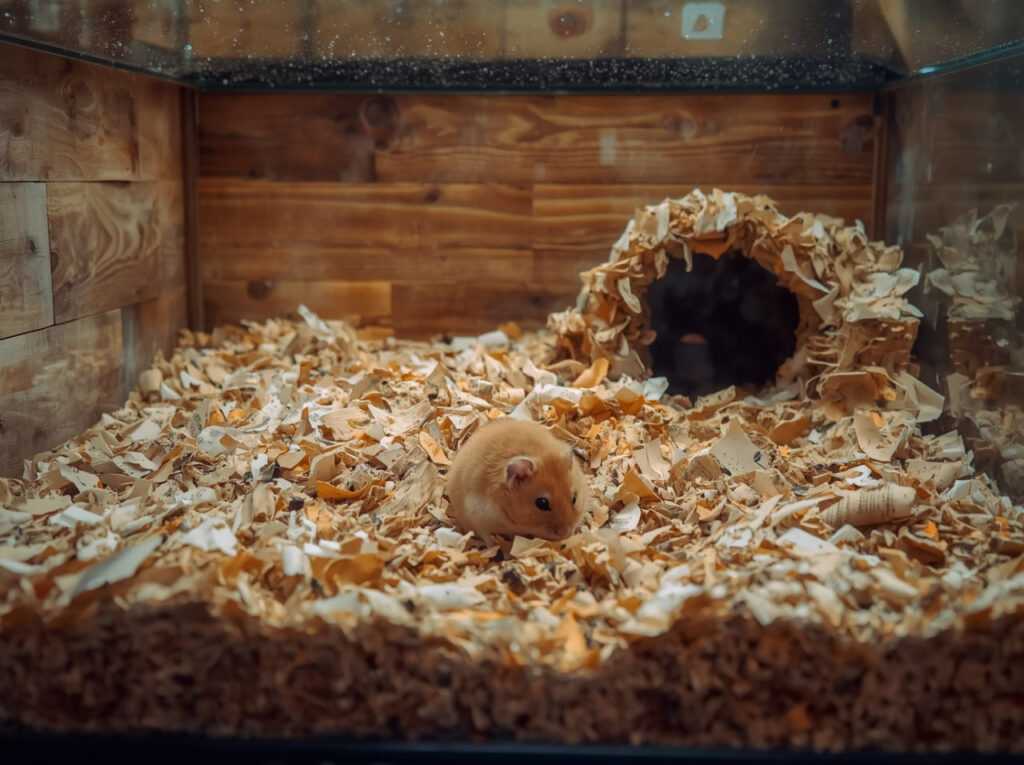
- Best enclosure types: large glass aquariums (40-gallon breeder tanks are excellent), IKEA Detolf display cases converted for hamster use, or large bin cages made from storage containers. These allow deep substrate that wire-bottom or shallow-floor cages do not.
- Avoid: multi-level wire cages with bar spacing over half an inch (escape risk and limb injury risk), very small commercial hamster cages, and cages with plastic mesh flooring that causes sores on hamster feet.
- Ventilation: glass enclosures need adequate ventilation — a secure mesh lid is ideal. Ensure airflow without drafts.
- Location: place the enclosure in a quiet area away from direct sunlight, drafts, and loud noise. Hamsters are nocturnal and sleep during the day — consistent daytime disturbance causes chronic stress.
Substrate and Bedding: Burrowing Is Not Optional
Burrowing is one of the most fundamental natural behaviors for hamsters — wild hamsters build complex multi-chamber burrow systems extending several feet underground. Providing adequate substrate depth is one of the most critical welfare requirements:
- Minimum depth: 6 inches of substrate. Many hamster welfare advocates recommend 10 to 12 inches or more for optimal wellbeing.
- Safe bedding materials: unscented paper-based bedding (Carefresh, Kaytee Clean & Cozy), kiln-dried aspen shavings, hemp bedding, or a combination of these.
- Safe materials for nesting: plain unscented tissues, toilet paper, or torn strips of paper. Hamsters will drag these into their burrow to create a sleeping chamber.
- Avoid: cedar and pine shavings (aromatic oils cause respiratory disease in hamsters), scented or colored bedding, and fluffy cotton nesting material (causes impaction, limb amputation, and choking as hamsters stuff it into their cheek pouches).
Diet and Nutrition
Hamsters are omnivores in the wild, eating seeds, grains, insects, and plant material. Their captive diet should reflect this diversity:
Commercial Hamster Mix or Lab Blocks
Use a high-quality commercial hamster mix — not a sugary muesli mix with lots of colored pieces (hamsters selectively eat the high-sugar components and leave the nutritious ones). Good options include Mazuri Rat and Mouse Diet, Higgins Sunburst, or Supreme Science Selective. Offer approximately one to two teaspoons per day for a Syrian hamster. Hamsters naturally hoard food in their burrow — you will rarely see the food bowl empty, because they move the food. Check the bowl daily and replenish as needed.
Fresh Foods (Three to Four Times Per Week)
Small amounts of the following are safe and beneficial: broccoli, carrot, cucumber, zucchini, cooked plain chicken or scrambled egg (small amounts for protein), apple (no seeds), pear, and leafy greens (avoid iceberg lettuce and spinach in large amounts). Fresh foods should be offered in small pieces and any uneaten portions removed within 24 hours to prevent spoilage in the burrow.
Water
Fresh, clean water must be available at all times. A water bottle mounted on the side of the enclosure works well for most hamsters. Check it daily — the ball valve can stick, cutting off water supply. A ceramic water bowl is a good backup.
Exercise: The Wheel Is Non-Negotiable
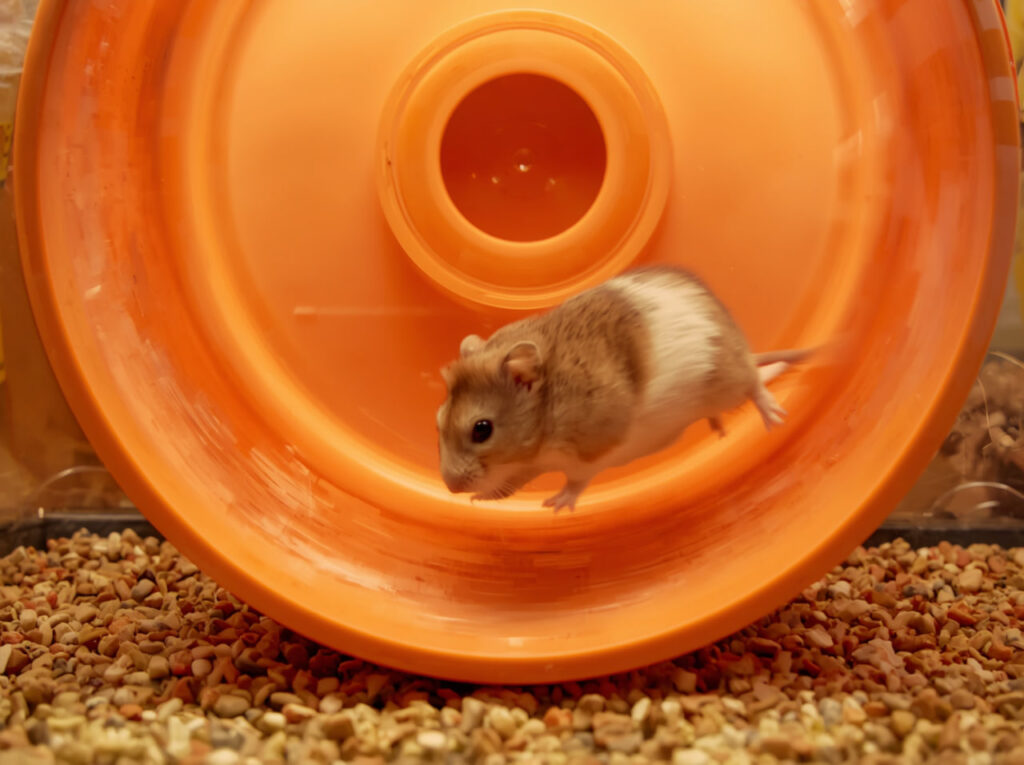
Wild hamsters run five to eight miles per night. A wheel is not optional — it is a fundamental welfare requirement that allows hamsters to express this natural behavior within their enclosure:
- Size: at least 10 inches in diameter for a Syrian hamster (smaller wheels force the hamster to run with a curved back, causing spinal injury over time). 8 inches for dwarf species.
- Surface: must be solid (no mesh or bar surfaces that can catch limbs and toes). The Silent Spinner, Wodent Wheel, and Niteangel wheels are well-regarded options.
- One per hamster: all hamsters need their own wheel. Sharing is not possible as hamsters are nocturnal and need continuous access throughout the night.
Taming and Handling
- Allow your new hamster two to three days to settle into their enclosure without attempting any handling. Provide food, check water, and allow them to acclimatize undisturbed.
- Begin by placing your hand, palm up, inside the enclosure without reaching toward the hamster. Allow them to investigate your hand at their own pace while you offer a small treat from your palm.
- Once the hamster takes treats from your palm reliably, allow them to walk onto your hand without lifting them — simply let them explore.
- Gradually progress to lifting your hand slightly while the hamster is on it. Cup both hands together so the hamster feels enclosed and secure.
- Always handle at low height or over a soft surface to prevent injury if the hamster jumps. Hamsters have no fear of heights and will jump from any elevation.
- Keep initial handling sessions to three to five minutes. Build up gradually. Morning sessions are usually unsuccessful as hamsters are naturally sleeping during the day — handle in the evening when they are naturally active.
Frequently Asked Questions
How long do hamsters live?
Syrian hamsters typically live two to three years. Dwarf species average 1.5 to 2 years, with Roborovski dwarfs living up to three to four years. Genetics, diet, enclosure quality, and veterinary care all significantly affect lifespan.
Can two hamsters live together?
Syrian hamsters are strictly solitary and will fight — often to the death — if housed together after weaning. Some dwarf species can be kept in same-sex pairs if introduced as littermates and given a large enough enclosure, but must be monitored closely for any aggression throughout their lives. When in doubt, house hamsters separately.
Do hamsters need veterinary care?
Yes. Find an exotic animal veterinarian before you bring your hamster home. Common conditions requiring veterinary care include wet tail (bacterial enteritis, most common in stressed young hamsters), dental disease, respiratory infections, and tumors — which are unfortunately common in Syrian hamsters over 18 months. Veterinary care for hamsters can be expensive relative to their purchase price.
Why is my hamster biting the cage bars?
Bar-chewing is a stereotypic behavior caused by stress, most commonly from an enclosure that is too small, substrate that is too shallow for burrowing, or insufficient enrichment. It is the hamster’s way of attempting to escape an inadequate environment. If your hamster bar-chews, upgrade to a larger enclosure with deeper substrate — the behavior typically stops within days.
Conclusion
Hamsters are genuinely rewarding pets for owners who take the time to understand their actual needs — not the needs implied by the small commercial cages and simplified advice that dominate the pet store experience. A large enclosure, deep burrowing substrate, an appropriate solid-surface wheel, a varied diet, and consistent patient handling produce a hamster that is healthy, active, curious, and a joy to observe and interact with. With the right setup, even a two-year hamster lifespan feels full and rich.