

Every dog owner has experienced that unmistakable moment — the chewed sofa cushion, the relentless pacing at midnight, the frantic sprinting circles around the living room for no apparent reason. These behaviors are not random acts of mischief, and they are not signs of a ‘bad dog.’ In the vast majority of cases, they are clear, urgent signals that your dog has unspent energy and is not getting adequate opportunity to expend it. Exercise is not a luxury for dogs — it is a fundamental biological need, as essential to their wellbeing as food, water, and sleep. Without sufficient physical activity and mental stimulation, dogs of virtually every breed and life stage develop behavioral problems that make daily life harder for both pet and owner. Understanding what under-exercise looks like, why it happens, and what to do about it is knowledge every dog owner needs.
Why Dogs Need Exercise: The Full Picture
Regular physical exercise provides dogs with a cascade of interconnected physical and psychological benefits that extend far beyond simply tiring them out:
- Cardiovascular health: sustained aerobic exercise strengthens the heart muscle, improves circulation, and reduces the risk of heart disease — one of the leading causes of death in middle-aged and senior dogs.
- Weight management: more than 50% of dogs in developed countries are currently overweight or obese. Exercise is the most effective non-dietary intervention for healthy weight maintenance and is essential for reversing obesity.
- Joint health and mobility: moderate regular exercise distributes joint fluid, maintains the muscle mass that supports and stabilizes joints, and slows the progression of conditions like osteoarthritis. Counterintuitively, insufficient movement accelerates joint deterioration.
- Mental and emotional health: exercise triggers endorphin, serotonin, and dopamine release in dogs — the same mood-regulating neurotransmitters involved in human mental health. Well-exercised dogs are demonstrably calmer, more emotionally stable, and more resilient to stress.
- Behavioral regulation: the majority of what owners label as ‘problem behavior’ is simply unexpressed physical and mental energy finding an outlet. Exercise depletes this reservoir in a healthy, appropriate way.
The Top 10 Signs Your Dog Is Not Getting Enough Exercise
Dogs cannot tell us directly when they are under-stimulated, but their behavior communicates it unmistakably. Here are the ten most common and recognizable signals:
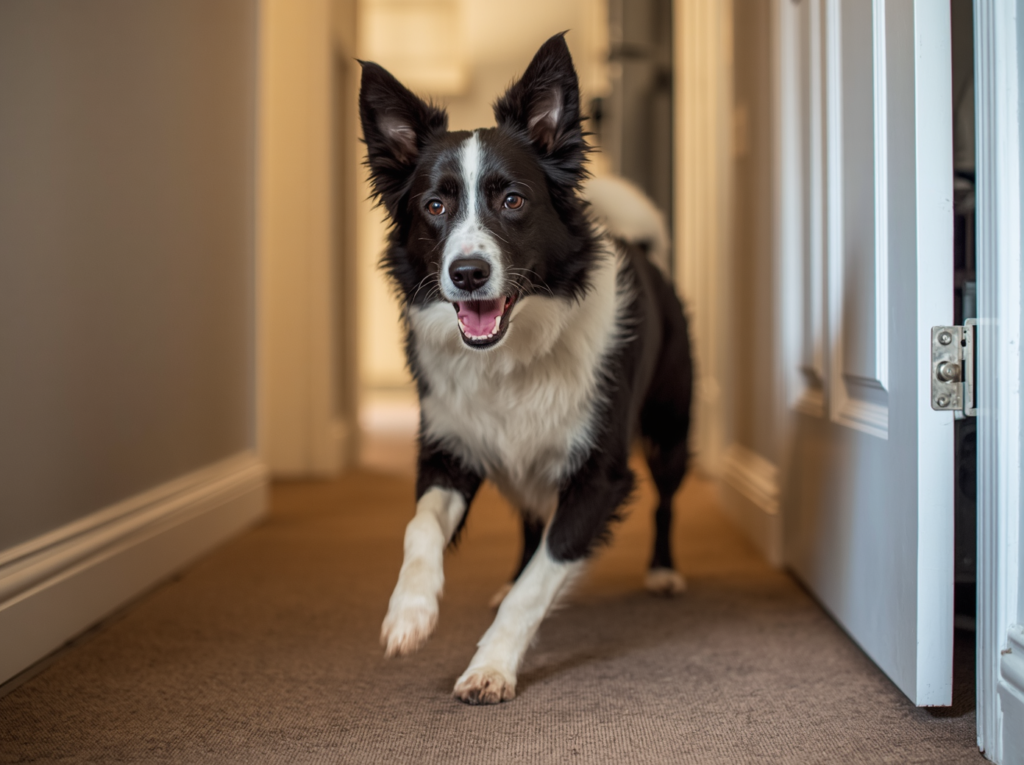
- Destructive chewing: furniture, shoes, baseboards, door frames — if your dog is systematically destroying household items, pent-up energy is the most common cause, especially in younger dogs and high-drive breeds.
- Excessive and persistent barking: a dog that barks continuously at every sound, at nothing in particular, or that whines constantly is almost certainly bored and under-stimulated.
- Hyperactivity and inability to settle: constant pacing, restless movement, an inability to lie down calmly for more than a few minutes — these are textbook signs of an energy surplus.
- The ‘zoomies’ at inappropriate times: frantic running in circles is normal after a bath or during play, but if it happens frequently in the evenings without provocation, it is a strong signal of accumulated unexpended energy.
- Rough and escalating play: play that starts normally but escalates into biting, nipping, or knocking people over is often energy-driven rather than aggressive.
- Weight gain without dietary changes: even on consistent feeding, a sedentary dog will slowly gain fat as metabolism slows. If your dog is getting heavier without a food change, lack of exercise is the most likely explanation.
- Extreme leash pulling: a dog that virtually drags you off the pavement at the start of every walk is releasing the energy they have accumulated since their last outing.
- Nighttime restlessness: waking repeatedly, pacing, or whining during the night strongly indicates that daytime exercise has not been sufficient to produce the fatigue necessary for restful sleep.
- Persistent attention-seeking: pawing, nudging, bringing toys repeatedly, following you from room to room — these are requests for active engagement, not just companionship.
- Difficulty focusing in training: a dog that breaks commands frequently, cannot maintain attention for more than a few seconds, or seems distracted throughout training sessions may simply have too much physical energy to channel mental focus.
How Much Exercise Does Your Dog Actually Need?
Exercise requirements vary considerably based on breed history, individual energy level, age, and health status. Here is a practical framework for estimating your dog’s needs:
High-Energy Working and Sporting Breeds: 90–120+ Minutes Per Day
Border Collies, Siberian Huskies, Vizslas, Belgian Malinois, Australian Shepherds, Dalmatians, Weimaraners, and Jack Russell Terriers were bred for sustained physical work — herding, hunting, sledding, protection — and carry the drive and stamina of working dogs. The most common mistake owners of these breeds make is dramatically underestimating their exercise needs. A 20-minute walk twice a day is woefully insufficient for a Border Collie. These dogs need vigorous, sustained activity for 90 minutes to two hours or more every single day.
Medium-Energy Companion and Sporting Breeds: 45–90 Minutes Per Day
Labrador Retrievers, Golden Retrievers, Standard Poodles, Beagles, Boxers, English Springer Spaniels, and most Spaniels need moderate to substantial daily exercise. Two solid 30-minute walks plus active play sessions in the garden or park will typically keep these breeds in good physical and behavioral condition.
Low-Energy Companion Breeds: 20–40 Minutes Per Day
Basset Hounds, Shih Tzus, English Bulldogs, Pugs, and most giant breeds like Great Danes are naturally less energetic and require less exercise overall. However, ‘low energy’ does not mean ‘no exercise.’ Regular gentle walks are still essential for maintaining healthy weight, joint mobility, and mental stimulation.
Puppies
Puppies should have shorter, more frequent exercise sessions to protect their developing growth plates — high-impact exercise on immature joints can cause lasting damage. The commonly used guideline is five minutes of structured exercise per month of age, up to twice per day. A four-month-old puppy, for example, should have no more than 20 minutes of on-lead walking twice per day. Free play in a safe, enclosed area is generally fine in between.
Senior Dogs
Senior dogs often benefit from shorter sessions at reduced intensity. The same frequency of outings (twice daily) with lower impact (shorter duration, gentle pace, soft surfaces) is ideal for most aging dogs. Exercise remains critically important for senior dogs — it maintains muscle mass, manages weight, distributes joint fluid, and supports cognitive health.
The Best Ways to Increase Your Dog’s Exercise
- Add a second daily walk: even adding 20 to 30 extra minutes per day has measurable physical and behavioral benefits for the vast majority of dogs.
- Vary your routes: new environments provide powerful mental stimulation in addition to the physical benefits of walking. A 30-minute sniff walk through a new park is mentally tiring in a profoundly positive way.
- Fetch and retrieval: one of the most efficient high-intensity exercises available to dog owners. Can be done in a small garden, a park, or even a long corridor at home.
- Swimming: exceptional low-impact cardiovascular exercise, particularly beneficial for dogs with joint conditions. Many breeds take to water enthusiastically.
- Off-leash dog parks: free running and social interaction provide both physical and social exercise simultaneously.
- Agility training: courses involving jumping, weaving poles, tunnels, and contact equipment provide intense physical and cognitive exercise. Many clubs offer beginner classes open to all breeds.
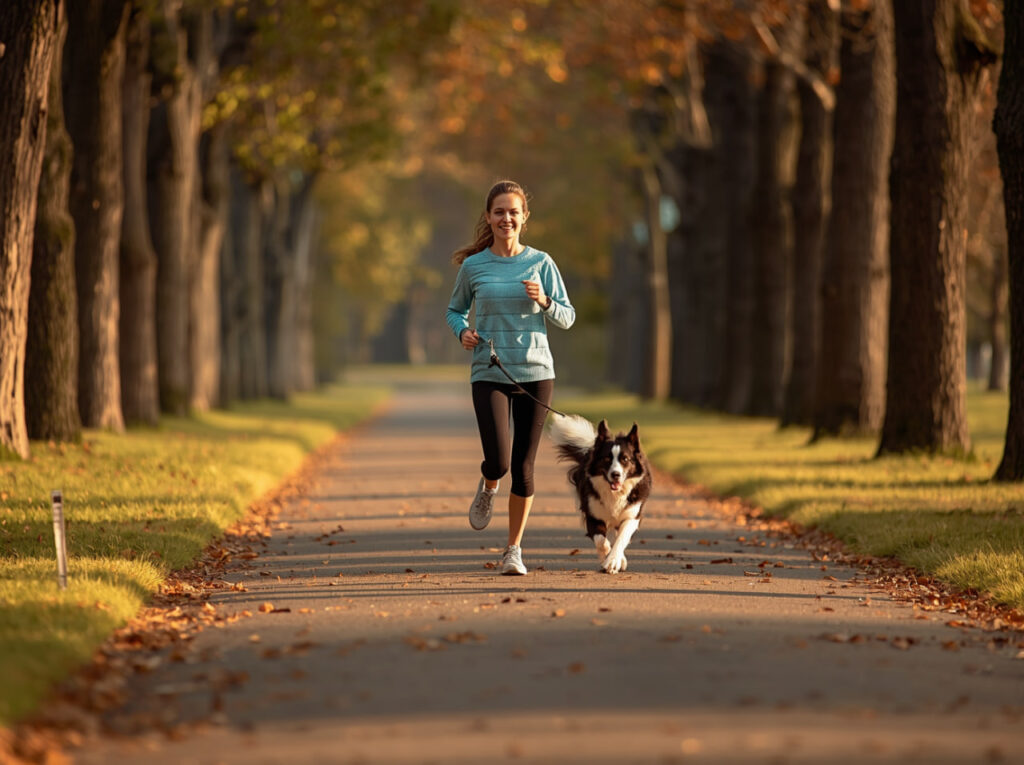
- Cycling or running with your dog: for healthy adult dogs of appropriate breeds, running alongside a bike or jogging with their owner is an excellent way to provide high-intensity exercise efficiently.
Dog daycare or a dog walker: for owners who work long hours, two to three days per week of doggy daycare or a midday dog walk by a professional provides structured exercise and social engagement.
Mental Exercise: The Often-Forgotten Half
Physical exercise addresses your dog’s body, but mental stimulation — often called ‘brain work’ — is equally essential and often dramatically underutilized by owners. Cognitive effort is genuinely tiring for dogs. A 15-minute training session or 20 minutes spent working on a food puzzle can produce a level of calm comparable to a 40-minute walk for many dogs. Incorporate these activities regularly to complement physical exercise:
- Training sessions: teaching new commands, tricks, and behaviors engages the dog’s problem-solving capacity and reinforces the bond between owner and pet.
- Puzzle feeders and stuffed Kongs: feeding meals from a food puzzle rather than a bowl can occupy a dog for 20 to 45 minutes and provide genuine mental challenge.
- Hide-and-seek with treats or toys: scatter treats in different rooms or hide a favorite toy and encourage your dog to find it using their nose.
- Nosework and scent games: teaching dogs to find specific scents taps into their most powerful sense and is deeply satisfying for virtually every breed.
- Interactive toys: automatic ball launchers, battery-operated motion toys, and rotating treat dispensers keep dogs engaged during periods when direct owner interaction is not possible.
Frequently Asked Questions
Can a dog get too much exercise?
Yes. Over-exercising is a real concern, particularly in puppies whose growth plates are still developing, and in brachycephalic breeds like Bulldogs, Pugs, and French Bulldogs whose shortened airways make sustained exercise dangerous. Signs of over-exercise include limping, extreme fatigue, reluctance to continue moving, excessive panting, and collapse. Stop immediately and contact your veterinarian if you observe any of these signs.
My senior dog has slowed down a lot. Should I still be exercising them?
Yes — but adapt the exercise to their current capacity. Shorter, gentler walks on soft surfaces, swimming, and light play are ideal for arthritic or aging dogs. Movement is actually therapeutic for arthritic joints — it distributes joint fluid and maintains the muscle mass that supports the joint. A veterinary assessment will help you determine the right exercise level for your specific senior dog.
My dog has a large garden. Isn’t that enough exercise?
For most dogs, garden access alone is not sufficient. The vast majority of dogs with garden access spend most of their outdoor time resting rather than running. Active, owner-led exercise — walks, fetch, training — is still necessary to meet breed-appropriate exercise requirements.
How quickly will I see improvement after increasing exercise? Most owners notice a measurable improvement in their dog’s behavior within three to five days of consistently increasing exercise. Reduced destructive activity, calmer indoor behavior, and improved focus during training are typically the first changes observed.
Conclusion
Adequate exercise is not optional for dogs — it is a cornerstone of physical health, behavioral stability, and emotional wellbeing. If you are seeing destructive behavior, persistent barking, restlessness, or unexplained weight gain, increasing exercise is often the single most powerful intervention available to you. Start by adding one extra walk each day, introduce a mental enrichment activity in the evening, and observe the change in your dog over the following week. The transformation in most dogs is remarkable and occurs faster than most owners expect.