
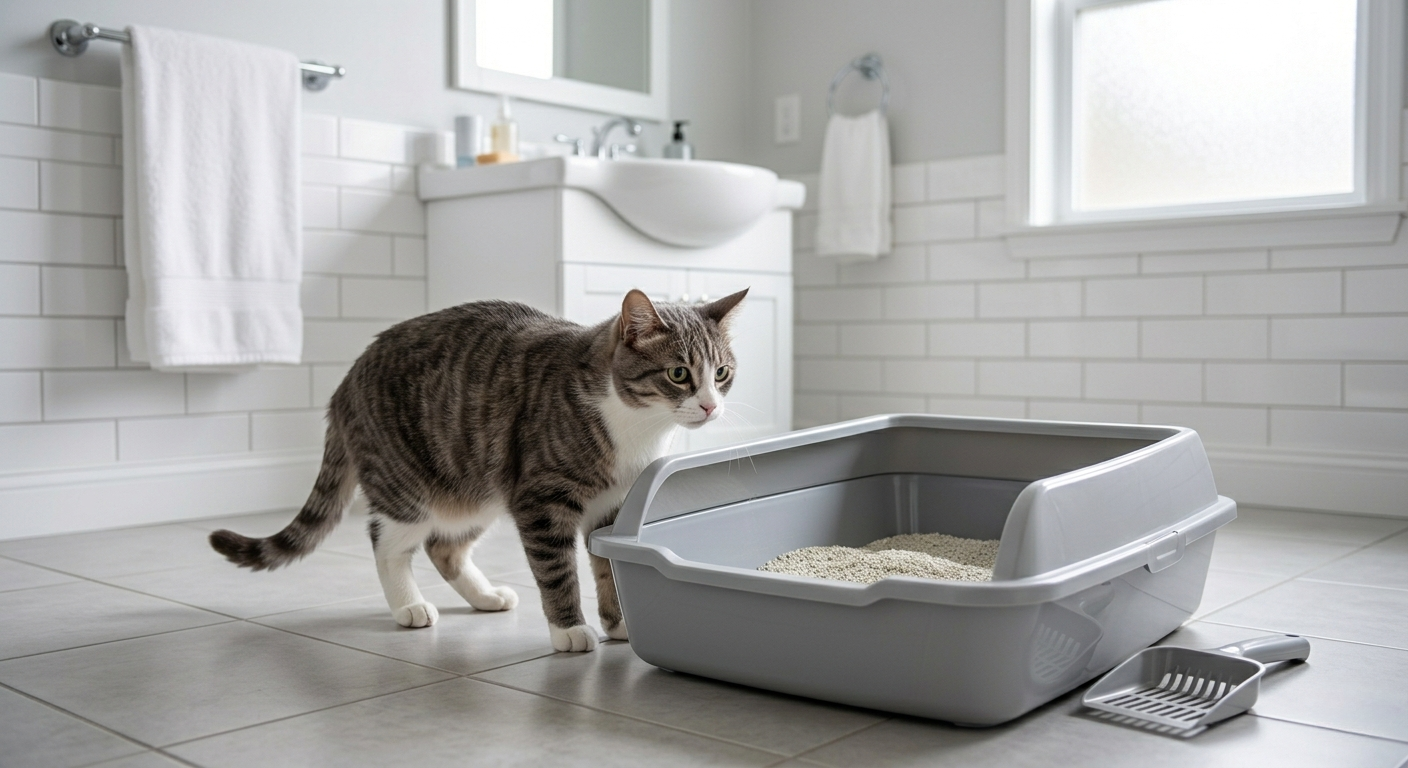
Finding cat urine or feces outside the litter box is one of the most frustrating experiences in cat ownership — and it is also one of the most misunderstood. Many owners interpret litter box avoidance as spite, stubbornness, or a deliberate act of defiance. In reality, cats virtually never eliminate outside the litter box for behavioral reasons when a suitable, clean, accessible litter box is available. When a previously reliable cat begins avoiding the box, they are communicating clearly that something is wrong — either medically, with the litter box setup, or both. Understanding the cause is the only path to a lasting solution.
Step One: Always Rule Out Medical Causes First
This is the most critical point in this entire article. Litter box avoidance — particularly straining, frequent trips with little or no output, blood in urine, or crying while eliminating — can indicate life-threatening medical conditions. In male cats specifically, a urethral obstruction (blocked bladder) is a veterinary emergency that can be fatal within 24 to 48 hours without treatment. Schedule a veterinary examination before implementing any behavioral or management changes if your cat shows:
- Straining to urinate or defecate with little or no output
- Frequent trips to the litter box producing only drops of urine or nothing
- Blood visible in urine or stool
- Crying or vocalizing while in the litter box
- Urine with a very strong or unusual odor
- Any change in litter box behavior in a cat over 7 years old
- A male cat that has not produced urine in 12 hours — emergency, call a vet immediately
Common medical causes of litter box avoidance include urinary tract infections (UTIs), feline idiopathic cystitis (FIC), bladder stones or crystals, constipation, diarrhea, inflammatory bowel disease, arthritis (which makes entering and posturing in the box painful), and cognitive dysfunction in senior cats.
The Most Common Non-Medical Causes and Fixes
1. The Litter Box Is Not Clean Enough
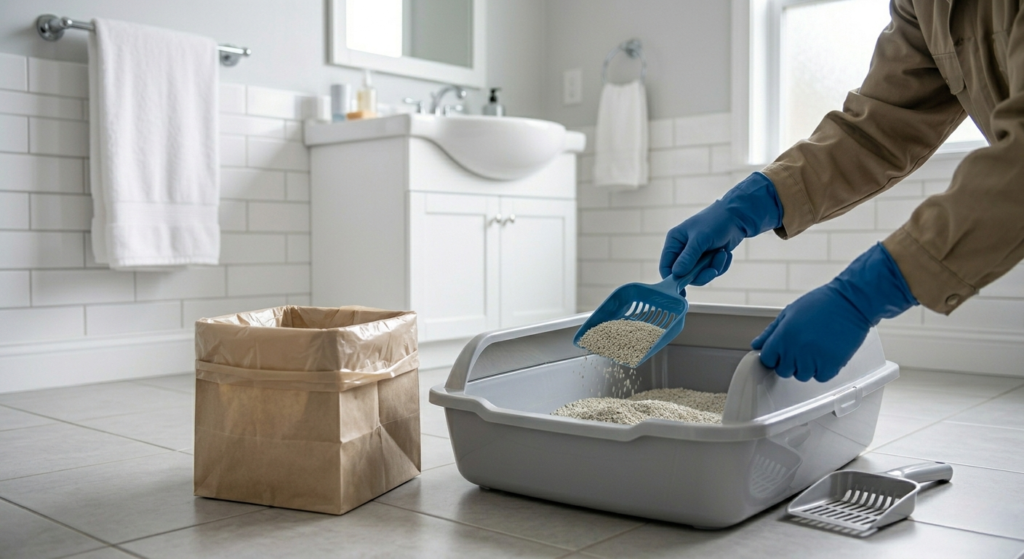
Cats have an exceptionally acute sense of smell — estimated to be 14 times stronger than a human’s. A litter box that appears acceptably clean to you may smell overwhelmingly soiled to your cat. Cats are fastidious by nature and many will avoid a box that is not scooped to their standard. The minimum standard: scoop at least once daily. Complete litter change and box washing weekly. If you have multiple cats, the box can become unacceptable within hours of the first use. Many cats with elimination problems resolve completely with a strict daily scooping routine.
2. Wrong Litter Type or Sudden Litter Change
Cats develop strong preferences for specific litter textures and scents, often based on the litter they used during kittenhood. Unscented, fine-grained clumping litter is the most universally preferred type in studies of feline litter preference. Strongly scented litters that smell pleasant to humans are frequently aversive to cats — they mask the smell of their own scent marks and may irritate the respiratory tract. Switching litter types abruptly is a common trigger for litter box avoidance. If a change is needed, transition gradually by mixing increasing proportions of the new litter with the existing litter over two to three weeks.
3. Box Location Problems
Location affects litter box acceptance in ways that many owners do not anticipate:
- Too close to food or water: cats instinctively avoid eliminating near their food source. Keep the litter box in a completely separate location from feeding stations.
- Too noisy or high-traffic: placing a litter box next to a washing machine, in a busy hallway, or near a child’s play area exposes the cat to startling noises and activity during a vulnerable moment.
- Too difficult to access: for senior or arthritic cats, a box on a different floor or behind a pet door that requires effort to push open may effectively be inaccessible. The box must be easily reachable at all times.
- Too hidden: while owners prefer boxes out of sight, very concealed locations (inside closed cabinets, behind furniture) may feel like a trap to anxious cats. Ensure the cat can see an exit from the box position.
4. Box Is Too Small
The standard commercial litter box is too small for most adult cats. The rule of thumb: the box should be at least 1.5 times the length of the cat from nose to base of tail. Many cats avoid small boxes because they cannot turn around comfortably, assume a full natural squatting posture, or avoid soiling the sides. A large plastic storage container (without the lid) makes an excellent, inexpensive, oversized litter box — far larger than most commercial options.
5. Not Enough Litter Boxes
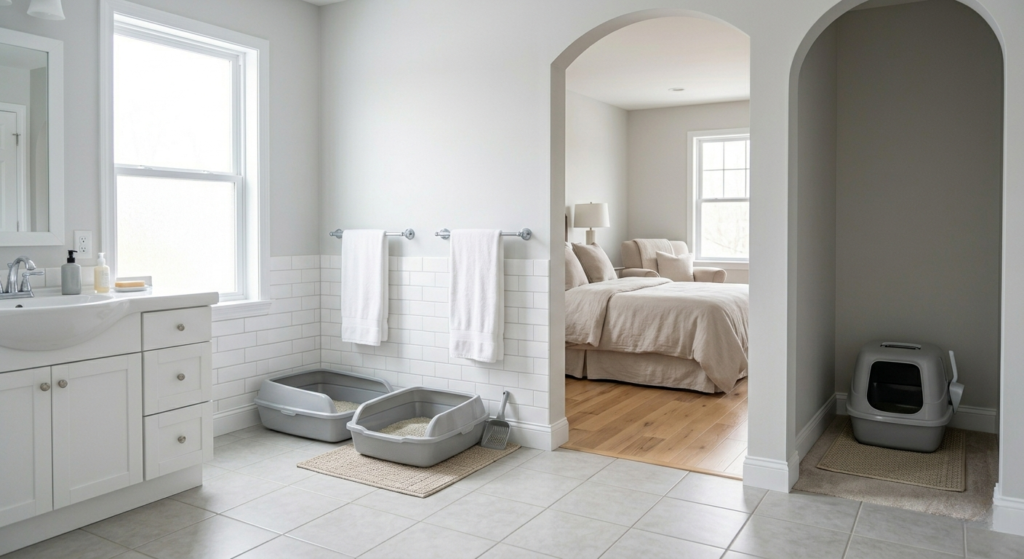
The standard recommendation is one litter box per cat plus one extra. In a multi-cat household, this is not a luxury — it is essential. A dominant cat may guard a litter box, effectively denying subordinate cats access. Even in single-cat households, having two boxes in different locations gives the cat options and prevents territorial marking behavior caused by a cat feeling that their single box is insufficient.
6. Covered vs Uncovered Boxes
Many owners prefer covered boxes for odor control and aesthetics. However, covered boxes trap odors inside — which is exactly the opposite of what the cat prefers. Most cats prefer open, uncovered boxes. If your cat has been avoiding a covered box, removing the cover immediately and observing whether usage improves is a quick diagnostic step.
7. Negative Association With the Box
If a cat experienced pain while using the litter box — from a UTI, constipation, or an injury — they may associate the box itself with that pain and begin avoiding it even after the medical issue is resolved. Introducing a second box in a different location with fresh litter (potentially a different litter type) often breaks this conditioned avoidance.
Managing Inappropriate Elimination While You Troubleshoot
- Clean all elimination accidents with an enzymatic cleaner (Nature’s Miracle or similar) — standard cleaning products do not break down urine proteins that continue attracting the cat back to the same spot
- Temporarily restrict access to frequently soiled areas while identifying and addressing the root cause
- Place a litter box in or near the area the cat is choosing to eliminate — this is a temporary measure to give the cat an appropriate outlet while the underlying issue is resolved
- Never punish the cat for eliminating outside the box — punishment creates fear without providing information about where the cat should eliminate, and worsens anxiety-related elimination problems
Frequently Asked Questions
My cat only goes outside the box sometimes. What does that mean?
Intermittent litter box avoidance is one of the most common presentations of feline idiopathic cystitis (FIC) — a stress-related inflammatory bladder condition that causes unpredictable urgency. A vet visit is warranted to rule this out. Environmental stress management and dietary changes are the primary treatment.
My cat is using the box for urine but defecating outside it. Why?
This is most commonly a litter box size issue (the box is too small for comfortable defecation posturing), or the cat dislikes the litter texture for defecation specifically. Try a larger box and confirm the litter depth is at least 3 to 4 inches.
My senior cat has started missing the box. Is this aging?
In senior cats, missing the box (eliminating just outside the edge) is most commonly caused by arthritis making it painful to step over the box sides. A low-entry litter box or a large storage container with one end cut down to approximately 2 inches resolves this in most cases.
My newly adopted cat is not using the litter box. What should I do?
Confine the new cat to a smaller space (the safe room setup) with a litter box that is easily accessible. New cats in large unfamiliar homes may not be able to find the box in time. Once they are using the box consistently in the safe room, gradually expand their access to the rest of the home.
Conclusion
Litter box problems are solvable in the vast majority of cases once the correct cause is identified — and identifying the cause requires ruling out medical issues first and then systematically evaluating the box setup. The most common, easiest-to-fix causes are an insufficiently clean box, wrong litter type, inappropriate location, and inadequate box size. Approach the problem analytically rather than emotionally, and most cats return to consistent litter box use quickly once the underlying issue is addressed.