
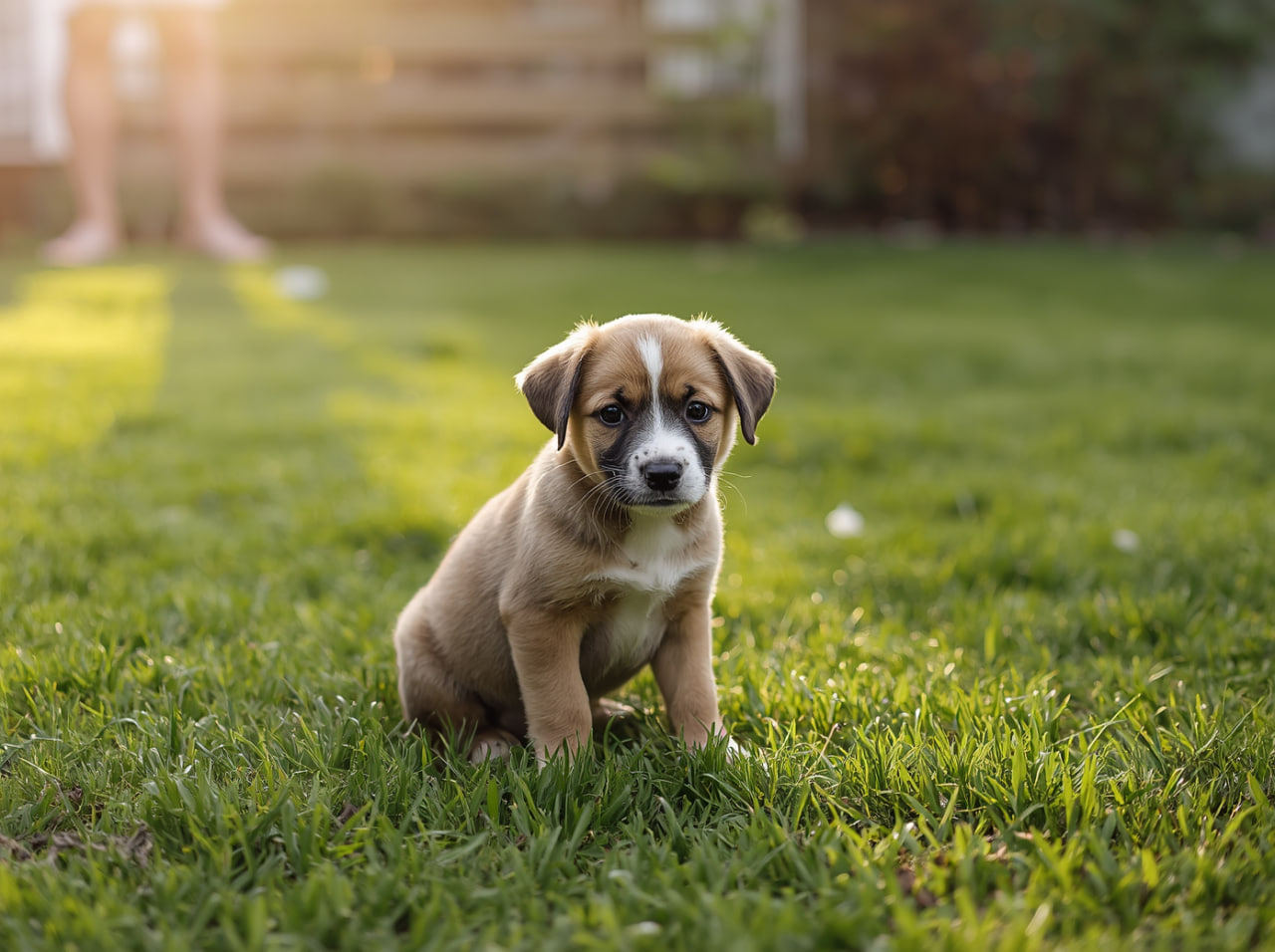
Potty training is universally cited as one of the most challenging aspects of new puppy ownership — and also one of the most manageable when approached with the right method. The speed at which house training is achieved depends almost entirely on two variables: how consistent your schedule is and how vigilantly you supervise your puppy between outdoor trips. Intelligence and breed are far less important factors than most new owners assume. A ‘slow’ puppy on a strict schedule with vigilant supervision will be reliably house-trained much faster than a ‘smart’ puppy with inconsistent management. This guide gives you the complete system — schedule, crate training, reward protocol, and accident management — that veterinary behaviorists and professional trainers consistently recommend.
Understanding Puppy Biology First
Before establishing a schedule, understanding your puppy’s physical capabilities prevents frustration and unrealistic expectations:
- Bladder capacity: a puppy can typically hold their bladder for approximately one hour per month of age, plus one. An eight-week-old puppy can hold it for approximately two to three hours maximum during the day — and considerably less when active, playing, excited, or immediately after waking or eating.
- Intestinal transit: puppies almost always need to defecate within 5 to 15 minutes of eating. Using this predictable window is one of the most effective tools in house training.
- Developmental timeline: true voluntary sphincter control does not fully develop until approximately 16 weeks of age. Before this point, accidents are physiologically unavoidable — the puppy literally cannot control elimination for extended periods. House training before 16 weeks is about management and schedule, not about the puppy having ‘learned’ full bladder control.
- Nighttime: a puppy under 12 weeks cannot comfortably hold their bladder through the night. Expect one to two nighttime outings for very young puppies, reducing to zero by approximately 14 to 16 weeks for most puppies.
Step 1: Establish a Non-Negotiable Schedule
The schedule is the foundation of house training. Puppies establish elimination habits quickly — and they will establish those habits in the locations you give them access to. Deny access to indoor elimination by creating frequent outdoor opportunities before the bladder is full:
- Immediately upon waking from any sleep (day or night): carry young puppies directly to the outdoor spot — do not allow walking through the house, as the movement stimulates the urge to eliminate.
- Within 5 to 15 minutes of finishing every meal.
- After every active play session, even brief ones.
- Immediately following any exciting event (arrival of guests, car rides, new experiences).
- Every 1 to 2 hours during active daytime periods for puppies under 12 weeks.
- Before crating for any period longer than 30 minutes.
- Last thing every night before bed.
Take your puppy to the same outdoor spot every time. The familiar scent of previous eliminations acts as a powerful cue that encourages the puppy to eliminate in that location. Stay with the puppy and wait — do not bring them back inside until they have eliminated.
Step 2: Reward Outdoor Elimination Immediately and Enthusiastically
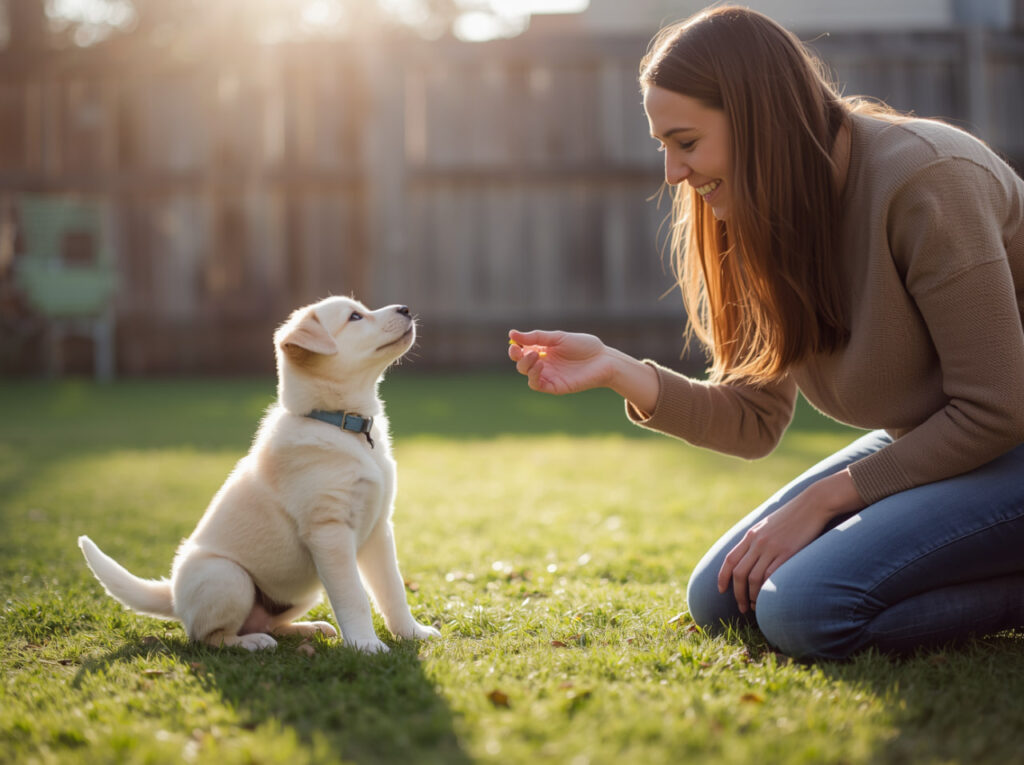
The timing of the reward is critical and cannot be overstated. The reward must arrive within one to two seconds of the puppy finishing elimination — not after you have walked back inside, not after you have praised them three times, not after you have reached into your pocket. Within one to two seconds of the last drop. Use high-value treats (soft, small, novel) and enthusiastic but calm praise simultaneously. You can introduce a cue word like ‘go potty’ or ‘hurry up’ by saying it calmly as the puppy begins eliminating — eventually they will begin eliminating on cue, which is enormously useful for travel, vet visits, and wet weather when you need them to eliminate quickly.
Step 3: Use Crate Training Correctly
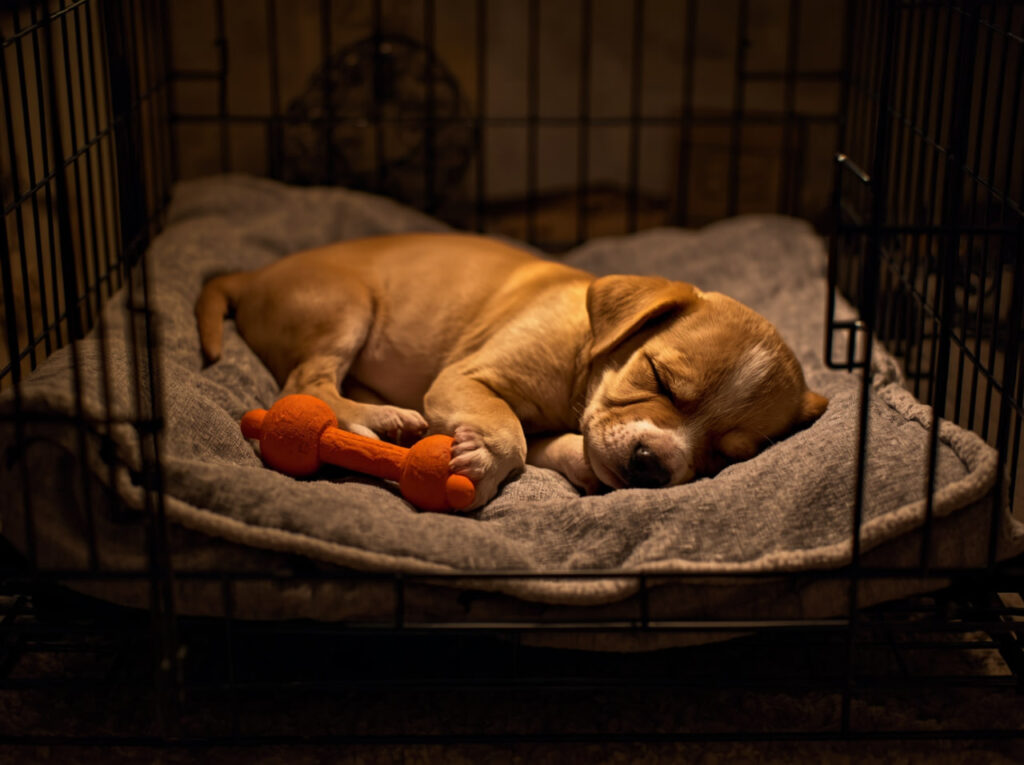
Crate training leverages one of dogs’ most powerful natural instincts: the instinct not to eliminate in their sleeping area. When used correctly, the crate is a powerful house training tool — not a punishment device. Correct use depends entirely on appropriate sizing:
- Crate size: just large enough for the puppy to stand up, turn around completely, and lie down in a natural position. A crate that is too large allows the puppy to eliminate in one end and sleep in the other — which defeats the entire behavioral mechanism.
- The rule: when you cannot supervise the puppy directly, they are in the crate. When they are out of the crate, you are watching them with 100% attention. There is no middle ground in the early weeks.
- Never use the crate as punishment: the puppy must associate the crate with safety and comfort. Feed meals inside the crate, place a worn piece of your clothing inside, and use puzzle toys and chews to build positive associations.
- Time limits: do not crate a puppy for longer than their bladder can hold (1 hour per month of age, maximum). Exceeding this forces the puppy to eliminate in the crate, which undermines the behavioral foundation.
- Crate location: keep the crate in your bedroom during the night. This allows you to hear the puppy when they wake and need to go out, and reduces separation anxiety.
Step 4: Manage Indoor Supervision to Prevent Accidents
Accidents are inevitable and normal during house training — but each one that occurs indoors sets back the process slightly by reinforcing the scent of elimination in an indoor location. The goal of supervision is to prevent as many indoor accidents as possible:
- Tether the puppy to you with a leash clipped to your belt when they are out of the crate and you want them to have freedom but cannot watch them 100%.
- Confine to one room with easy-to-clean flooring during the initial weeks — do not allow free access to the entire house.
- Learn your puppy’s pre-elimination signals: sniffing the floor, circling, suddenly losing focus on play, or squatting. Interrupt immediately with a cheerful ‘outside!’ and bring them out promptly.
- When you cannot actively supervise: crate.
Step 5: Handle Accidents Correctly — This Matters More Than You Think
How you respond to indoor accidents directly affects how quickly house training progresses. The most common mistakes — both of which slow the process — are punishment after the fact and under-cleaning:
- If you catch the puppy in the act: interrupt with a calm, neutral sound (a clap, a single ‘outside’), pick the puppy up mid-stream if possible, and immediately bring them to the outdoor spot. If they finish outside, reward enthusiastically. This teaches the correct location without creating fear.
- Never punish after the fact: if you find an accident and the puppy has moved on, they have absolutely no ability to connect your reaction with what happened earlier. Rubbing a puppy’s nose in an accident or scolding after the fact creates fear and confusion — not learning. It is one of the most persistently harmful training myths.
- Clean accidents with an enzymatic cleaner: standard cleaning products do not fully break down the urine proteins that mark the location as an elimination site for the puppy’s nose. Only enzymatic cleaners (Nature’s Miracle, Simple Solution) fully eliminate the scent that will otherwise draw the puppy back to the same spot.
- Log accidents: track the time and location of every accident. Patterns reveal gaps in your schedule — if accidents consistently happen at a specific time, add an outdoor trip before that window.
Frequently Asked Questions
How long does it take to potty train a puppy?
With a strict schedule and consistent supervision, most puppies reach reliable house training by 4 to 6 months of age. Small breeds often take longer — up to 12 months — due to smaller bladder capacity. ‘Reliable’ means going weeks without accidents, not just a few clean days.
How do I potty train at night?
Set an alarm to take your puppy out every 3 to 4 hours for the first few weeks. Each week, add 30 minutes to the interval. Most puppies can sleep through the night (6 to 7 hours) by 14 to 16 weeks. Keep nighttime trips brief and boring — no play, no treats, just out and immediately back to the crate.
Is puppy pad training a good idea?
Pads teach puppies that eliminating indoors on an appropriate surface is acceptable — which directly contradicts outdoor-only training. If pads are necessary (apartment without easy outdoor access, temporary mobility limitation), plan a deliberate transition to outdoor-only later, which adds weeks to the overall timeline. Avoid pads if outdoor access is possible.
My puppy goes outside and then has an accident inside immediately after. Why?
The puppy was likely distracted outdoors and did not fully empty their bladder or bowel. Stay outside longer and wait for both urination and defecation before bringing them inside. Many puppies need to walk a bit before they will eliminate — avoid bringing them in after only one piece of the puzzle.
Conclusion
Potty training a puppy requires your full attention for approximately four to six weeks — and it pays off for the next ten to fifteen years. The system is simple: strict schedule, immediate rewards, correct crate use, constant supervision, and calm correct handling of accidents. Every puppy owner who implements this consistently reports the same experience: it feels impossible for the first week, manageable in week two, and largely done by week six. Stay consistent, stay positive, and remember that accidents are information — each one tells you exactly where your schedule needs tightening.