

Eggs rank among the most nutritionally complete foods available — they contain every essential amino acid, a wide spectrum of vitamins and minerals, and healthy fats that support coat and skin health. It is no surprise that dog owners frequently wonder whether their pets can share in these benefits. The answer is yes, with one important distinction: cooked eggs are the clear recommendation from veterinary nutritionists, while raw eggs carry a small but real set of risks that are worth understanding. This guide covers everything you need to know about feeding eggs to your dog — the nutritional benefits, the raw versus cooked debate, safe portion sizes, preparation tips, and the specific situations where caution is warranted.
Nutritional Profile of Eggs for Dogs
Eggs are often described as nature’s most complete protein source, and that description is accurate. A single large egg (approximately 50 grams) provides:
- High-quality complete protein: approximately 6 grams per egg, containing all nine essential amino acids that dogs cannot synthesize themselves and must obtain from food.
- Healthy fats: including omega-3 and omega-6 fatty acids that support skin health, coat shine, and inflammatory balance.
- Vitamin A: supports vision, immune function, and cell growth.
- Vitamin B12: essential for nervous system health, red blood cell formation, and DNA synthesis.
- Vitamin D: critical for calcium absorption, bone health, and immune regulation.
- Riboflavin (Vitamin B2): supports energy metabolism and healthy skin.
- Selenium: a trace mineral and powerful antioxidant that supports thyroid function and immune health.
- Iron: essential for oxygen transport in the blood.
- Choline: supports brain function and cell membrane integrity — particularly important for puppies and aging dogs.
- Lutein and zeaxanthin: carotenoid antioxidants associated with eye health.
This nutritional density makes eggs one of the most cost-effective, naturally nutritious treats you can offer your dog. They are also extremely palatable — virtually every dog loves the taste of eggs.
Raw Eggs vs Cooked Eggs: The Key Difference
This is the most important practical question for dog owners, and the answer comes down to two distinct risks associated with raw eggs:
Risk 1 — Salmonella Contamination
Raw eggs carry a small but real risk of Salmonella contamination — the same bacterial pathogen that causes foodborne illness in humans. Healthy adult dogs are more resistant to Salmonella than humans, and many dogs eat raw eggs without any issues. However, dogs with compromised immune systems — including puppies, senior dogs, and dogs on immunosuppressive medications — are at higher risk. Additionally, owners who handle raw eggs and then touch their face or other household surfaces can themselves be exposed to Salmonella. For households with young children, elderly family members, or immunocompromised individuals, this cross-contamination risk is a meaningful consideration. Cooking eggs to a safe internal temperature eliminates Salmonella entirely.
Risk 2 — Avidin and Biotin Deficiency
Raw egg whites contain a protein called avidin, which binds to biotin (Vitamin B7) in the digestive tract and prevents its absorption. A single raw egg occasionally will not cause problems, but regular feeding of raw egg whites over time can lead to biotin deficiency. Signs of biotin deficiency in dogs include hair loss, skin problems, and digestive upset. Importantly, cooking destroys avidin — making cooked eggs completely free of this risk. The egg yolk is also naturally rich in biotin, which partially offsets the effect of avidin in the white, but not entirely in cases of very frequent raw egg feeding.
The Recommendation: Cooked Eggs
Given these risks, the veterinary consensus is that cooked eggs are the safest and most beneficial option for dogs. Plain scrambled eggs, hard-boiled eggs, or poached eggs prepared without butter, oil, salt, or seasoning of any kind are all excellent. The cooking method itself does not significantly affect the nutritional value — the protein quality and vitamin content remain high after cooking.
How Many Eggs Can a Dog Eat? Safe Portion Guide
Eggs are calorie-dense — a single large egg contains approximately 70 to 78 calories. This is significant for smaller dogs, whose total daily caloric needs may be only 200 to 400 calories. Use the following as a practical guide:
- Extra-small dogs (under 10 lbs): a quarter to a half egg, two to three times per week maximum.
- Small dogs (10–20 lbs): half an egg per day, or one whole egg every two to three days.
- Medium dogs (20–50 lbs): one whole egg per day.
- Large dogs (50–90 lbs): one to two eggs per day.
- Giant breeds (over 90 lbs): up to two eggs per day, factored into total daily calorie intake.
For dogs with a history of pancreatitis, obesity, or kidney disease, consult your veterinarian before adding eggs to the regular diet. The high fat content of egg yolks can exacerbate pancreatitis in susceptible dogs.
Can Dogs Eat Eggshells?
Yes — eggshells are an excellent and bioavailable source of calcium carbonate for dogs. This is particularly valuable for dogs that cannot tolerate bone-based calcium sources, or for raw-fed dogs whose diet needs calcium supplementation. To feed eggshells safely, dry them thoroughly in a low oven (200°F/93°C for 10 minutes), then grind them into a fine powder using a coffee grinder or mortar and pestle. Sprinkle a small amount over your dog’s regular meal. Ask your veterinarian for the appropriate amount based on your dog’s size, diet, and any underlying health conditions.

How to Serve Eggs to Your Dog: Practical Tips
- Plain scrambled eggs: the easiest option. Scramble in a dry non-stick pan with no butter, oil, salt, or seasoning. Let cool to room temperature before serving.
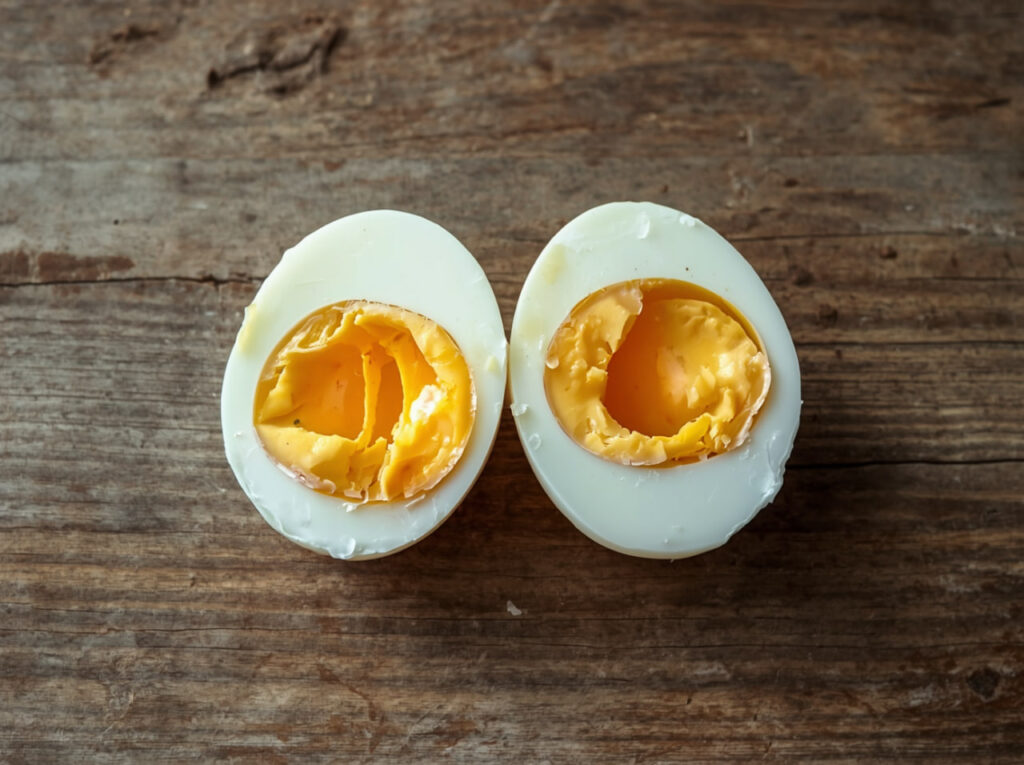
- Hard-boiled eggs: boil for 10–12 minutes, cool completely, peel, and serve whole for large dogs or sliced for smaller dogs.
- Poached eggs: boiled in water with no vinegar, salt, or other additives. Very gentle cooking method that preserves nutrients well.
- Mixed into regular food: for dogs who need encouragement to eat, a crumbled hard-boiled egg mixed into their regular kibble can be a powerful appetite stimulant.
- What to avoid: fried eggs (excess fat), seasoned eggs, eggs cooked with onion or garlic (both toxic to dogs), and eggs with cheese or cream.
Frequently Asked Questions
My dog ate a raw egg off the counter. Should I worry?
One raw egg is unlikely to cause any problems in a healthy adult dog. Monitor for vomiting or diarrhea over the next 24 hours. Contact your vet if symptoms develop or if your dog is a puppy, elderly, or has a compromised immune system.
Can puppies eat eggs?
Yes, in appropriate amounts. A quarter of a cooked egg offered a few times per week is suitable for most puppies over 8 weeks old. Introduce gradually and watch for any digestive reaction.
Are egg yolks or egg whites better for dogs?
Both are beneficial and most appropriate when fed together as a whole egg. The yolk provides the majority of the vitamins and healthy fats, while the white provides lean protein. Feeding the whole egg ensures nutritional balance.
Can I use eggs as a training treat?
Scrambled eggs can be cooled, cut into small pieces, and used as high-value training treats. They are particularly effective for dogs that are picky about conventional commercial treats.
Is it okay to feed eggs every day?
Yes for most healthy adult dogs, within the appropriate portion size for their weight. Dogs with pancreatitis, high cholesterol, or obesity should have eggs limited to a few times per week at most, and always under veterinary guidance.
Conclusion
Eggs are one of the most nutritionally complete, affordable, and universally enjoyed natural foods you can add to your dog’s diet. Cook them plain — scrambled, boiled, or poached with zero seasoning — serve in appropriate portions for your dog’s size, and enjoy the enthusiasm with which virtually every dog greets egg day. For most healthy adult dogs, eggs can be a regular and genuinely beneficial part of their nutritional routine.