
Anxiety in dogs is not a character flaw, a training failure, or something a dog can simply be told to overcome. It is a genuine neurological and emotional state — often deeply rooted in genetics, early experience, or specific learned associations — that causes real suffering. Dogs with anxiety live in a state of chronic or episodic physiological stress that affects their health, behavior, and quality of life in measurable ways. Understanding what anxiety actually is, how to recognize it in your specific dog, and which interventions have the strongest evidence behind them is the foundation of genuinely helping an anxious dog rather than simply managing or suppressing symptoms.
Understanding Dog Anxiety: Types and Triggers
Canine anxiety takes several distinct forms, and the most effective interventions differ significantly between types:
- Separation anxiety: distress specifically triggered by the owner’s absence or anticipated absence. Typically begins within minutes of the owner leaving. Signs include destructive behavior focused on exits, vocalization, inappropriate elimination, and frantic activity on security cameras.
- Noise phobia: intense fear response to specific sounds — thunder, fireworks, construction, gunshots. Often worsens over time without intervention due to sensitization.
- Social anxiety: fear of unfamiliar people, other dogs, or social situations. Ranges from mild apprehension to full panic in novel social environments.
- Generalized anxiety disorder: chronic, pervasive anxiety that is not tied to specific triggers. The dog is consistently hypervigilant, unable to fully relax, and reactive to minor environmental changes.
- Specific phobias: intense fear of specific objects, environments, or situations — car rides, veterinary clinics, grooming, specific surfaces, and many others.
Recognizing Anxiety: Behavioral Signs
- Panting without physical exertion or heat as explanation
- Yawning repeatedly in non-sleepy contexts
- Lip licking not associated with food
- Whale eye (showing whites of the eyes)
- Lowered tail, tucked between the legs
- Ears pinned back or flattened
- Trembling or shaking
- Pacing and inability to settle
- Destructive behavior in the owner’s absence
- Excessive vocalization — barking, whining, howling
- Excessive drooling
- Loss of appetite in familiar or stressful environments
- Avoidance behaviors — hiding, pulling away, refusing to approach
- Redirected aggression when unable to escape a stressor

Strategy 1: Identify and Reduce Exposure to Triggers
The first and most fundamental strategy is accurate trigger identification. Anxiety does not occur in a vacuum — there is always something (or a combination of things) that initiates the anxiety response. Keeping a simple behavior diary for one to two weeks, noting the time, context, and apparent trigger each time your dog shows anxiety signs, often reveals patterns that were not previously obvious. Once triggers are identified, reducing unavoidable exposure while implementing desensitization training significantly reduces the frequency and intensity of anxiety responses.
Strategy 2: Create a Safe Den Space
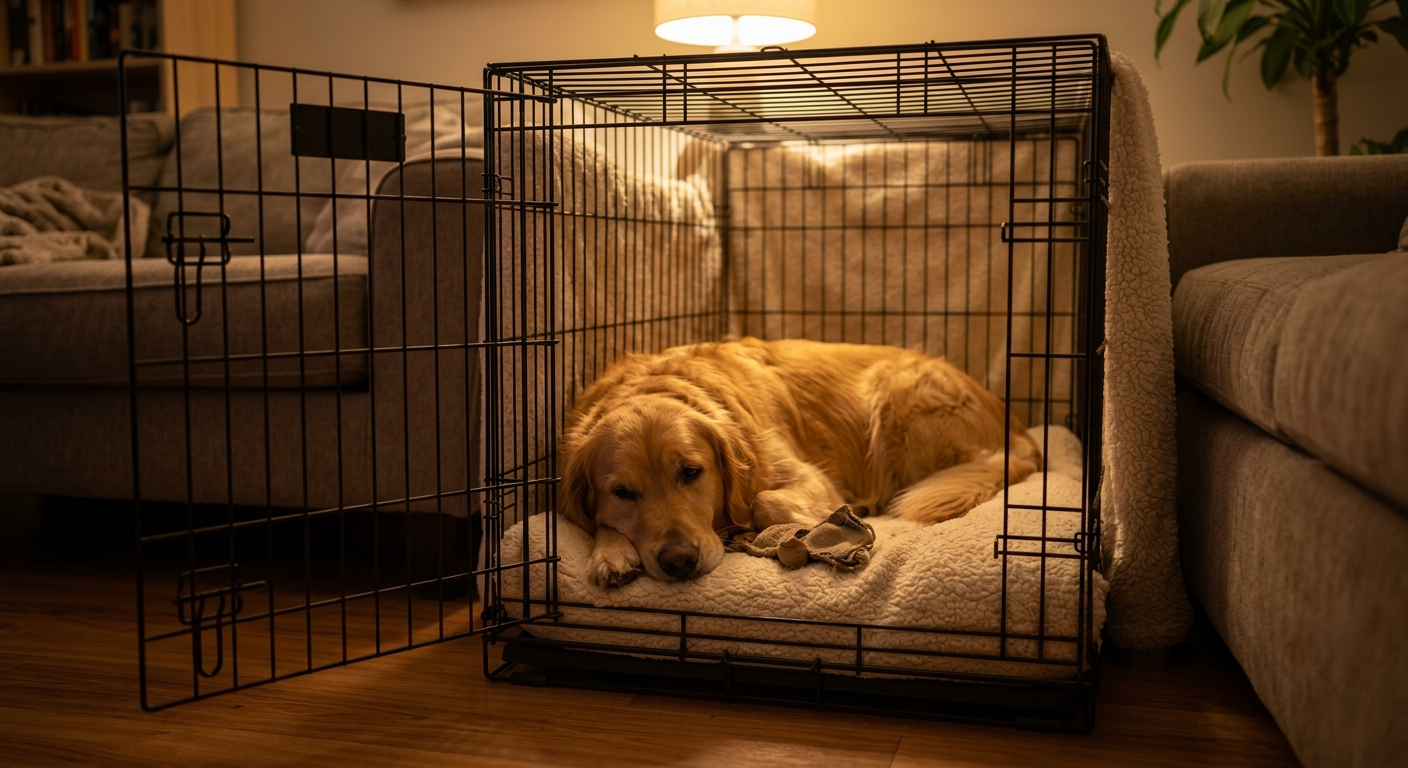
Every anxious dog benefits from having a clearly defined safe space — an area they can retreat to voluntarily when overwhelmed. This should be: enclosed on three sides (a crate with a cover, a dog cave bed, or a space under a desk), positioned in a quiet area away from high-traffic zones, equipped with familiar bedding and a worn piece of your clothing (for separation anxiety), and accessible at all times. Critically, the safe space must never be used as a punishment location. The dog must associate it entirely with safety, rest, and positive experiences. A correctly established safe den is one of the most powerful ongoing management tools for anxiety of any type.
Strategy 3: Exercise and Mental Stimulation as Anxiety Management
Chronic under-exercise is a significant contributor to anxiety in many dogs — unspent physical energy maintains a high baseline arousal level that makes anxiety responses more intense and more easily triggered. Daily aerobic exercise that actually tires the dog physically (not just a sedate walk) reduces baseline cortisol levels, increases serotonin and endorphin production, and provides an appropriate outlet for nervous energy. For most anxious dogs, targeting the higher end of their breed-appropriate exercise requirements produces noticeable anxiety reduction within one to two weeks of consistent implementation. Mental stimulation — training sessions, puzzle feeders, nosework — complements physical exercise by tiring the cognitive system alongside the body.
Strategy 4: Systematic Desensitization and Counter-Conditioning
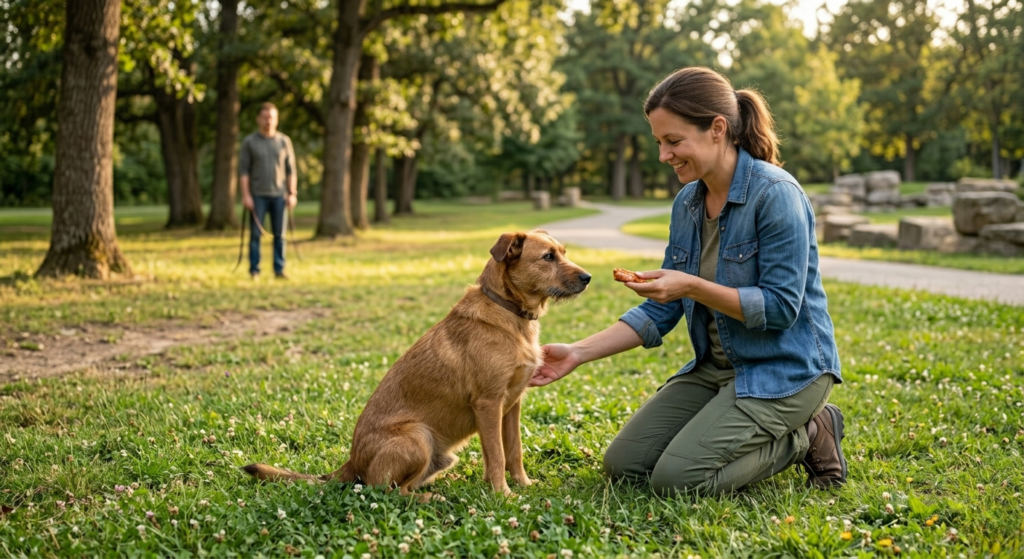
For anxiety tied to specific triggers — other dogs, strangers, loud sounds, specific environments — systematic desensitization combined with counter-conditioning (DSCC) is the most evidence-supported behavioral intervention available. The mechanism: expose the dog to the anxiety trigger at an intensity far below their threshold of reaction, simultaneously pairing the exposure with something highly positive (high-value food, play). Over many sessions, the emotional association with the trigger shifts from threatening to neutral or positive. Key principles:
- Always start below threshold — the dog must show no anxiety during exposures for the training to work
- Progress only when the dog is consistently comfortable at the current level
- Never rush — weeks to months are typical timelines for meaningful desensitization
- Work with a certified professional dog trainer (CPDT-KA) or veterinary behaviorist for severe anxiety or reactive behavior
Strategy 5: Evidence-Based Calming Products
- Adaptil (Dog Appeasing Pheromone): synthetic analog of the calming pheromone produced by nursing mother dogs. Available as a plug-in diffuser, collar, or spray. Clinical trials show modest but consistent anxiety reduction across multiple anxiety types. Most effective when used continuously rather than situationally.
- Pressure wraps (ThunderShirt): applies gentle constant pressure to the torso, producing a calming effect in approximately 60 to 70% of anxious dogs. Most effective for situational anxiety when applied before anxiety onset.
- Calming supplements: products containing L-theanine (found in green tea), alpha-casozepine (from milk protein), or melatonin have clinical evidence for mild to moderate anxiety reduction. Always choose products that have been studied in dogs specifically, not just in humans.
- Through a Dog’s Ear music: clinically tested music specifically designed to reduce canine anxiety through sound frequencies and rhythmic patterns that promote calm. Effective background management tool, particularly for noise sensitivity and separation anxiety.
Strategy 6: Veterinary Support for Moderate to Severe Anxiety
For dogs whose anxiety causes clinically significant distress — preventing normal function, causing self-injury, or making daily management unsafe — veterinary intervention combines behavioral support with pharmacological options that reduce baseline anxiety enough for behavioral training to be effective:
- Fluoxetine (Reconcile/Prozac): selective serotonin reuptake inhibitor used for chronic generalized anxiety and separation anxiety. Requires 4 to 6 weeks to reach full effect. Most effective combined with behavior modification.
- Clomipramine (Clomicalm): tricyclic antidepressant FDA-approved specifically for separation anxiety in dogs.
- Trazodone: effective anxiolytic for situational and moderate chronic anxiety. Faster onset than SSRIs.
- Gabapentin: excellent for situational anxiety, veterinary visits, and travel. Produces calm without heavy sedation.
- Alprazolam: benzodiazepine effective for acute panic (thunderstorms, fireworks). Requires monitoring and should not be used long-term without veterinary guidance.
Frequently Asked Questions
Can anxiety be cured in dogs, or only managed?
Many dogs with mild to moderate anxiety achieve substantial, lasting improvement through behavioral intervention and management — particularly when the underlying cause is addressed early. Severe anxiety, genetic anxiety predisposition, and trauma-based anxiety may require ongoing management rather than cure. The goal is always maximum quality of life for that individual dog.
Does getting another dog help with separation anxiety?
For true separation anxiety — where the dog is specifically anxious about the owner’s absence — a second dog typically provides limited relief. The anxious dog’s distress is owner-specific, not loneliness-specific. A second dog may help with dogs whose distress is more generalized loneliness, but this should not be the primary treatment approach for diagnosed separation anxiety.
My dog destroys things only when I leave. Is that definitely separation anxiety?
Destructive behavior during absence is consistent with separation anxiety but is not diagnostic on its own. Boredom and insufficient exercise can produce similar behaviors. Reviewing security camera footage during your absence is the most reliable way to distinguish between the two — separation anxiety produces clear distress behaviors (vocalization, pacing, focused destruction at exits) rather than calm exploratory destruction.
Is it safe to give my dog CBD for anxiety?
CBD products for dogs have limited clinical evidence at this stage, and product quality and dosing consistency varies enormously between brands. Some dogs appear to benefit; the evidence base is not yet strong enough for universal recommendation. Discuss with your veterinarian before using CBD, and choose products with third-party Certificate of Analysis testing.
Conclusion
Helping an anxious dog is one of the most rewarding things a dog owner can do — and it requires a combination of accurate identification of the anxiety type, consistent environmental management, evidence-based behavioral training, appropriate use of supportive products, and veterinary partnership for persistent or severe cases. There is no single universal solution, but virtually every anxious dog can experience meaningful improvement in quality of life with the right individualized approach. Start with the simplest interventions — exercise, safe den, trigger reduction — and build from there.