
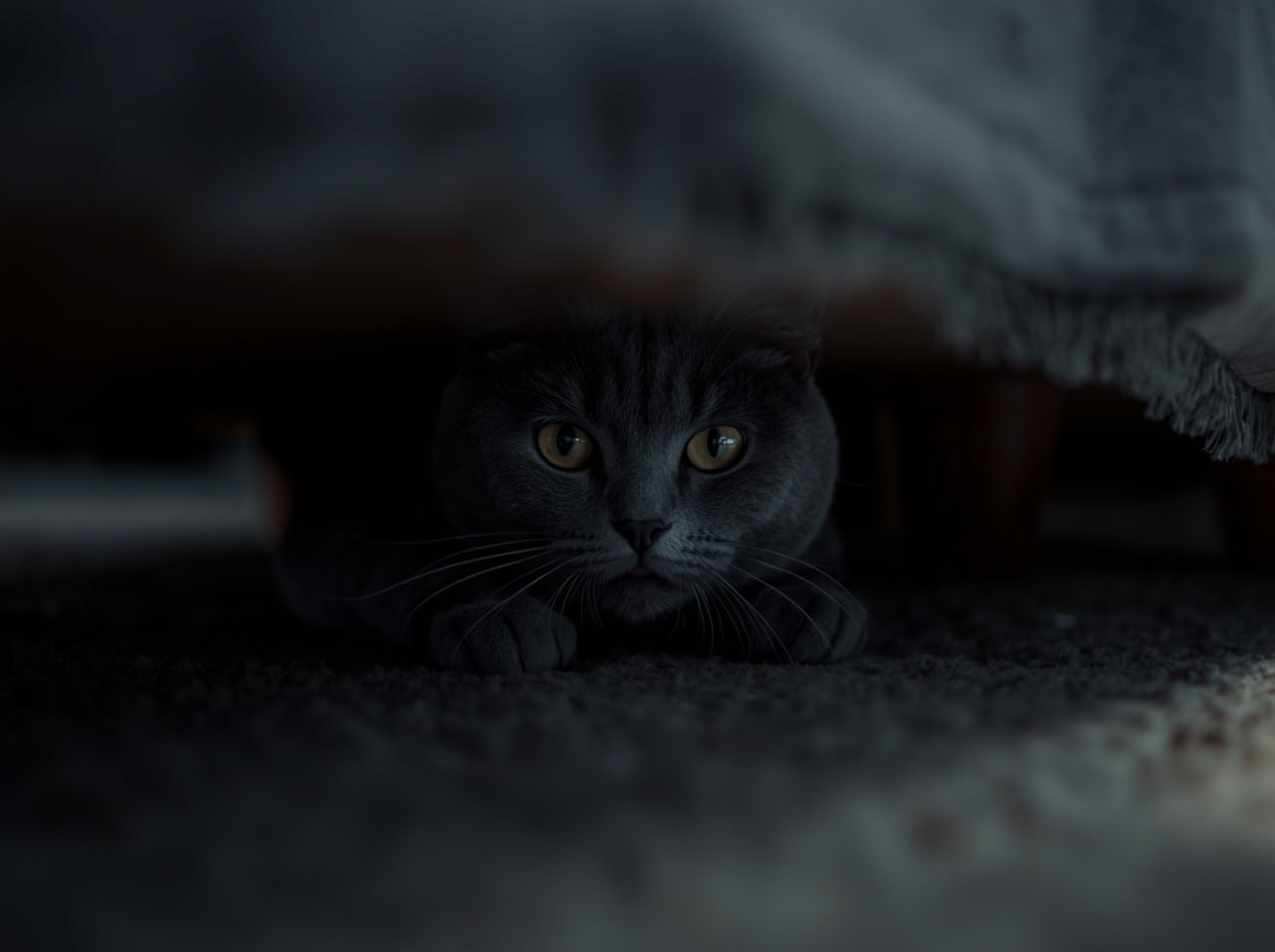
Anxiety in cats is far more common than most owners realize — and far more harmful to their wellbeing than it might appear. Cats are not stoic by choice; they are stoic by evolutionary necessity. A cat displaying visible anxiety symptoms is a cat that has been experiencing significant stress for long enough that their natural concealment mechanisms are no longer sufficient to hide it. Whether your cat hides from strangers, over-grooms to the point of creating bald patches, redirects aggression onto other pets or family members, eliminates outside the litter box, or simply seems constantly on edge and reactive, understanding the root causes and effective interventions can make a transformative difference in your cat’s quality of life.
Recognizing Anxiety in Cats: Behavioral Signs
Cats communicate anxiety through behavior far more reliably than through vocalization. The following signs, particularly when they represent a change from the cat’s established baseline behavior, indicate anxiety worth addressing:
- Hiding: seeking unusual hiding places and spending extended time there — not emerging for meals, play, or normal social interaction
- Reduced social interaction: withdrawing from family members who were previously welcomed
- Aggression: redirected aggression (toward other pets or humans) following exposure to a stressor, or generalized irritability and low tolerance for contact
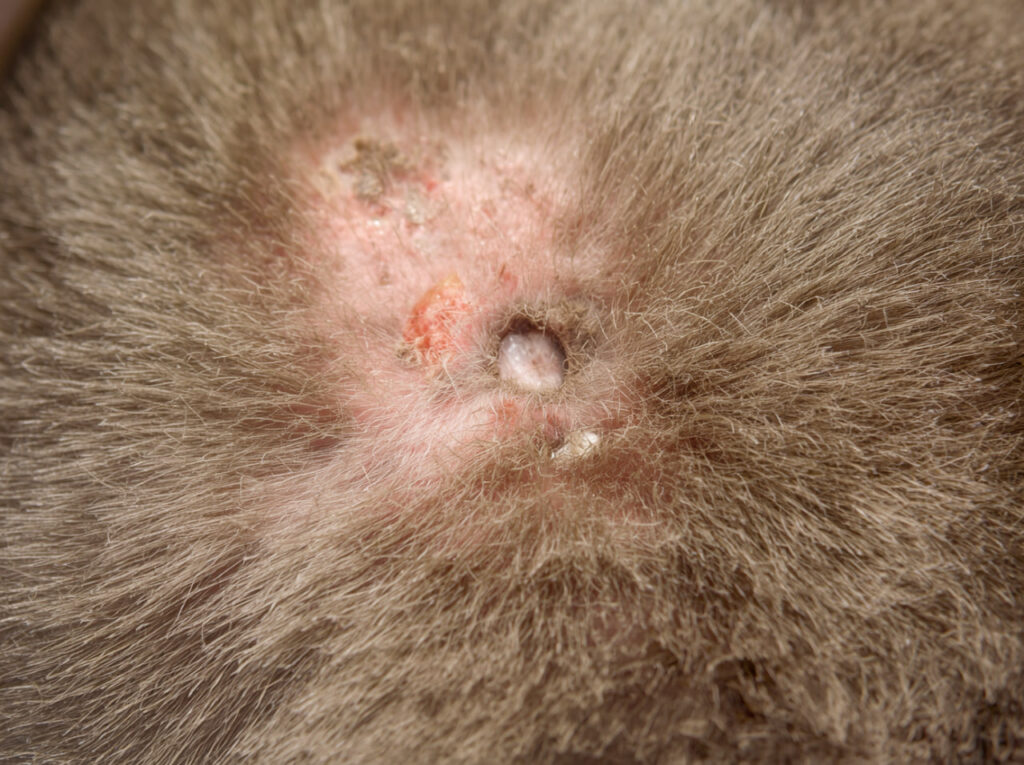
- Over-grooming and barbering: compulsive licking that thins or removes hair, typically on the belly, inner thighs, or lower back — called psychogenic alopecia
- Inappropriate elimination: urinating or defecating outside the litter box, or urine-marking vertical surfaces (even in spayed/neutered cats) in response to territorial stress
- Hypervigilance: constantly scanning the environment, startling easily at sounds, unable to fully relax
- Appetite changes: reduced appetite or stress-induced overeating
- Excessive vocalization: particularly at night or in association with specific triggers
- Destructive scratching beyond normal levels: as a coping or marking behavior
- Repetitive behaviors: tail chasing, excessive face rubbing, compulsive behaviors performed in stressful situations
Common Causes of Feline Anxiety
Changes in the Social Environment
Cats are highly territorial animals for whom social composition is deeply important. The arrival of a new pet — particularly a new cat — is one of the most powerful anxiety triggers available. The loss of a companion animal or a human family member, a new baby, or a new person moving into the household all alter the social landscape in ways that cats find genuinely stressful.
Changes in the Physical Environment
Moving to a new home is a major anxiety trigger because it simultaneously eliminates all known territory and familiar scent marks. Renovation, new furniture, changes to the layout of rooms, new appliances with different sounds, or even the rearrangement of furniture can be meaningfully stressful for particularly sensitive cats.
Outdoor Threats (Even for Indoor Cats)
Stray or feral cats visible through windows represent a territorial threat that indoor cats cannot address through their normal territorial behavior — patrolling, scent-marking, and confrontation. This inability to resolve the perceived threat creates a chronic low-grade anxiety state. Redirected aggression — where a cat attacks a housemate or human immediately after seeing an outdoor cat — is one of the most puzzling cat behaviors for owners, but it is directly traceable to this frustration.
Inadequate Environmental Enrichment
Chronic under-stimulation is a powerful contributor to anxiety and stress in indoor cats. A cat with nowhere to retreat, nowhere to climb, no appropriate outlets for hunting behavior, and no predictability in their day is a cat whose stress system is chronically activated.
Medical Causes
This is a critical point: several medical conditions present with behavioral changes indistinguishable from anxiety — including hyperthyroidism, pain conditions (particularly dental disease and arthritis), urinary tract disease, and neurological conditions. Before implementing any behavioral intervention for anxiety, a comprehensive veterinary examination including bloodwork is essential to rule out an underlying medical cause.
Evidence-Based Strategies to Help an Anxious Cat
1. Create a Resource-Rich Environment
Cats need high-quality access to resources — not just the presence of resources. In multi-cat households, inadequate resource provision (too few litter boxes, food bowls in contested locations, insufficient hiding spots) is one of the most common and most easily remedied causes of feline anxiety. The guideline is one litter box, food bowl, water source, and sleeping spot per cat, plus one extra, distributed so that no individual resource can be guarded by one cat against others.
2. Provide Safe Hiding Spots and Vertical Space
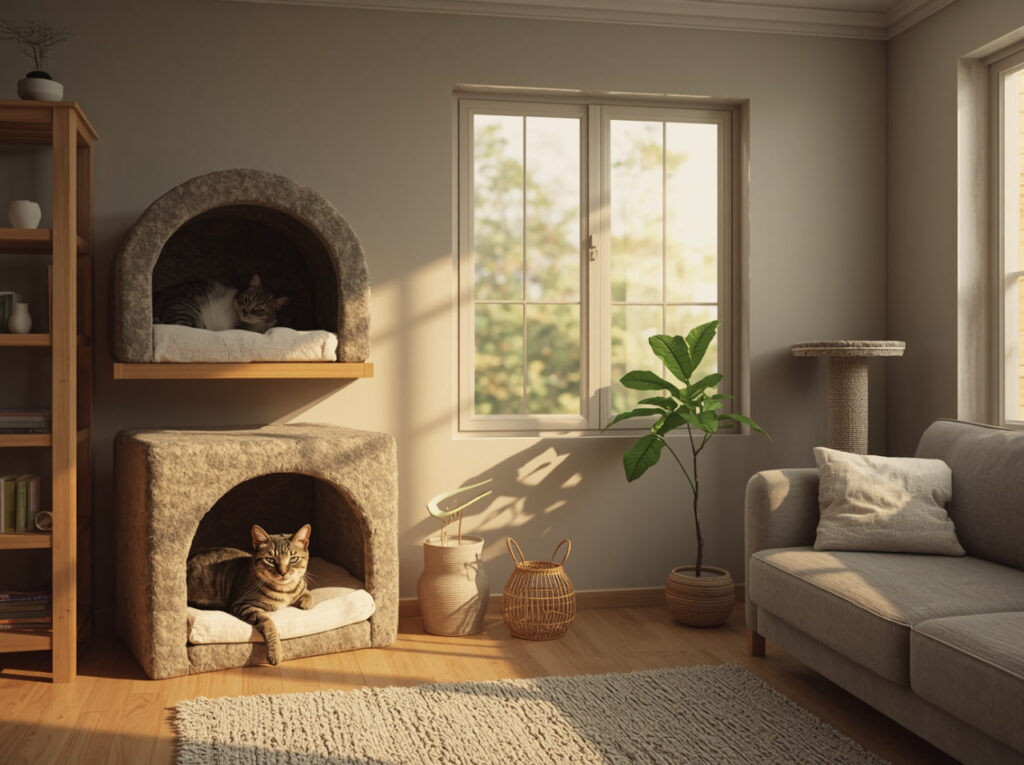
Anxiety is fundamentally a safety perception problem. Cats who feel they can retreat to safety — a high, enclosed space, an area under a bed, a cat cave — have a reliable behavioral escape from overwhelming situations. Providing multiple hiding options and vertical space (cat trees, high shelves, cleared counter sections) throughout your home gives anxious cats the control over their environment that reduces chronic anxiety levels.
3. Maintain Absolute Routine Consistency
Cats are profoundly comforted by predictability. Consistent feeding times, consistent play times, consistent sleeping locations, and a consistent general household schedule reduce the unpredictability that fuels anxiety. This is particularly important during periods of environmental change — maintaining as much routine as possible during moves, household additions, or other disruptions significantly buffers the anxiety response.
4. Feliway and Pheromone Products
Feliway Classic is a synthetic analog of the facial pheromone that cats deposit when they rub their face against surfaces — a pheromone associated with safety and familiarity. Clinical trials show that Feliway reduces anxiety-related behaviors in cats in a range of stressful situations including travel, veterinary visits, new environments, and multi-cat tension. Available as a plug-in diffuser (most useful for household-level anxiety), spray, and collar. Feliway MultiCat (also known as Feliway Friends) contains a different pheromone compound targeting inter-cat tension specifically. Start the diffuser one to two weeks before an anticipated stressor (moving day, new cat introduction) for best effect.
5. Systematic Desensitization for Specific Triggers
For cats with anxiety triggered by specific events — the carrier, the car, visitors, specific sounds — gradual, systematic desensitization combined with positive reinforcement is the most durable long-term solution. The principle: expose the cat to the trigger at a level far below their anxiety threshold (so far away, so quiet, or so brief that they show no stress response), pair this exposure with highly valued food, and very gradually increase proximity or intensity only when the cat is consistently comfortable at each previous level.
6. Block the View of Outdoor Cats
For cats anxious about outdoor cats they can see through windows, frosted window film applied to lower window panes removes the visual trigger entirely. This is a simple, inexpensive, and highly effective intervention for redirected aggression and window-fixated anxiety in indoor cats.
7. Veterinary Support for Moderate to Severe Anxiety
For cats whose anxiety causes clinical-level distress — preventing normal function, causing self-injury through over-grooming, or making the cat a danger to themselves or others — veterinary intervention is both appropriate and humane. Options include: gabapentin (excellent anxiolytic with minimal side effects, also used for travel anxiety), buspirone (long-term anti-anxiety medication with a calming effect on social anxiety in cats), fluoxetine (for chronic generalized anxiety or compulsive disorders), and trazodone for situational anxiety. All require veterinary prescription and monitoring.
Frequently Asked Questions
My cat is anxious at the vet. How can I make it less traumatic?
Ask your vet about medicating with gabapentin before vet visits — this is now standard practice at many Fear Free certified clinics and dramatically reduces stress for anxious cats. Keep the carrier out permanently so it becomes part of the furniture rather than a signal of a vet visit. Use Feliway spray on the carrier bedding 30 minutes before travel. Request a cat-only appointment time or a Fear Free certified practice.
Can a cat be born anxious or is it always environmentally caused?
Both. Genetic factors contribute significantly to baseline anxiety tendency. Cats from anxious parents and cats who were poorly socialized during the critical period (3 to 7 weeks of age) are at substantially higher risk of developing anxiety problems. However, environmental factors throughout life can either protect against or exacerbate genetic predisposition.
My cat over-grooms but the vet found no skin condition. What now?
Psychogenic alopecia — over-grooming driven by anxiety rather than skin disease — is the diagnosis of exclusion once dermatological causes have been ruled out. Treatment focuses on identifying and reducing anxiety triggers, environmental enrichment, and in persistent or severe cases, behavioral medication. A veterinary behaviorist referral is appropriate for cases that do not respond to basic environmental interventions.
Will getting a second cat help my anxious cat?
This is highly individual and unpredictable. Some cats find a compatible companion calming and enriching. Others find the addition of another cat a significant additional stressor. For a cat already experiencing anxiety, introducing a new cat without a carefully managed, gradual introduction protocol is likely to worsen rather than improve their anxiety. Discuss with your veterinarian and consider your individual cat’s personality before proceeding.
Conclusion
Feline anxiety is a real, treatable condition that significantly affects quality of life when left unaddressed. The most effective approach combines environmental enrichment and modification (providing hiding spots, vertical space, and reduced triggers), routine consistency, pheromone support, and veterinary evaluation to rule out medical causes and provide pharmacological support when behavioral interventions alone are insufficient. Most anxious cats respond positively to thoughtful environmental management — and those who do not have excellent veterinary options available. Your cat’s anxiety is not a personality flaw or a character that cannot change. It is a treatable condition that deserves the same compassionate attention as any other health problem.