
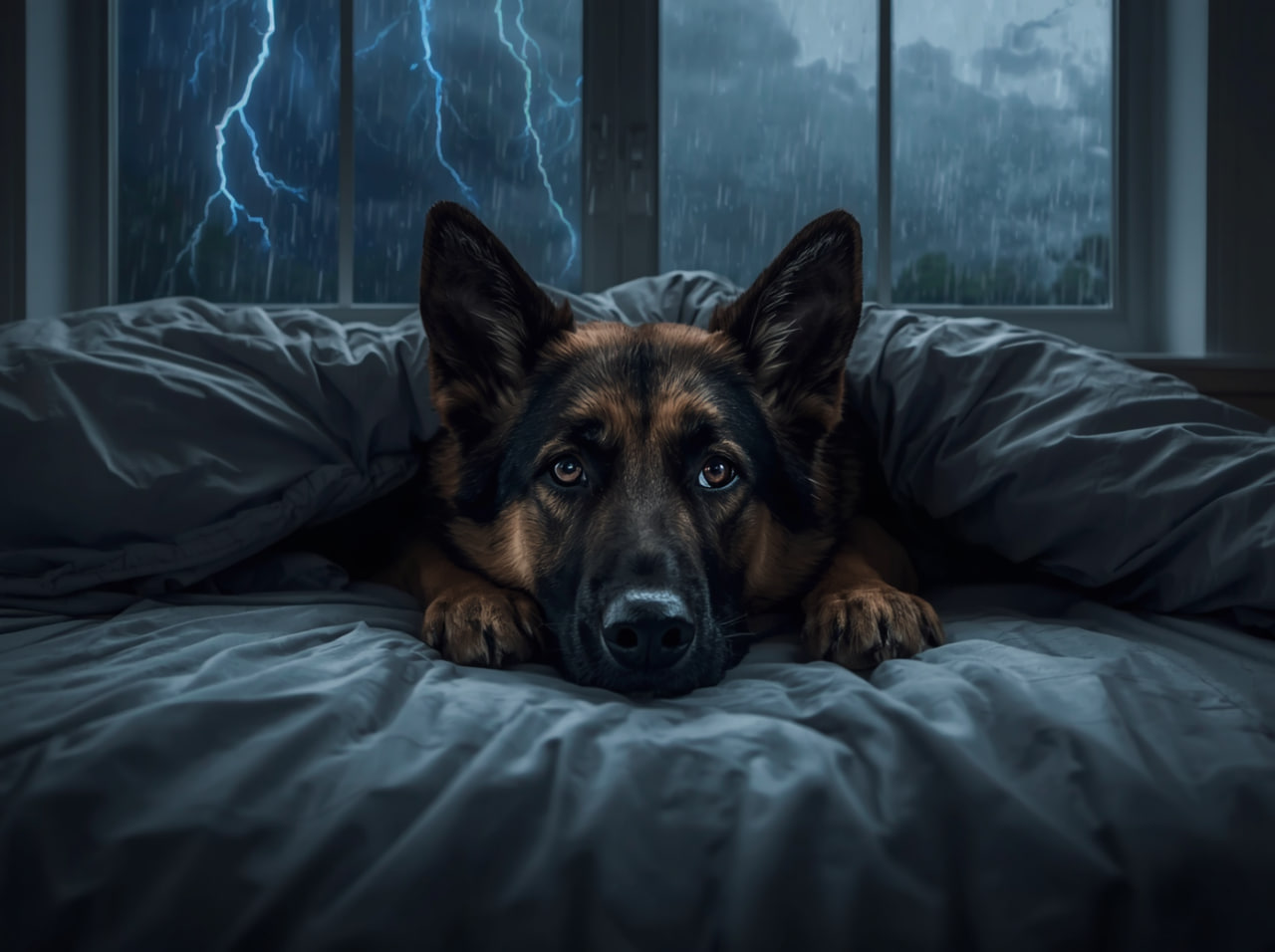
Thunder phobia is one of the most common anxiety-related conditions in dogs, estimated to affect between 30 and 40% of the canine population to varying degrees. For some dogs, a distant rumble produces mild restlessness that passes quickly. For others, an approaching storm triggers a full panic response — trembling, panting, destructive behavior, attempts to escape through doors and windows, and in severe cases, self-injury. The distress is genuine and can be severe. The encouraging news is that thunder phobia is one of the most extensively studied canine anxiety conditions, and a range of evidence-based interventions are available that can significantly reduce its impact — from environmental management through behavior modification to veterinary pharmacological support.
Why Are Dogs Afraid of Thunder? The Full Sensory Picture
Understanding why dogs experience thunder phobia helps explain why it can be so intense and why it often worsens over time. Thunderstorms are not simply loud noise events for dogs — they are multi-sensory experiences that affect dogs through multiple simultaneous channels:
- Sound: thunder is the most obvious trigger, but the frequency and intensity of thunder far exceeds what humans experience — dogs hear in a wider frequency range and with greater sensitivity.
- Barometric pressure changes: dogs appear to detect changes in atmospheric pressure that precede storms by 30 to 60 minutes, which is why many storm-phobic dogs become anxious before any audible thunder.
- Static electricity buildup: this is one of the most underappreciated triggers. Thunderstorms cause significant atmospheric electrostatic buildup, and dogs — particularly those with thick double coats — may actually experience painful electrostatic shocks through their coat during storms. This may explain why many thunder-phobic dogs try to access bathrooms, basements, or other grounded locations during storms.
- Lightning flashes: the visual disturbance of lightning affects dogs with light-sensitive eyes more than humans.
- Rain and wind: the sound of heavy rain and wind on roofs, windows, and surfaces contributes to the overall arousal level.
Because dogs experience all of these triggers simultaneously and in a compressed timeframe, the anxiety response can escalate rapidly from mild alertness to full panic within minutes of storm onset.
Why Thunder Phobia Typically Worsens Over Time
Without intervention, thunder phobia almost universally worsens over successive storm seasons. This occurs through a process called sensitization — each frightening storm experience reinforces and strengthens the fear pathway in the brain, lowering the threshold of arousal for subsequent events. A dog that was mildly anxious about thunder at age two may be severely phobic by age five without any treatment. This progression is one of the strongest arguments for early intervention — addressing mild thunder anxiety before it escalates is far easier than treating established severe phobia.
Immediate Management Strategies: What to Do During a Storm
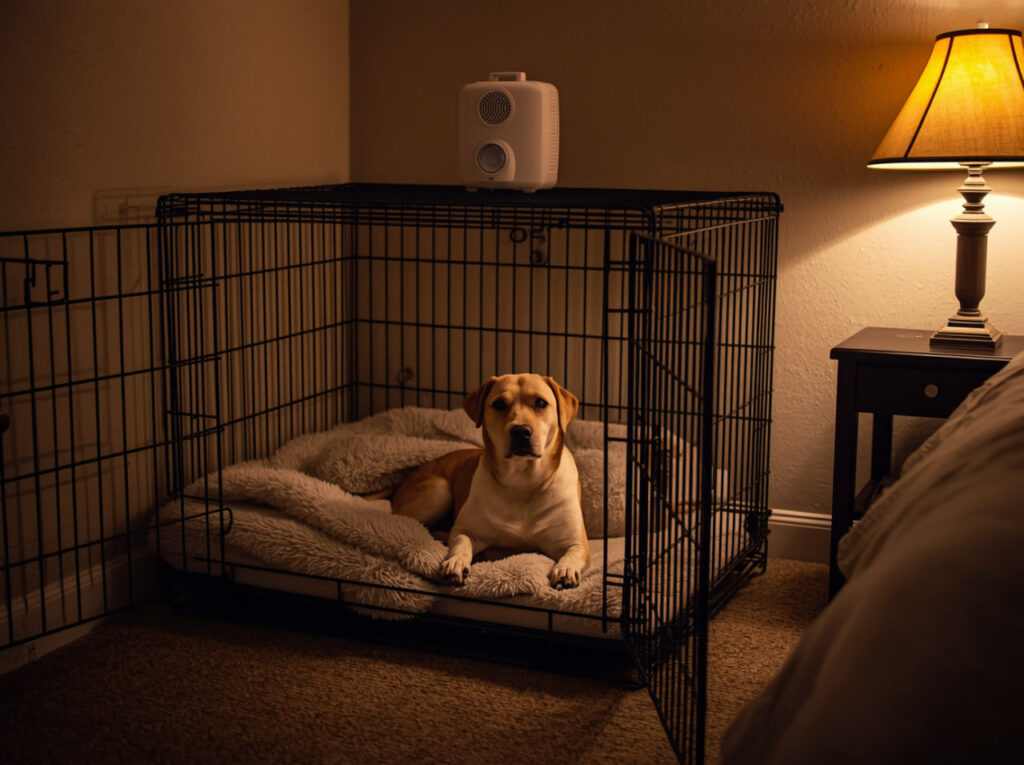
- Create a safe den: identify where your dog naturally retreats during storms — under a bed, in a closet, in the bathroom — and make that location as comfortable and accessible as possible. Add soft bedding, a worn item of your clothing, and if possible, ensure access to a grounded surface (tiled bathroom floors are often preferred for static discharge reasons). Do not force your dog out of their chosen hiding spot.
- White noise and sound masking: a fan, white noise machine, or dog-specific calming music played at moderate volume can mask some of the external storm sounds. Through a Dog’s Ear is a clinically tested music protocol specifically designed to reduce canine anxiety.
- Draw curtains and blinds: reducing the visual disturbance of lightning flashes removes one component of the multi-trigger experience.
- Stay calm yourself: dogs monitor their owner’s emotional state continuously. If you are visibly anxious or dramatically comforting your dog, you may inadvertently communicate that there is something genuinely dangerous occurring. Stay calm, go about your normal activities where possible, and offer gentle, matter-of-fact reassurance.
- Do not force your dog to confront the storm: counter to older training advice, modern behavioral science clearly supports that comforting a frightened dog does not reinforce fear. Fear is an emotional state, not a behavior. You cannot reinforce an emotion — you can only manage it.
Calming Products: Evidence and Recommendations
Pressure Wraps (ThunderShirt and Equivalents)
Pressure wraps apply gentle, constant pressure to the dog’s torso — similar in concept to swaddling an infant. Approximately 60 to 70% of dogs show measurable anxiety reduction with a correctly fitted pressure wrap. They are most effective when used consistently — put them on before the storm begins if possible, and before arousal is already high. They are ineffective once a dog is at the peak of a panic response. Available from most pet retailers, they are one of the most cost-effective first-line interventions.
Adaptil (Appeasing Pheromone Products)
Adaptil (also known as DAP — Dog Appeasing Pheromone) is a synthetic analog of the pheromone produced by nursing mother dogs, which has a calming effect on dogs of any age. Available as a plug-in diffuser, a collar, and a spray. Clinical trials show modest but consistent anxiety reduction effects. Most effective when the diffuser is started several days before anticipated storms, rather than during the storm itself. The collar format provides continuous exposure.
Melatonin
Melatonin has shown benefit for some storm-phobic dogs when given 30 to 60 minutes before storm onset. Ask your veterinarian for the appropriate dose for your dog’s weight — dosing varies significantly by size and should not be extrapolated from human doses without guidance.
Long-Term Solution: Systematic Desensitization and Counter-Conditioning
Desensitization and counter-conditioning (DSCC) is the most durable long-term solution for thunder phobia. It works by gradually and systematically changing the emotional association the dog has with storm triggers — from ‘terrifying’ to ‘neutral’ or even ‘positive.’ The process:
- Find a high-quality thunderstorm recording (YouTube, Spotify, or dedicated apps offer many options). Start playback at the absolute lowest audible volume — so low you can barely hear it from across the room.
- During this low-level playback, engage your dog in activities they love: feeding meals, training with high-value treats, interactive play.
- Over many sessions spanning weeks, very gradually increase the volume — increase only when your dog shows no anxiety at the current level.
- If at any point your dog shows anxiety signs, reduce the volume immediately and proceed more slowly.
- Begin incorporating other storm-associated triggers as tolerance builds: strobe lights simulating lightning, fans simulating wind, pressure changes.
This process takes months and requires consistency, but produces genuine, lasting behavioral change. It is most effective when started between storm seasons when no real storms occur to counteract the desensitization progress.
When to Ask Your Veterinarian for Medication
For dogs whose fear is so severe that management strategies and calming products provide inadequate relief, or for dogs who injure themselves or others during storms, veterinary pharmacological intervention is both appropriate and humane:
- Sileo (dexmedetomidine oromucosal gel): the only FDA-approved medication specifically for noise aversion in dogs. Applied to the gum tissue inside the cheek, it works within 30 to 60 minutes and produces marked anxiety reduction without heavy sedation. Requires a veterinary prescription.
- Trazodone: an anxiolytic medication frequently prescribed for situational anxiety in dogs. Given orally one to two hours before anticipated storms. Produces calm without elimination of awareness.
- Alprazolam (Xanax): a benzodiazepine that is effective for acute anxiety but requires careful veterinary monitoring and should not be used in dogs with liver disease.
- Combination approaches: most severe cases respond best to a combination of behavioral modification, environmental management, and medication rather than any single approach.
Frequently Asked Questions
Should I comfort my dog during a thunderstorm?
Yes — modern veterinary behavioral science is clear on this point. Comforting a frightened dog does not make the fear worse. It provides reassurance and helps the dog feel less alone in an overwhelming experience. What to avoid is dramatic, anxious behavior on your part that may communicate danger rather than safety.
Why does my dog’s storm phobia seem to get worse each year?
Without intervention, sensitization causes progressive worsening of phobia responses. Each frightening storm experience reinforces the fear pathway. Early treatment is significantly more effective than waiting until the phobia is severe.
Are some breeds more prone to thunder phobia than others?
Yes. Herding breeds (Border Collies, German Shepherds, Australian Shepherds, Shelties) and some sporting breeds (Retrievers, Vizslas) are among the most commonly affected. However, any individual dog of any breed can develop storm phobia.
My dog hides in the bathroom during storms. Should I encourage this?
Yes — the bathroom may be a grounded surface that actually provides relief from static electricity buildup. If your dog seeks the bathroom during storms, make it comfortable and accessible rather than attempting to keep them elsewhere.
Conclusion
Thunder phobia is a real, distressing condition that deserves serious attention — not dismissal as ‘just a quirk.’ The combination of immediate environmental management (a safe den, white noise, pressure wrap), long-term desensitization training between storm seasons, and veterinary pharmacological support where needed gives most dogs significant relief. Start with the simplest interventions and escalate based on your dog’s response. With consistent effort, most thunder-phobic dogs experience meaningful improvement — many become genuinely calm in conditions that once sent them into panic.